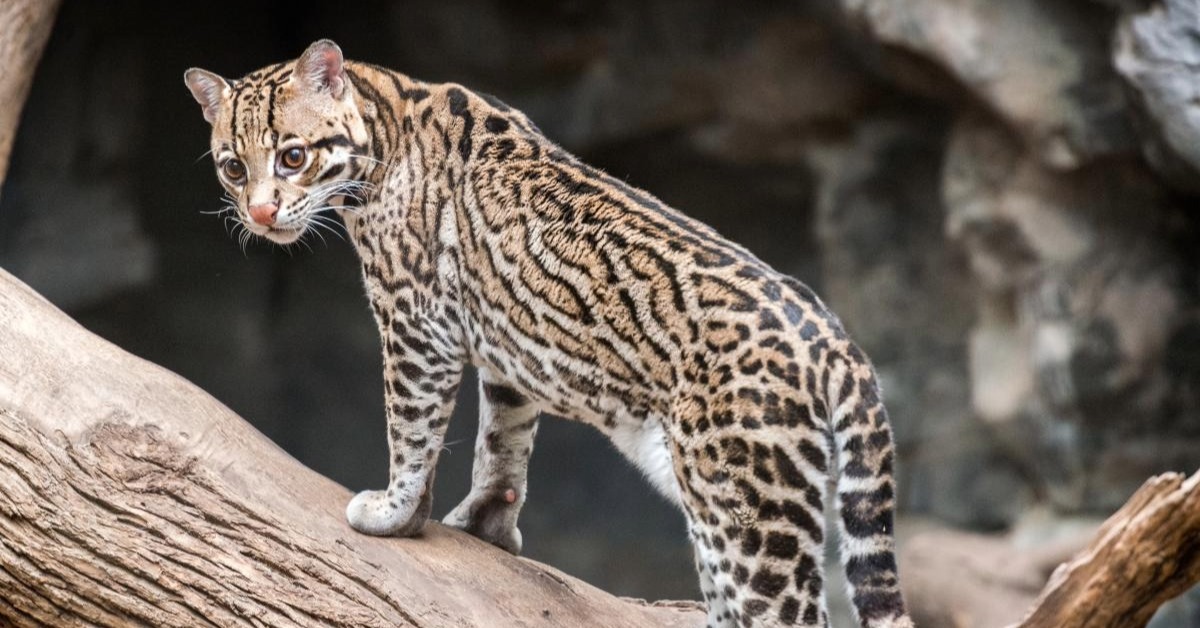
An ocelot was struck and killed Saturday morning on the toll road between Playa del Carmen and El Tintal, about 10 kilometers from the city.
Municipal personnel went to the scene after the animal was reported on the road. The feline, identified as a female, had already died. Its body was removed for study.
The case has renewed attention on a problem that often goes unseen by drivers in the Riviera Maya. Roads through jungle areas can become deadly barriers for animals that move through the forest in search of food, shelter, and breeding territory.
For residents of Playa del Carmen, the incident is also a reminder that the city’s growth does not stop at the edge of the urban area. The surrounding jungle remains habitat for native species, even when roads, subdivisions, and tourism corridors make that habitat harder to cross.
Why this road matters for wildlife
The Playa del Carmen-El Tintal toll road crosses a jungle area that serves as a natural wildlife corridor. These corridors allow animals to move between feeding areas, water sources, and safer habitats.
That movement is not optional for many species. Wild cats do not live their lives in one small patch of forest. They travel, especially at night, and their routes can overlap with roads built through their territory.
The road opened in 2016 as a faster connection through inland Quintana Roo. It also became part of a broader pattern in the region: better transportation access for people, but more pressure on wildlife habitat.
Wildlife crossings and other mitigation measures have been discussed for this corridor. A study of the Cedral-Tintal-Playa del Carmen highway found that the road was planned to include wildlife crossing structures. Researchers also found that some crossings needed to be moved from their original locations after field monitoring.
That detail matters because wildlife protection is not just about building a structure and moving on. Crossings have to be placed where animals actually travel. They also have to be maintained, monitored, and adapted when evidence shows they are not working well enough.
What is an ocelot?
The ocelot, known in Spanish as ocelote, is a medium-sized wild cat found in parts of Mexico and across much of Latin America. It is smaller than a jaguar but larger and stronger than a house cat.
Its coat is marked with dark rosettes and stripes, which help it blend into dense vegetation. Ocelots are mostly nocturnal and elusive, so many people living near their habitat may never see one in the wild.
In Mexico, the ocelot is listed as endangered under the country’s NOM-059 environmental protection standard. That does not mean every individual animal is monitored, but it does mean the species has legal protection because of conservation concerns.
The main threats are familiar across much of Mexico: habitat loss, fragmentation, illegal capture, and conflict with people. Roads add another danger because they divide habitats and create points where animals must cross traffic.
Roads can divide the jungle
A road through the jungle does more than create a paved surface. It can split habitats into smaller pieces. For wildlife, that can mean longer travel routes, fewer safe crossings, and greater contact with people and vehicles.
This is known as the barrier effect. Animals may avoid crossing a road because of traffic, noise, lights, or open space. Others may still try to cross and get hit.
For a species such as the ocelot, the death of one animal is not only a sad image on the roadside. It can also represent the loss of a breeding adult in an already pressured landscape.
In areas like Playa del Carmen, the issue becomes more complicated because roads serve real human needs. Residents, workers, tourists, and businesses depend on transportation links. The challenge is to build and manage those roads in ways that reduce harm to wildlife.
Why expats and visitors should care
For many foreigners living in Playa del Carmen, Cancún, Tulum, and other parts of Quintana Roo, the region’s natural beauty is part of daily life. The jungle, cenotes, beaches, and wildlife are not separate from the local economy. They help define why people come and why many choose to stay.
But rapid growth has consequences. More roads, more housing, and more traffic mean more pressure on the same ecosystems that support the region’s identity.
Wildlife deaths also affect road safety. Larger animals can create hazards for drivers, especially at night. Even when a collision does not injure people, it can indicate that a road segment has become a repeated crossing point for animals.
Better signage, speed control in known crossing zones, fencing that guides animals toward safe crossings, and continued monitoring can all reduce risk. None of those steps solves the broader development question, but they can help prevent avoidable deaths.
What happens next
The ocelot’s body was removed for study, which may help authorities confirm details such as condition, age, and cause of death. That type of information can also be useful when agencies and specialists review wildlife mortality along the road.
The larger question is whether this case leads to closer attention on the Playa del Carmen-El Tintal corridor. A single death may draw public concern for a day. A pattern of deaths would point to a planning-and-enforcement problem.
For now, the incident shows the tension between growth and conservation in the Riviera Maya. Playa del Carmen continues to expand, and the roads around it carry more traffic. The wildlife around the city still needs space to move.
The ocelot killed on the highway is one animal. It is also a warning about what happens when natural corridors and human infrastructure collide.