Baja California Sur extends its Wolbachia mosquito releases from La Paz to Los Cabos, aiming to cut dengue and chikungunya risk.
Los Cabos is about to see a very different kind of mosquito campaign. Instead of more insecticide fogging trucks, Baja California Sur is preparing a second phase of its Wolbachia strategy. This biological method has already changed how La Paz deals with dengue. Now, state and federal authorities want that same shield in place for Los Cabos as chikungunya cases rise across the wider region.
The state government says the Wolbachia method Los Cabos program will expand from La Paz to the municipality in mid-December. Health officials describe the goal as reducing transmission of dengue, Zika and chikungunya by changing the mosquitoes themselves, not the people. The plan relies on technology transferred from Mexico’s National Center for Preventive Programs and Disease Control and includes ongoing larval control and targeted fumigation. For now, state hospitals report that beds occupied by dengue patients remain below 1.2 percent of available capacity, a figure authorities want to keep low as the high season continues.
The Wolbachia method works by introducing a naturally occurring bacterium into Aedes aegypti mosquitoes, the species that carries dengue, Zika and chikungunya. When mosquitoes with Wolbachia mate with wild mosquitoes, their offspring inherit the bacterium and lose most of their ability to transmit these viruses. Once the bacterium establishes itself in a local mosquito population, it tends to persist, so health authorities do not need to spray the same areas constantly.
La Paz has served as the testing ground for this strategy in Mexico. The World Mosquito Program partnered with Baja California Sur health authorities in 2018, and full releases of Wolbachia-carrying mosquitoes took place between 2019 and 2021, covering about 250,000 people across 50 square kilometers. State officials later reported that dengue incidence in La Paz remained far below levels seen a decade earlier, even after all four dengue serotypes began circulating again. In 2024, La Paz registered about 75 dengue cases, while Los Cabos surpassed two thousand confirmed infections and accounted for around 90 percent of the state’s total.
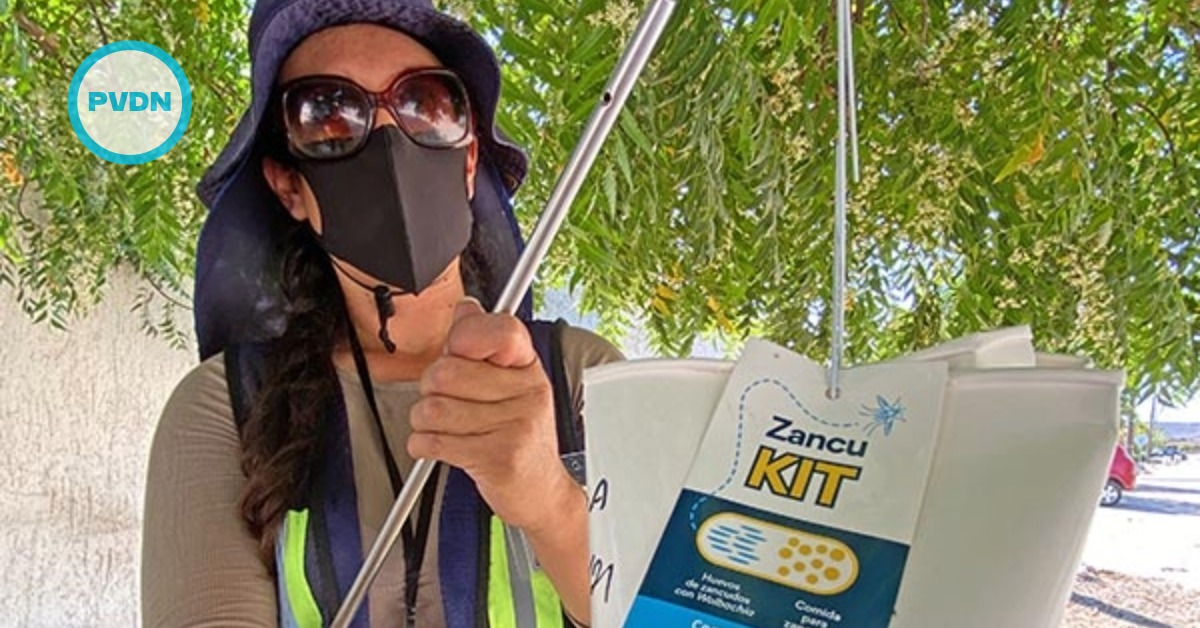
Those contrasts help explain why Los Cabos is now the focus of the next release phase. The first stage in the municipality centered on community outreach and explaining the strategy to neighborhoods, hotels and local leaders. The new stage moves into regular field releases of Wolbachia mosquitoes in selected neighborhoods. Teams from the state Health Secretariat, federal agencies and the Los Cabos municipality will coordinate schedules, transport and public information so that residents understand why more mosquitoes are appearing in traps and on posters.
Officials stress that the mosquitoes used in this program are not genetically modified and do not pose a risk to people or animals. Wolbachia already exists in many insect species, including butterflies and some types of flies. International health agencies have reviewed data from trials in Mexico, Brazil, Indonesia and other countries and describe the method as a safe form of biological control that can cut dengue and related infections when it is used across large areas and paired with standard mosquito control work.
Chikungunya pressure in the Americas
Although dengue remains the main driver of hospitalizations in Baja California Sur, chikungunya is the virus that worries epidemiologists as they plan ahead. The same mosquitoes that spread dengue can also carry chikungunya, a disease that causes high fever and intense joint pain and can leave patients sidelined for months. Once chikungunya takes hold in a city, outbreaks can grow quickly and strain local health systems.
Regional figures show why BCS does not want to wait. Data compiled by international health agencies indicate that countries in the Americas reported more than 410,000 chikungunya cases in 2023. The following year set a new record with more than 420,000 reported cases and over 200 deaths, mainly driven by major outbreaks in Brazil and Paraguay. Warmer temperatures, dense urban neighborhoods and heavy seasonal rains give Aedes mosquitoes more chances to breed and to move into new cities that have not faced large outbreaks before.
Mexico has so far avoided the worst of those spikes. Still, all of its coastal states, including Baja California Sur, have the right climate and the right mosquitoes for chikungunya to spread if it arrives with enough force. That is why state officials now frame the Wolbachia strategy as a way to protect both residents and visitors before large chikungunya outbreaks appear, not after. By targeting the mosquito that carries several viruses at once, they hope to blunt future waves of chikungunya while also keeping dengue in check.
For local families, the program could mean fewer lost workdays, fewer emergency visits and less pressure on public hospitals when dengue and other arboviruses circulate. La Paz already offers one example of how a sustained Wolbachia program, combined with fumigation and house-to-house larval control, can keep case counts lower even when regional numbers climb. Los Cabos, which depends heavily on tourism, has even more to gain if it can avoid the kind of prolonged outbreak that adds stress to clinics and raises anxiety for residents and visitors alike.
The state still needs the public on its side. Wolbachia mosquitoes only work if enough households accept trap placement, tolerate small release containers and keep sharing information about suspicious fever cases with local clinics. Surveys in La Paz found strong support for the project after years of community meetings, school visits and media campaigns. Health teams hope to build similar trust in Los Cabos by explaining the method in clear language, answering questions and emphasizing that traditional steps, such as clearing standing water and covering water storage containers, still matter.
Baja California Sur is not alone in turning to this type of biological control, but it is among the first Mexican states to deploy it at scale. If Los Cabos sees the same drop in dengue and related infections that La Paz has reported, the Wolbachia program could become a template for other coastal cities that now appear on regional risk maps for chikungunya. For now, residents can expect to see more visits from vector control brigades and, in some neighborhoods, a few extra mosquitoes in plastic cups on porches and rooftops, all part of an effort to keep serious infections out of homes, hotels and schools.