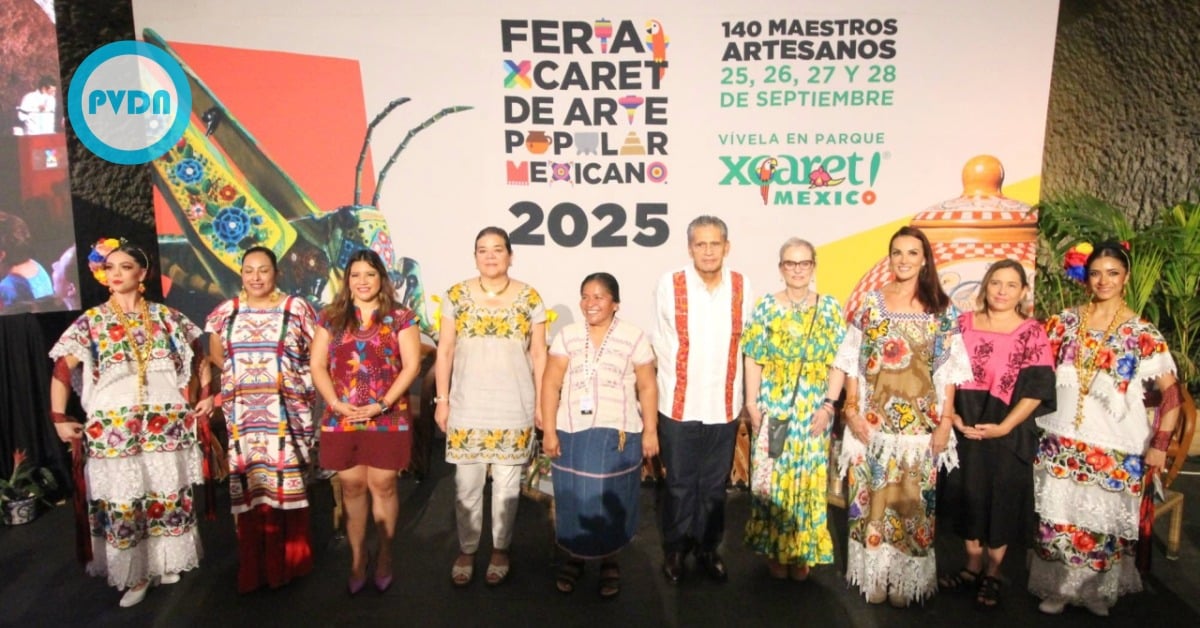
The second Xcaret folk art fair opened in the Riviera Maya, featuring more than 140 master artisans showcasing and selling work that families have refined for generations. Over four days, the park’s Hacienda Henequenera transforms into a vibrant market, featuring demonstrations, talks, and direct sales that keep money in the hands of makers. It’s a celebration, but it’s also economic oxygen for workshops from Chiapas to Jalisco, landing in one of Mexico’s most visited corridors just as fall travel season starts.
Xcaret Park opened the second edition of its Mexican Folk Art Fair. This four-day showcase gathers more than 140 artisans from across the country inside the park’s historic Hacienda Henequenera. Organizers say the goal is simple: put buyers face-to-face with makers while spotlighting the techniques and stories behind each piece. The fair runs from September 25 to 28 in Solidaridad. This municipality includes Playa del Carmen.
Xcaret folk art fair
At its heart, the Xcaret folk art fair is meant to be hands-on. Beyond stalls, the program features live demonstrations and talks, transforming the venue into a working classroom where visitors can witness embroidery, clay work, and wood carving in progress, then engage directly with the artisans who create them. The fair’s official schedule confirms daily programming from morning through early evening, positioning the event as a cultural counterweight to the coast’s beach-first image.
El Economista first reported the opening and the scale: more than 140 artisans from across Mexico gathered under one roof for four days. That figure matches the fair’s official material and pre-event listings, which promoted the return of the market-style gathering at Xcaret Park. The alignment across outlet coverage and organizer pages helps anchor the numbers and dates.
What’s on sale spans the country’s best-known traditions and plenty that rarely leave small towns: textiles from highland communities, burnished clay from Michoacán, lacquerware from Guerrero, and intricate woodwork from Oaxaca and Jalisco. The curatorial pitch is to bring regional craft ecosystems into a single, accessible space for travelers and locals alike, while keeping prices set by the workshop rather than middlemen.
The timing matters. Mexico’s cultural economy has a measurable craft backbone. According to the most recent cultural satellite account from the national statistics agency, “artesanías” represented the single most significant slice of the cultural sector’s GDP in 2023, at 19.1 percent, and the category generated nearly a third of the cultural sector’s jobs. That context turns a weekend fair into more than a photo op; it’s a temporary export market planted in one of the country’s busiest tourism corridors.
Why it matters now
Bringing artisans to a high-traffic destination like Xcaret inserts living traditions into the same itinerary as cenotes and reef tours. It also provides visitors with a direct purchasing option from workshops, which can lead to a steadier cash flow for families that rely on seasonal sales and festival circuits. The fair’s return, with similar scale and public programming, suggests organizers see enough demand to make this an annual anchor for the Riviera Maya’s shoulder season.
There’s a preservation angle too. International bodies have expanded attention to living heritage this year, from Mexico’s newly recognized Wixárika pilgrimage route to ongoing protections for craft lineages inside UNESCO frameworks. Events that make the people and processes visible—rather than just the finished souvenirs—help audiences understand that these objects are the product of communities, not factories
For travelers, the takeaway is straightforward. If you’re in Playa del Carmen this weekend, the fair is open daily through September 28 at Xcaret Park’s Hacienda Henequenera. Go early, talk to the makers, and if something speaks to you, buy it from the person who made it —right then and there.