Mexico City’s housing boom isn’t happening where you might think. Even as an affordability crunch pushes many families outward, most new apartment towers rise in just a dozen central neighborhoods. Developers favor transit-rich, amenity-packed areas, deepening an imbalance between where housing is built and where it’s needed most. One upscale district saw over 700 new apartments in a year, while vast swaths of the city saw virtually none. For those priced out of these central enclaves, the result is often longer commutes and difficult trade-offs.
Mexico City is in the midst of a housing crunch, but you wouldn’t know it from where developers are building. Instead of spreading out to meet demand, new apartment buildings are overwhelmingly sprouting in the same few parts of town. An analysis of 2025 data by consulting firm 4S Real Estate reveals a striking concentration: just a dozen neighborhoods accounted for more than half of all new apartments built across the metro area. Most of these neighborhoods are in the city’s central boroughs.
This concentration stands out starkly. The metropolitan region, known as the Valley of Mexico, encompasses more than 2,000 neighborhoods and districts. Yet last year, only 52 of them saw any new apartment projects reach the market. In roughly 98% of localities, no new condos or rental units were put up for sale. In effect, nearly all the construction cranes were clustered in the same limited zones of the city.
Central Colonias Capture New Supply
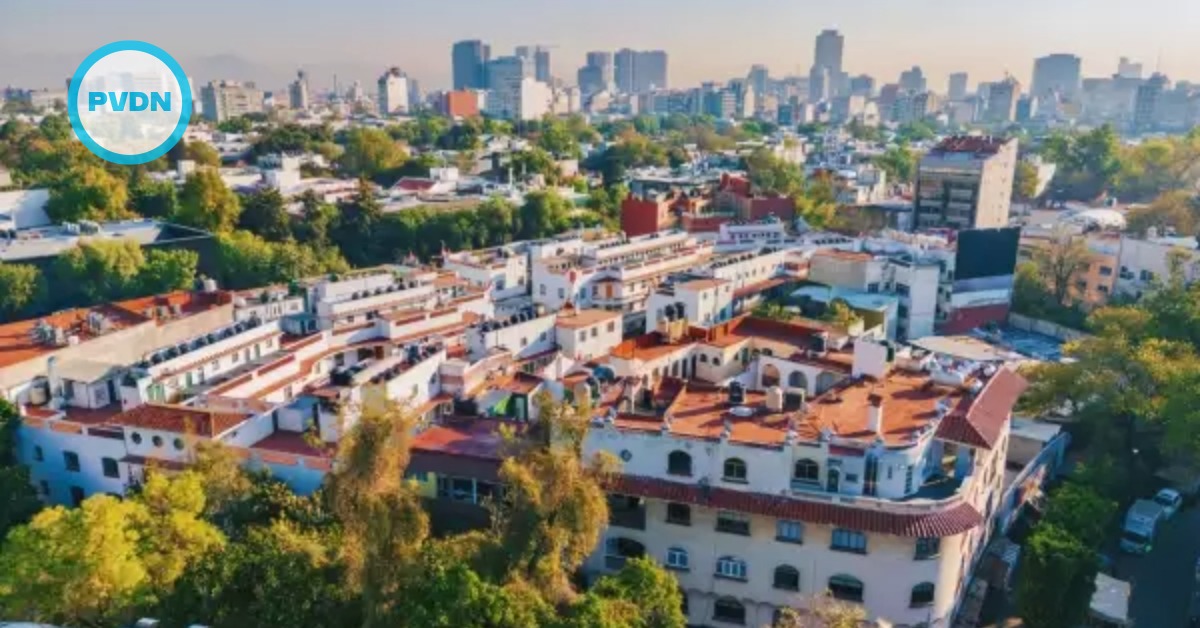
What do these lucky dozen locales have in common? They are established colonias in central Mexico City or in select pockets of the western suburbs. All of them boast strong transportation links and plenty of urban amenities. These neighborhoods range from trendy inner-city areas like Roma and Juárez. They also include middle-class hubs such as Portales, Narvarte, and Del Valle in the center-south. Upscale enclaves like Nuevo Polanco in the west round out the group. Even a neighborhood outside the capital proper made the list. Bosque Real, a luxury enclave in neighboring Estado de México, was included thanks to a large high-end project.
In these places, developers find both demand and high profit potential. Proximity to workplaces, public transit, shopping, and dining makes these colonias attractive for buyers who can afford the steep prices. The new construction is almost entirely “vivienda residencial” – mid- to high-end apartments rather than entry-level homes. As a result, prices in these developments are well above the city’s average. For instance, in Nuevo Polanco, the average price per square meter exceeds 84,000 pesos. That means many units cost over 16 million pesos (nearly US $900,000). By comparison, projects in colonias like Roma or Portales often sell for around 3 million pesos per apartment (roughly $170,000). Yet even that price is beyond what most local families can comfortably pay.
Little New Housing in Outlying Areas
Meanwhile, large swaths of the metropolis have seen little to no new home construction. Many peripheral districts and working-class colonias on the city’s edges had virtually zero new apartments built last year. For example, a few far-flung neighborhoods did register minor developments. Tecamachalco and Morelos, on the outskirts, each saw just over ten new units in 2025. A couple of others, like Guerrero and Tetelpan, counted fewer than ten. Outside those dozen hot areas, the new housing pipeline in 2025 was essentially dry.
This geographic imbalance is deepening Mexico City’s housing dilemma. Affordable housing demand is strongest in the outskirts and suburbs. Many families have been relocating to those areas in search of lower rents or home prices. But those are precisely the areas developers largely ignored in recent years, as construction concentrated in higher-cost zones. The result is a mismatch between where housing is going up and where it’s most needed. Lower-income households often end up moving even farther out. They trade longer commutes and weaker services for a chance at housing they can afford. This happens because few new affordable units are being added near where the jobs are.
Calls for a More Balanced Growth
City authorities are aware of this skewed development pattern. In mid-2025, Mexico City’s government launched a program to create thousands of affordable housing units. The initiative was meant as a countermeasure to gentrification and displacement. The plan aims to build 20,000 new rental homes over six years. It targets residents who might otherwise be priced out of central areas. It’s an ambitious public investment, yet still modest relative to the scale of demand. City officials estimate that over 50,000 families in the capital search for a home to rent each year. Many of them are forced to either pay more than they can afford or move far from their workplaces.
For now, however, construction cranes continue to orbit the same desirable neighborhoods. Housing experts note that without incentives to encourage development in underserved areas, Mexico City’s housing gap will only widen. A broader distribution of new projects could help balance the market. That would include building more mid-priced homes that middle-class families can afford. Otherwise, the city’s skyline will keep rising only in select corners. That would leave much of the metropolis behind in the housing boom.