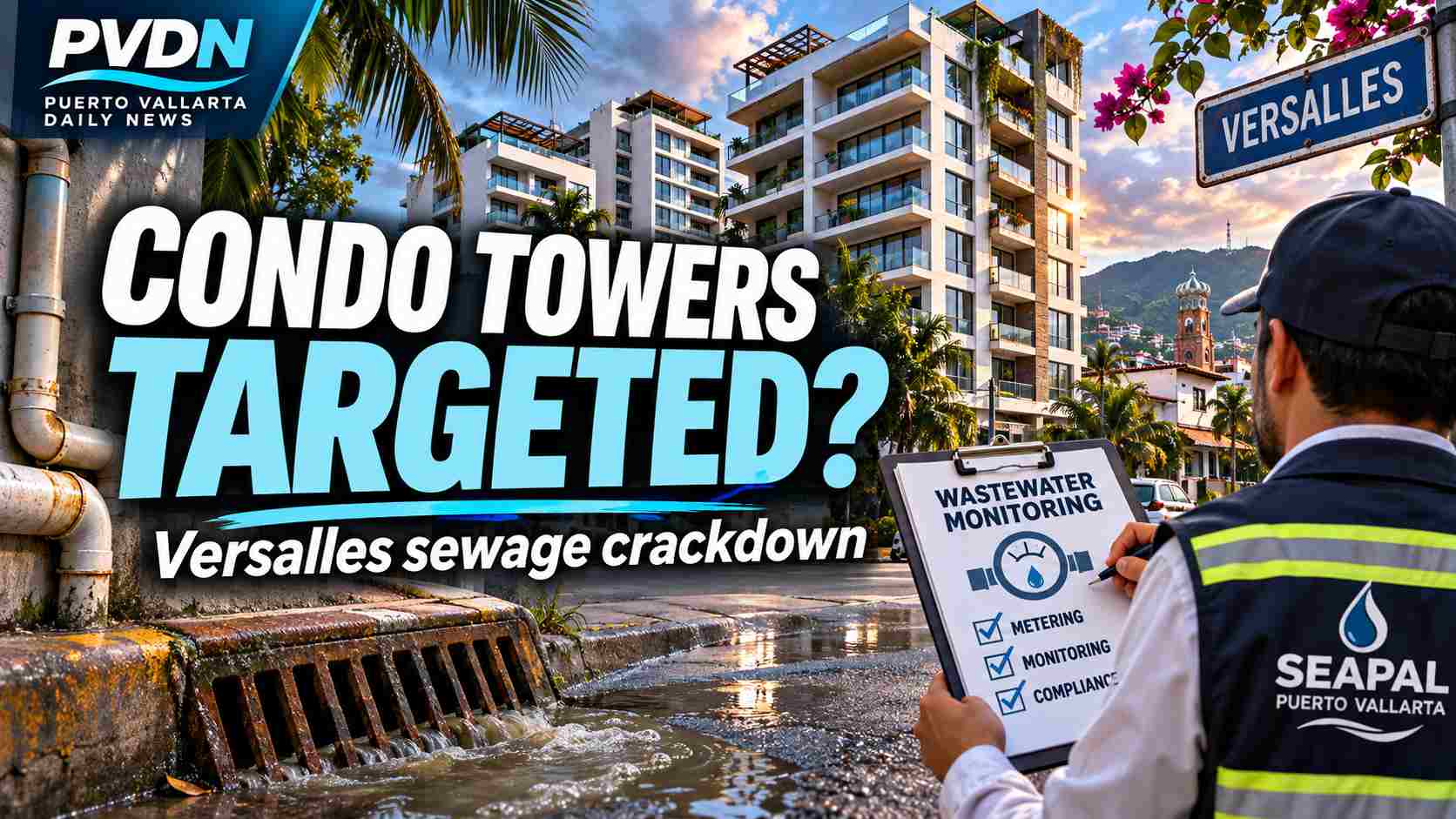
Puerto Vallarta’s SEAPAL plans to meter condo wastewater in Versalles, as officials weigh charges for rainwater and groundwater in sewers.
Puerto Vallarta, Jalisco, November 18, 2026 — Condominium buildings in Puerto Vallarta’s Versalles neighborhood could soon face closer scrutiny over what they’re sending into the city’s sewer system. SEAPAL wants to install wastewater meters at residential towers to identify excessive discharges, particularly rainwater and groundwater that officials say are contributing to recurring sewage overflows.
The proposal could eventually mean additional charges for condominium developments that send water into a drainage network already struggling to handle its normal workload. Repeat violations could also bring penalties and bills for repairs.
But the meters haven’t been installed, and the proposed enforcement measures still need to be worked out.
SEAPAL Director General Carlos Alberto Ruiz Hernández outlined the proposed measures in statements reported November 17. The plan involves coordination with municipal departments responsible for environmental protection, urban development, public works and inspections.
Ruiz said the meters would measure how much wastewater buildings discharge into the public system. Officials would use that information, along with inspections, to identify properties sending rainwater or groundwater into pipes intended primarily for sewage.
The concern isn’t ordinary wastewater coming from toilets, sinks or showers. It’s the additional water that can overwhelm a sewer line, particularly during heavy rainfall.
Some buildings pump groundwater from underground construction areas or drainage systems to keep lower levels dry. Others may have roof drains, stormwater outlets or other connections that direct rainfall into sanitary sewers.
When that extra water enters an already overloaded system, it takes up capacity needed to carry sewage away from homes and businesses. During periods of heavy rain, the result can be wastewater backing up and spilling into streets.
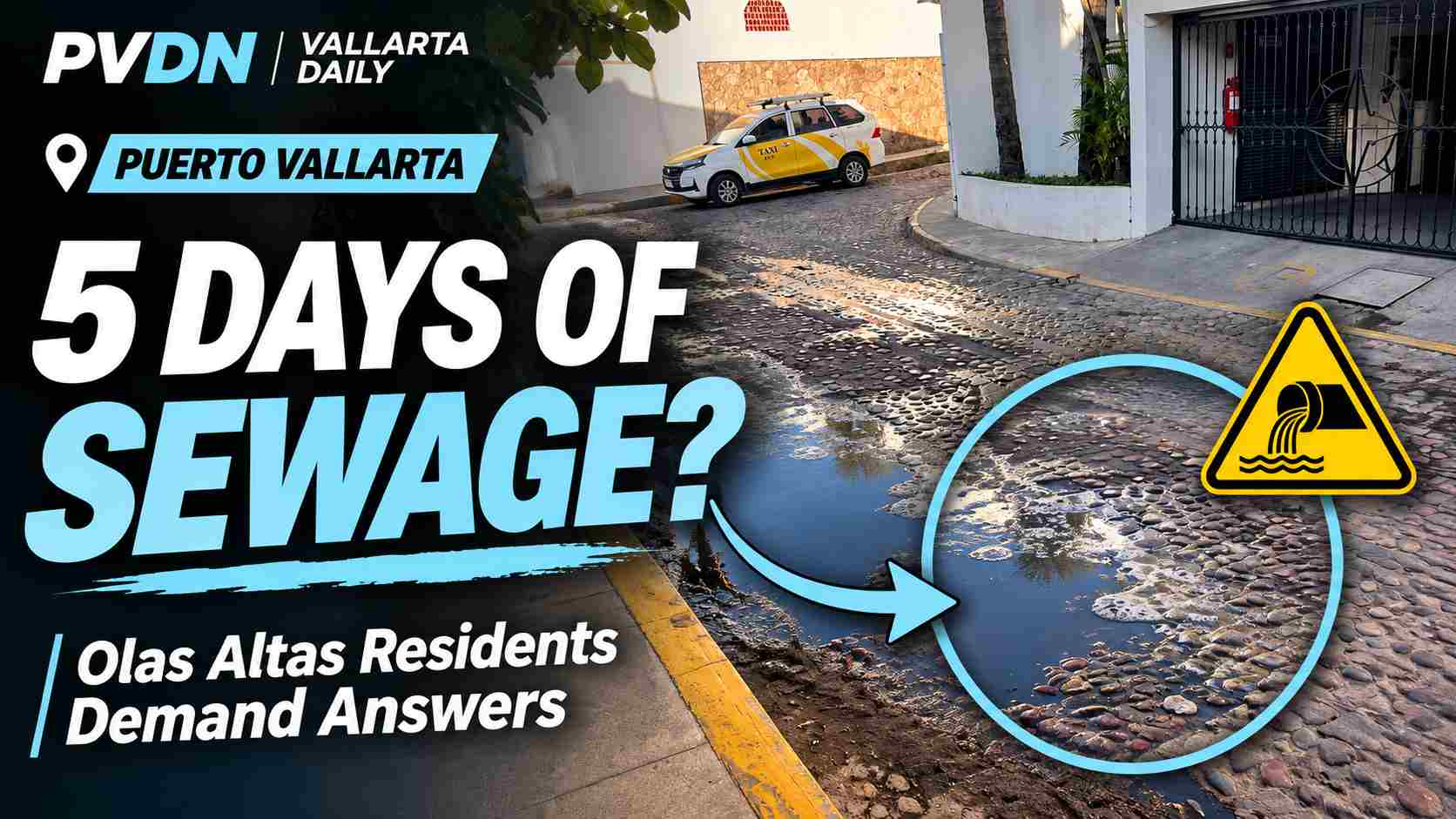
That’s what SEAPAL says has been happening in parts of Versalles and neighboring Díaz Ordaz.
Which condominium buildings are being targeted?
One of the biggest unanswered questions is which properties SEAPAL intends to inspect.
The November 17 announcement did not identify specific condominium towers, provide a list of suspected violators or say how many buildings would receive meters.
That’s a significant gap, particularly in a neighborhood where condominium construction has expanded considerably in recent years.
In an earlier September 30 interview, Ruiz said SEAPAL had discovered some newer developments pumping groundwater directly into the sewer network during construction. He also pointed to buildings that had received permits and technical approvals under previous municipal administrations.
Those statements suggest officials believe they have already identified some problematic connections. However, the reports reviewed for this article do not establish which properties were involved, whether formal violations were recorded or whether any developers have been sanctioned.
The distinction matters. A building’s size or age doesn’t establish that its drainage connections are improper, and not every discharge into the sanitary system is a violation.
SEAPAL’s proposed metering program would need to distinguish legitimate wastewater use from water entering through unauthorized connections.
A meter can show how much liquid moves through a pipe, but it cannot, by itself, establish whether that water came from ordinary household use, rainfall or groundwater pumping. Inspections of a property’s drainage connections would still be needed.
How much could condominium owners be charged?
Ruiz said the idea is to make buildings financially responsible for excess water discharged into the municipal sewer network.
He warned that developments continuing to send stormwater or groundwater into the system could face substantial charges, particularly following heavy rains.
SEAPAL is also considering charging repeat offenders for the cost of sending crews to repair damage or deal with preventable blockages and overflows.
Under the proposal, those costs could fall on the building’s management or condominium association.
No proposed rate schedule was provided in the November 17 report. Officials also haven’t explained whether charges would be assessed against the condominium association, individual owners, developers or another legally responsible party.
Nor have they announced how wastewater volumes would be calculated for billing, what equipment would be required or whether property owners could challenge a measurement.
Ruiz acknowledged that sanctions must still be defined through regulations and agreements among the participating municipal departments.
Municipal inspectors already have responsibilities for enforcing local regulations, but that doesn’t mean the proposed new billing system has been approved.
The distinction is important for condo owners who may be concerned about additional building expenses. SEAPAL has described what it wants to do, not a new fee that residents are already required to pay.
The sewer problems go well beyond condominium buildings
The focus on condominium discharges comes after months of sewage complaints from residents and businesses in Versalles and Díaz Ordaz.
In October, SEAPAL met with neighborhood representatives and acknowledged that the problem has persisted for years.
The agency has identified several contributing factors, including accumulated debris inside sewer pipes, grease discharged by restaurants, groundwater entering the system and insufficient pumping capacity during periods of heavy rainfall.
Versalles sits in a low-lying section of the drainage network, which makes the neighborhood particularly vulnerable when sewage cannot move through the system quickly enough.
The problems became especially difficult during the 2026 rainy season.
In early October, SEAPAL reported damage to two pumps at the Norte I wastewater treatment facility. The agency installed additional pumping equipment and sent crews to clean affected streets while working to lower wastewater levels in the drainage network.
The sewer itself also needs considerable attention.
As Vallarta Daily reported November 7, SEAPAL has proposed cleaning approximately 6,200 meters, or 6.2 kilometers, of the Colector Centro-Norte.
The project concentrates on sections along Avenida México, where SEAPAL Operations Director Alejandro Padilla said some pipes may be as much as 80% obstructed by accumulated material.
Crews plan to use cameras to inspect the pipes and mechanical equipment to clear the blockages.
SEAPAL has also discussed increasing pumping capacity at Norte I and maintaining backup equipment to prevent future failures from leaving the system unable to handle wastewater volumes.
These are separate parts of the same problem. Metering condominium wastewater could help control additional discharges, but it won’t clear years of accumulated material from existing sewer lines or restore damaged pumping equipment.
Restaurants and developers will also face inspections
Condominium buildings aren’t the only properties drawing attention.
Ruiz said SEAPAL wants restaurants to operate their grease traps properly. Those devices keep fats, oils and food waste from entering the sewer system, where they can accumulate and restrict water flow.
Officials have identified restaurant grease as another contributor to blockages in the Versalles drainage network.
The proposed inspection effort would also involve municipal environmental authorities.
According to the November 17 report, staff from the Dirección Municipal de Sostenibilidad Ambiental would accompany inspections to identify improper stormwater discharges.
Properties found with irregular connections could receive formal warnings, while officials would also review compliance with their Manifestaciones de Impacto Ambiental, or environmental impact assessments.
These assessments establish environmental conditions and obligations associated with developments. Reviewing them could help officials determine whether buildings are operating according to their approved plans.
It’s not yet clear how many inspections SEAPAL intends to carry out, which properties will be examined first or when formal notices could begin.
The question of enforcement has already surfaced beyond SEAPAL. Earlier this month, Vallarta Daily reported that Conagua was directing complaints about suspected groundwater discharges to its reporting system, while questions remained about which authorities would investigate individual properties and enforce applicable requirements.
SEAPAL has promised results before the next rainy season
During a November 6 meeting with neighborhood representatives, Mayor Luis Ernesto Munguía González committed to addressing the sewage overflow problem before the next rainy season.
The mayor backed SEAPAL’s proposed sewer-cleaning work, which officials said would be funded through the utility’s own resources.
The meeting followed earlier discussions with residents of Versalles and Díaz Ordaz who had pressed authorities for action on recurring wastewater spills.
SEAPAL expected the sewer rehabilitation project could begin within approximately 15 days of that meeting and require around seven months to complete. A firm starting date had not been established at the time.
The proposed condominium meters add another part to that work, but with considerably less detail about how implementation would proceed.
There is still no publicly announced installation calendar in the latest report, no stated number of meters to be purchased and no approved system of additional charges.
For condominium associations in Versalles, the next development will be the inspection process itself. SEAPAL plans to examine drainage connections and review environmental compliance, but it has yet to say which buildings will be first or when those inspections will begin.