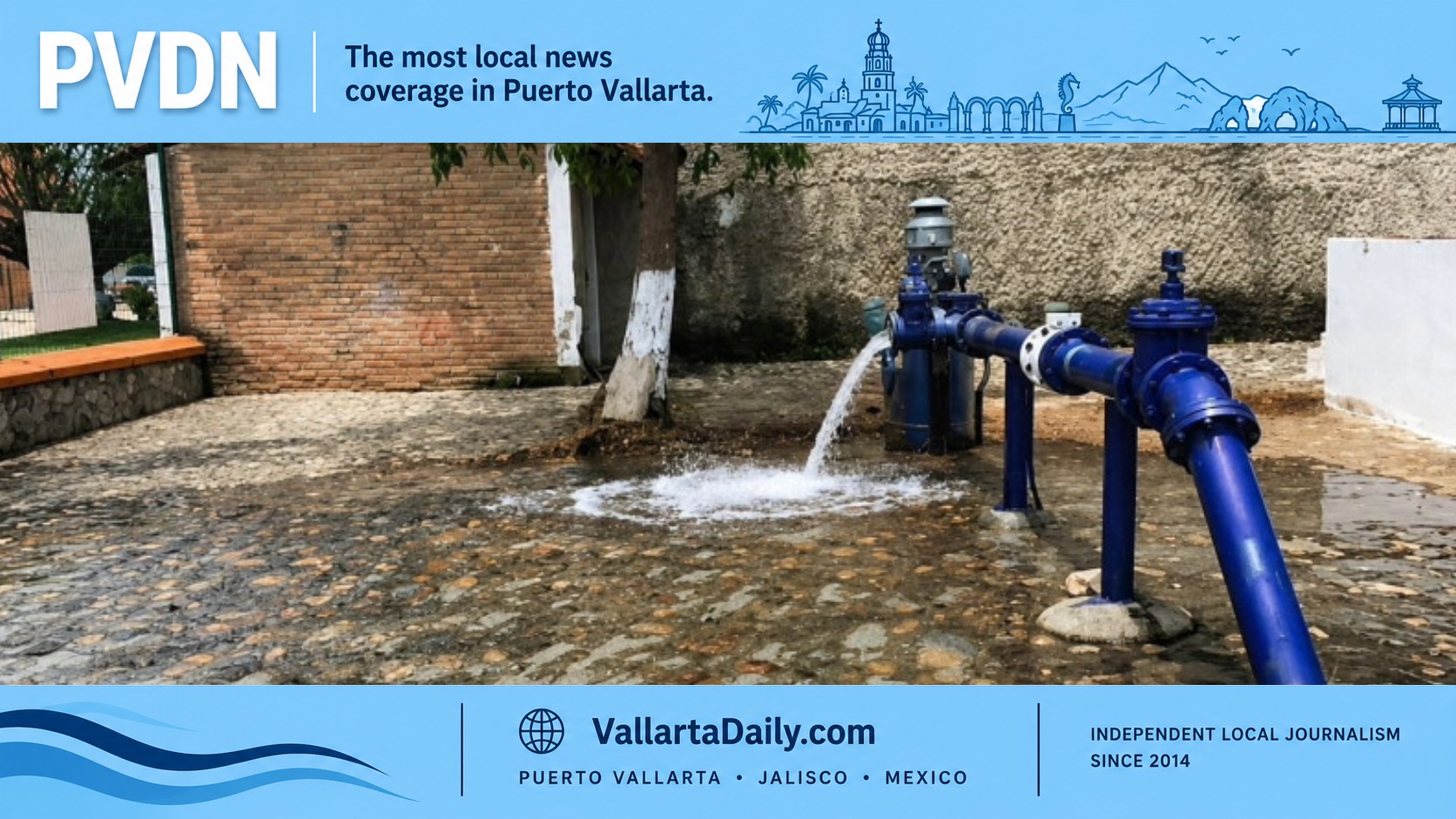

Puerto Vallarta, Jalisco, October 22, 2026 — SEAPAL pledged pumping upgrades and sewer clearing to tackle recurring sewage spills in Versalles in an October 21 announcement, without identifying secured funding.
Director Carlos Ruiz committed to resolving the problem before the current administration ends on September 30, 2027. He also said recent storm damage to pumping equipment had been addressed and that spills were no longer occurring when it was dry.
For residents and businesses, the real question is: Will the proposed work keep sewage off their streets when it rains?
Funding remains a substantial obstacle. The proposed solution is 50 million pesos, and SEAPAL says it does not currently have those resources. Ruiz committed to seeking the money.
The utility also asked regional health chief Jaime Álvarez Zayas to help pursue state funding.
The funding shortage affecting Versalles and neighboring areas was already public in September. Ruiz priced a full rehabilitation of the collector at 650 million pesos.
“Right now, we don’t have the funds,” he said, translated from Spanish.
The published accounts do not explain how the latest 50-million-peso proposal relates to that earlier estimate. They also provide no confirmed funding package or construction timetable for individual stages, leaving residents without intermediate dates against which to measure the commitment.
The announcement identifies two principal interventions: strengthening pumping at the Norte I wastewater treatment plant in Las Mojoneras and clearing critical sections of the Centro–Norte collector. SEAPAL reported obstructions affecting up to 40% of the collector’s internal diameter.
A collector is a main sewer that receives wastewater from smaller neighborhood lines. Clearing an obstruction can help wastewater move through it, while pumping improvements help move that flow onward toward treatment.
But SEAPAL’s explanation also points to water entering the system that those pipes were not designed to carry.
Operations director Alejandro Padilla Viorato attributed saturation partly to rainwater and groundwater entering sanitary sewers. He said Versalles’ position in a low section of the collector aggravates the problem and called for municipal coordination to review irregular discharges from properties and developments.
Under that diagnosis, lasting improvement depends on both restoring the sewer’s ability to move wastewater and reducing the additional water entering it during wet weather.
SEAPAL has already reported some operational improvements. In its October 7 update on pumping repairs, the utility said installing equipment at Norte I had lowered sewer levels and reduced overflow risks, particularly in Versalles. Crews also washed affected streets and surfaces and applied sodium hypochlorite.
Those measures address immediate conditions. Establishing whether the new commitments deliver sustained improvement will require records showing which collector sections were cleared, how much pumping capacity was restored, and whether spills become less frequent or shorter during rainfall.
The agreed follow-up meetings with residents provide a place to review those results alongside spending and construction progress. A timetable tied to specific works would also make it possible to identify delays before the administration’s final deadline.
At the assembly, Plaza Genovesa tenant América Jiménez reported substantial financial losses from prolonged flooding, according to Tribuna. For affected businesses, a measurable improvement would mean fewer days with wastewater obstructing their entrances.