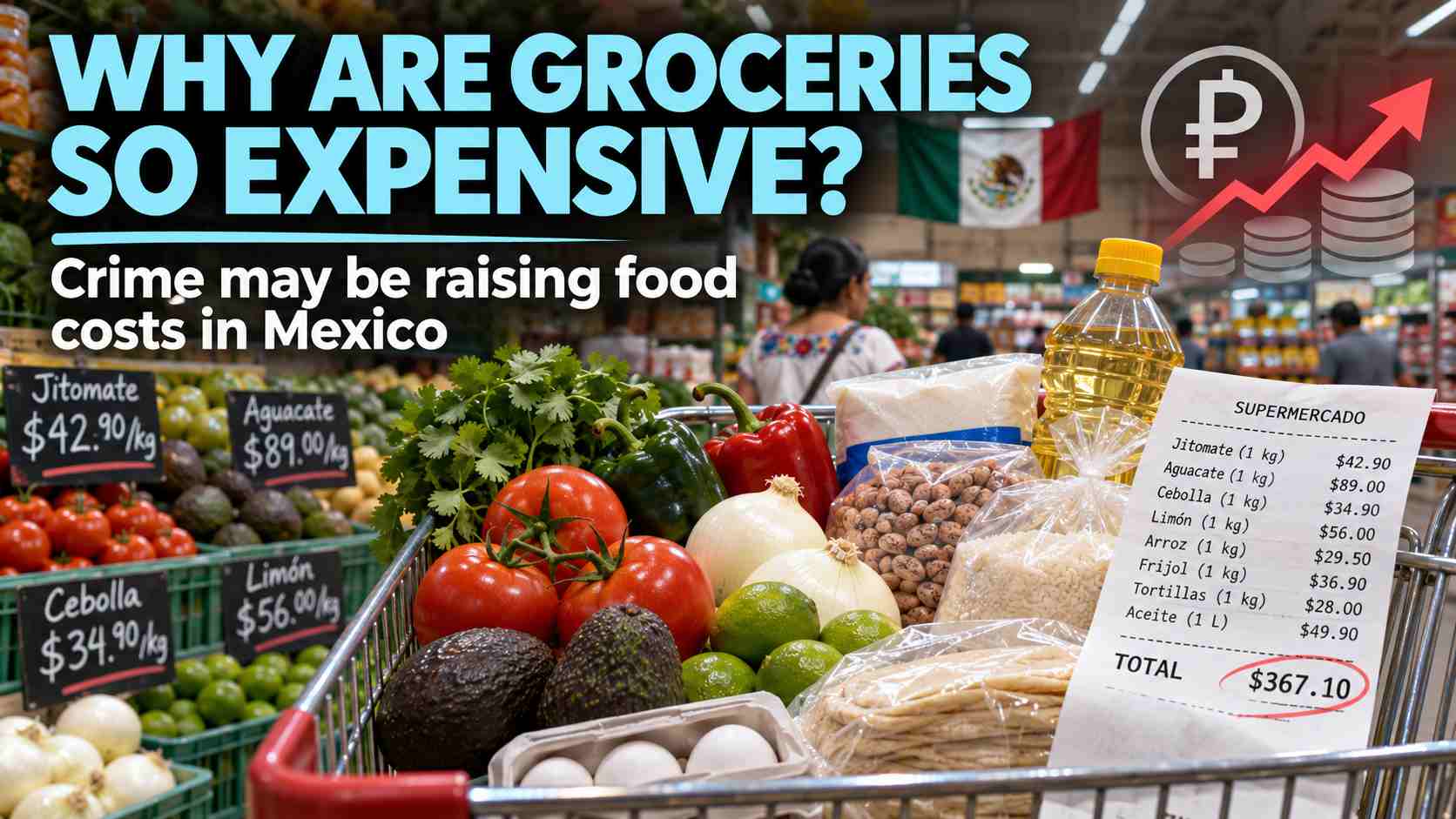
Mexico’s agricultural council warns that extortion and insecurity could be making food 10% to 20% more expensive in some parts of the country.
Guadalajara, Jalisco, November 28, 2026 – The next time you walk out of a Mexican supermarket wondering how a few bags of groceries ended up costing so much, consider one expense that never appears on your receipt: organized crime.
Mexico’s National Agricultural Council (CNA) estimates that insecurity, particularly criminal extortion, is making food between 10% and 20% more expensive for consumers in some parts of the country.
Speaking Friday during the Global Agri-Food Forum in Guadalajara, CNA President Jorge Esteve warned that criminal activity continues to put financial pressure on farmers, food producers and transportation companies, with some of those additional costs ultimately reaching consumers.
The impact varies depending on the region and the type of agricultural activity, but the warning highlights a side of Mexico’s security crisis that receives considerably less attention than cartel arrests, highway blockades and violent confrontations.
Even people who have never directly encountered organized crime may be feeling its economic consequences every time they go grocery shopping.
From the farm to your shopping cart
Before a tomato reaches a supermarket shelf in Puerto Vallarta, it may have passed through the hands of farmers, agricultural workers, transportation companies, wholesalers and distributors.
Every business involved in that journey has expenses. There are wages to pay, fuel to purchase, equipment to maintain and electricity bills to cover.
In parts of Mexico, there is also the cost of doing business under the threat of organized crime.
Esteve explained that agricultural producers are being forced to account for extortion payments when calculating their operating expenses.
The financial burden extends beyond the money demanded by criminals. Businesses may also face higher insurance premiums, additional security expenses, stolen merchandise and disruptions to deliveries.
When those expenses increase, businesses have limited options. They can absorb the losses, reduce their operations or attempt to recover some of the additional costs through higher prices.
For consumers, the result can be a more expensive trip to the grocery store, even when the food itself hasn’t become any more expensive to grow.
A crime that rarely makes it into official statistics
Extortion, commonly referred to in Mexico as cobro de piso when criminals demand recurring payments from businesses, remains one of the country’s most persistent security challenges.
The latest National Business Victimization Survey from INEGI, released earlier this month, identified extortion as the most frequently committed crime against Mexican businesses in 2025.
The survey estimated that approximately 1.4 million businesses experienced some form of crime during the year, representing 25.9% of the economic establishments covered by the survey.
Insecurity and crime cost businesses an estimated 115.1 billion pesos, including 58.9 billion pesos spent on preventive measures, expressed in inflation-adjusted values.
Perhaps the most troubling figure is that 91.8% of crimes against businesses either went unreported or did not result in authorities opening an investigation.
That figure covers all crimes against businesses, not just extortion, but it illustrates how much criminal activity can remain outside official police records.
As Vallarta Daily reported earlier this week, insecurity is also influencing investment decisions, forcing companies to reconsider expansion plans and dedicate more resources to protecting their existing operations.
Money that could otherwise be spent hiring employees, improving equipment or increasing production is instead being spent on security.
Why groceries are getting more expensive
The agricultural council’s warning comes at a time when Mexican households are already dealing with noticeable increases in food prices.
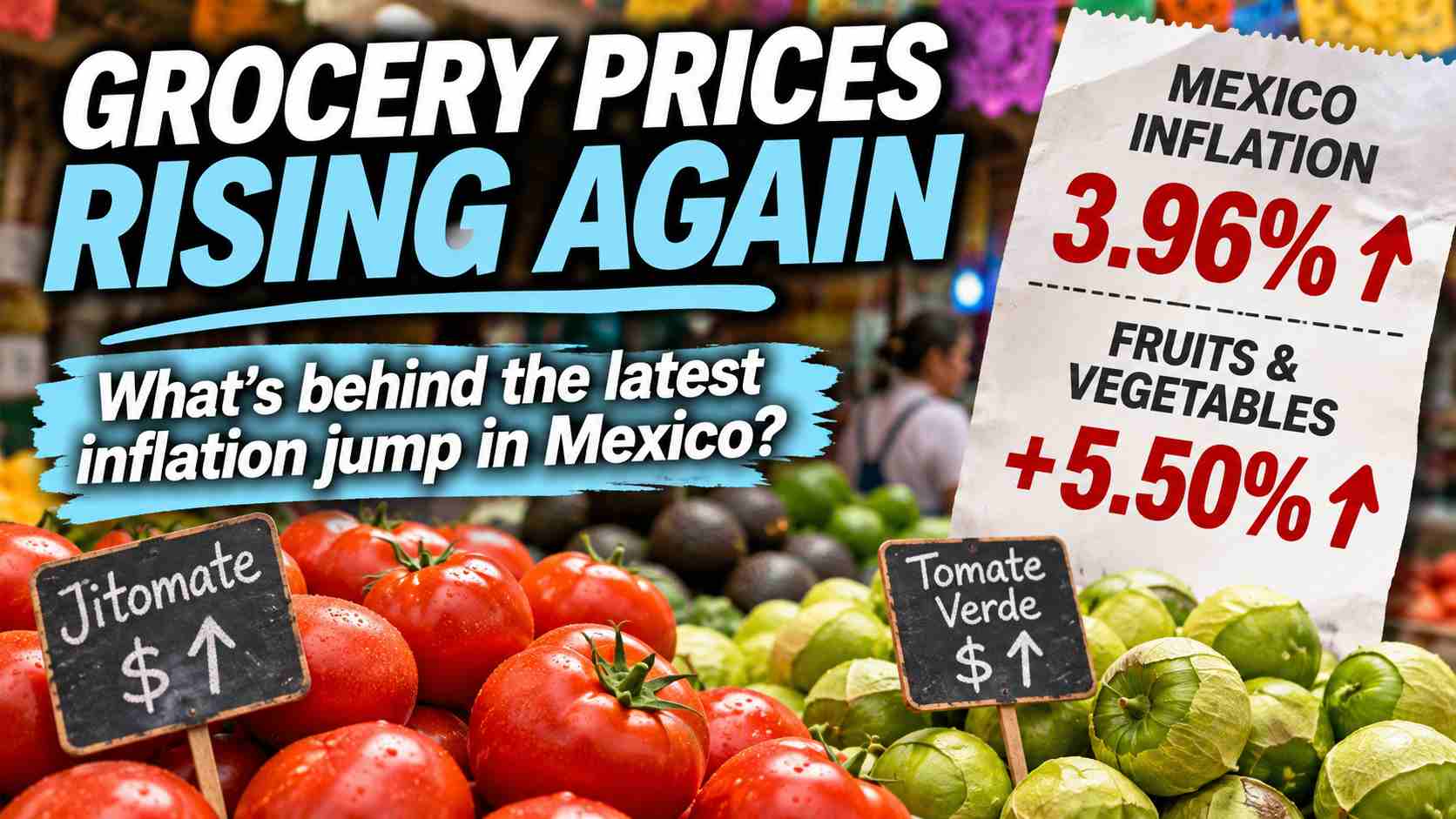
As we reported Tuesday, Mexico’s annual inflation increased to 3.96% during the first half of November.
The official inflation report from INEGI showed that fruit and vegetable prices increased by 5.5% in just two weeks and were 20.05% higher than during the same period last year.
It is important, however, not to confuse those inflation figures with the agricultural council’s estimate of the cost of insecurity.
Weather conditions, seasonal production, labor expenses, fuel prices, agricultural diseases and changes in supply and demand all influence what consumers pay for food.
The CNA’s estimate does not establish that organized crime is responsible for a 20% increase in grocery prices nationwide. Nor has the council provided a detailed public methodology that would allow consumers to calculate how much of their individual grocery bill is attributable to criminal activity.
What the warning does suggest is that insecurity creates an additional financial burden on a food supply chain already dealing with numerous economic pressures.
Mexico’s efforts to keep food affordable
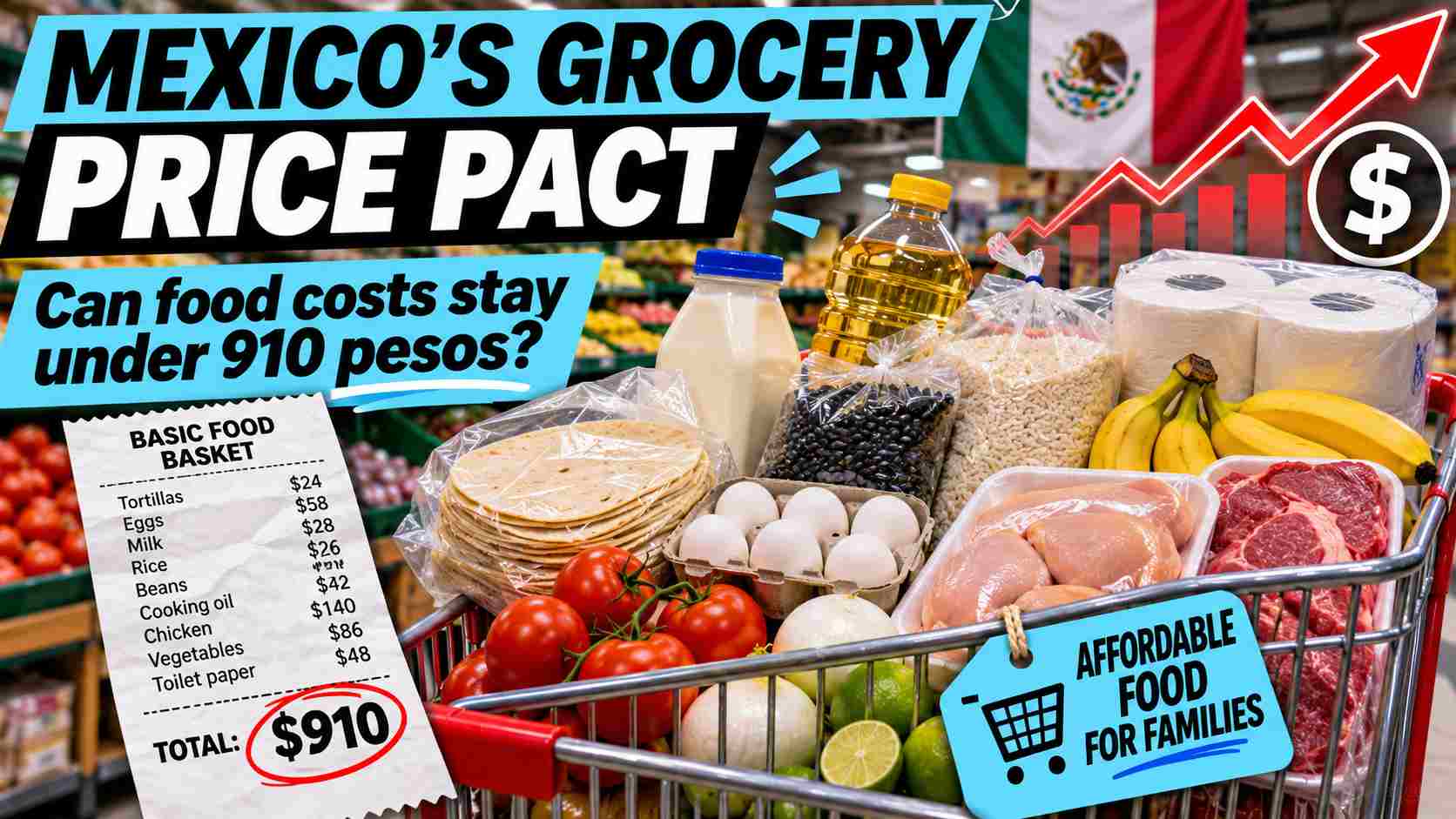
President Claudia Sheinbaum’s administration is preparing to renew Mexico’s grocery price agreement, known as PACIC, which seeks to keep a basket of 24 essential products affordable through voluntary commitments from producers and participating retailers.
The president acknowledged during her November 25 morning press conference that seasonal increases in agricultural prices remain a concern for her administration.
But agreements with supermarkets and food producers can only address part of the problem.
A retailer may agree to maintain certain prices, but that does not eliminate the financial pressure experienced by a farmer facing extortion or a transportation company dealing with stolen shipments.
Eventually, somebody in the supply chain has to absorb those expenses.
Reducing the cost of insecurity could provide some relief to both businesses and consumers, without requiring producers or retailers to continually sacrifice their profit margins.
What is Mexico doing about extortion?
Today marks exactly one year since Mexico published its General Law on the Prevention, Investigation and Punishment of Extortion, establishing a nationwide legal framework for addressing the crime.
The federal government has also implemented a National Strategy Against Extortion, which includes specialized investigative units, victim assistance and the nationwide 089 anonymous reporting telephone line.
During the government’s November 10 security briefing, authorities reported that 2,395 people had been arrested in connection with extortion between July 6, 2025, and October 30, 2026.
Sheinbaum also acknowledged that extortion remains a significant concern and said she has personally met with avocado and lime producers in Michoacán who face the problem.
While the government points to progress in investigations and arrests, the agricultural council’s latest warning indicates that producers continue to experience the financial consequences.
What it means for people living in Puerto Vallarta
Puerto Vallarta doesn’t need to experience widespread agricultural extortion within its own municipal boundaries for residents to be affected by it.
Much of the food sold in local supermarkets, neighborhood markets and restaurants travels from agricultural regions elsewhere in Mexico. When production and transportation become more expensive in those regions, the financial impact can travel right along with the merchandise.
That matters particularly to Mexican families struggling to stretch their wages, retirees living on fixed incomes and small restaurant owners trying to keep their menus affordable.
Mexico’s fight against organized crime is often measured in arrests, confiscated assets and reductions in violent crime.
For many ordinary households, another meaningful measure of success may eventually be found somewhere considerably less dramatic: the total at the supermarket checkout.