Families in the city’s east will start the 2025–2026 year with something rare in public education: a single campus that brings pre-K, primary, and secondary together, with wide corridors, shaded classrooms, and safe play areas. Officials say the goal is simple—public schools that match or beat private standards. Enrollment pressure and a fast-growing urban fringe made the project urgent. The question now is whether this model scales across the state—and how fast.
Aguascalientes unveils new education complex in Villas
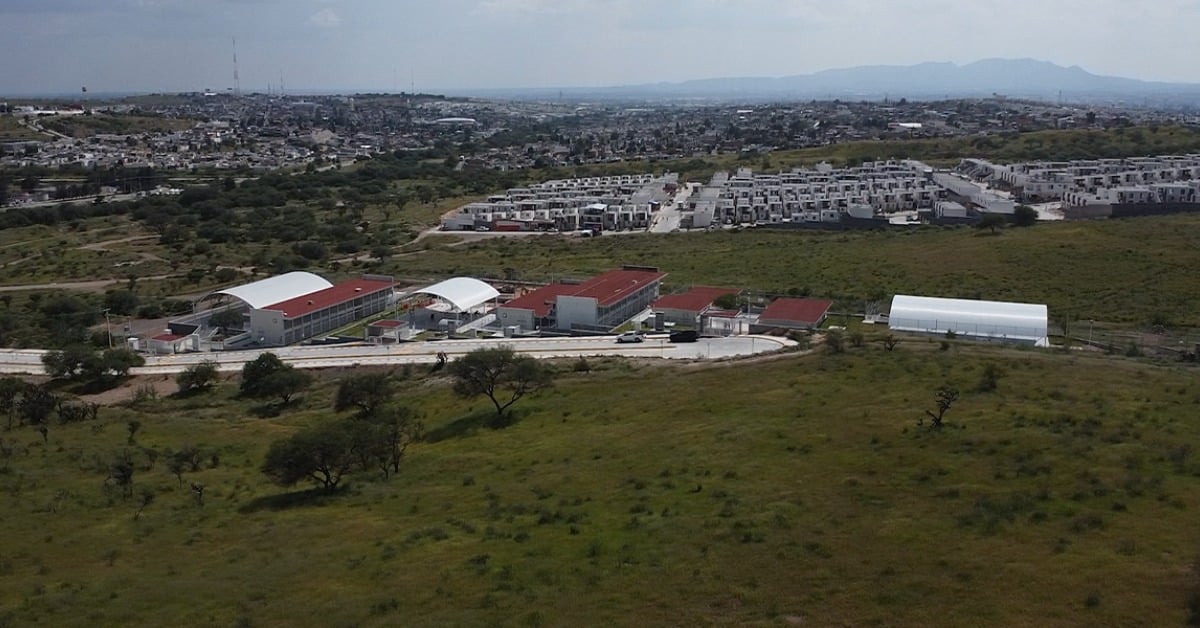
On the northeast edge of the capital, in Villas de Nuestra Señora de la Asunción (Villas), the municipality presented a new public education complex that opens for the 2025–2026 school cycle. The site co-locates pre-school, primary, and secondary—and officials say a high-school module could follow—aimed at easing long commutes and classroom crowding for thousands of families.
The campus doesn’t look like a typical public school. Visitors found wide pedestrian corridors, bike paths, sturdy perimeters, and playgrounds that resemble private parks. Classrooms include metal shade structures (“velarias”) to regulate temperature—key in hot months when heat undermines learning. The pitch from the state is explicit: public campuses should equal or exceed private ones.
A model years in the making
The new complex didn’t appear overnight. In 2023, the governor laid the first stone for a multi-level “complejo escolar” in the city’s east, signaling a shift toward clustered public campuses that share services and security. That early brief matches what opened now in Villas: pre-K, primary, and secondary in one place.
The timing aligns with the school calendar. Aguascalientes closes out the 2024–2025 year with more than 400,000 students and begins the 2025–2026 cycle on Monday, September 1, 2025. The local education institute (IEA) says the focus during the break was planning, teacher training, and infrastructure. This context helps explain the push to complete the Villas campus before the new term.
Capacity, coverage, and the bigger push
The IEA projects more than 300,000 basic-education students returning statewide and has flagged new capacity for this cycle: six new basic-education schools, plus a new CONALEP in Villa Juárez (Asientos) and a new Intercultural University campus in San Francisco de los Romo. State officials estimate more than 500 million pesos in investment tied to coverage and infrastructure for 2025–2026.
Federal investments complement the state program. The “La Escuela es Nuestra” initiative is channeling funds this year to hundreds of campuses across Aguascalientes, with bank cards delivered to school committees to decide local works—from classroom upgrades to basic services—totaling roughly 145 million pesos statewide. While separate from the Villas build, it illustrates the multi-stream flow of money into public school facilities.
What parents will see on day one
For families, the co-located model matters in everyday ways. One drop-off and pickup point across grade levels reduces time and cost. Shared security and maintenance can be stronger than at scattered sites. Wide walkways and bike paths make arrivals safer, especially for younger siblings accompanying older students. And shaded classrooms help keep teaching time on track when temperatures climb. These are the concrete details parents notice first.
The location choice also answers a geographic need. Villas and nearby sectors on the east have grown dense, with many households on tight budgets. A full-service public campus inside the neighborhood reduces transport spending and the risk of students dropping out because of distance. That was a recurring complaint in community meetings over the past decade and is a key metric officials will watch this term.
The Villas complex sets a bar for what public education can look like when design and policy align. The question now is scale. The state’s portfolio includes new basic-education plants and two post-basic nodes, but demand is uneven, and construction takes time. If the Villas model delivers higher attendance and smoother transitions between grades, it will be hard for planners to argue against more clusters in other growth corridors. For now, families in the east will measure success in small daily wins: a shorter walk, a cooler classroom, and siblings learning under one roof.