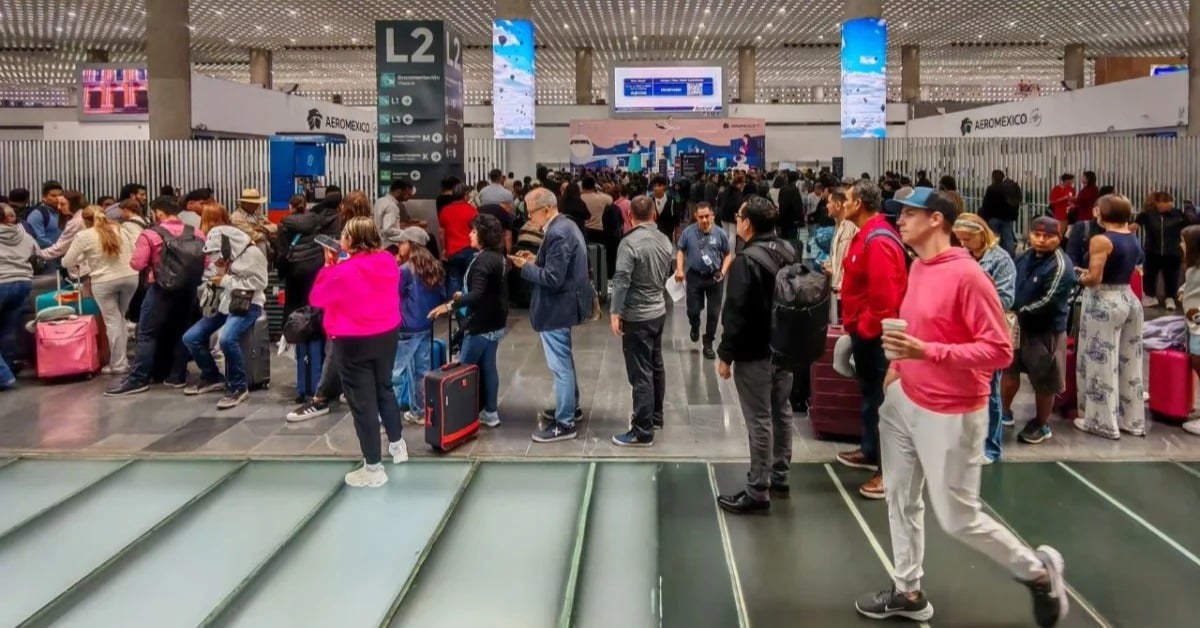
Mexico City’s main airport restored service at its refurbished Module 11 after a same-day operational hiccup, with officials saying passenger flow returned to normal by evening. The Terminal 1 area—home to international gates 29–36—features new flooring, lighting, signage, accessibility enhancements, and revamped circulation. It is one piece of an airport-wide makeover led by the Navy and slated to wrap before the 2026 World Cup. Recent weather-related suspensions showed how fragile the system can be; the Module 11 upgrade aims to add resilience.
AICM Module 11 reopens
AICM Module 11 reopens in Terminal 1 after a brief incident on Wednesday, August 27, 2025. By late afternoon, authorities said operations and passenger flow were normal. The reopening comes as the airport pushes a larger renovation program to prepare for heavy traffic through 2026.
The area serves as the international departures and arrivals terminal, anchoring a high-traffic corner of Terminal 1. Any stoppage here ripples quickly through check-in, security, and boarding. Getting it back online the same day was crucial for passengers and airlines trying to keep their late-summer schedules on track.
What changed inside Module 11
The remodeled space spans roughly 6,400 square meters. It covers the last-wait lounges for gates 29 to 36, their access corridors, the split-flow paths for arriving and departing passengers, and the staging vestibules for remote-stand buses. The upgrade added new granite flooring, baffle ceilings, LED lighting, updated HVAC, electrical and data systems, refreshed bathrooms—including a third set—and accessible floor guides and seating. New digital signage and FIDS screens aim to cut wayfinding friction.
These changes are not cosmetic. They are designed to smooth choke points that previously slowed boarding and arrivals during peak periods. AICM’s congestion problems are well-documented; better circulation in an international module is a practical solution that passengers will notice at the gate, rather than in press releases.
The bigger picture for AICM
President Claudia Sheinbaum personally put Module 11 into operation on August 27 as part of the first stage of renovations, scheduled to be completed before the 2026 FIFA World Cup. The airport says the program will deliver safer, more comfortable, and more efficient spaces across both terminals. The Navy-led airport authority is overseeing the works, a continuation of the federal push since 2022 to stabilize operations and rebuild basic infrastructure.
That broader context matters. This isn’t a one-off ribbon cutting. It’s a phased rehabilitation of Mexico’s busiest airport, designed to reduce routine strain and lift the day-to-day passenger experience.
Recent stress tests show why this matters
Just two weeks ago, severe overnight storms forced AICM to suspend takeoffs and landings twice within a 24-hour period, affecting more than 130 flights and nearly 20,000 travelers. The weather is beyond any airport’s control; how fast the system recovers is not. Upgrades in passenger flow areas—such as Module 11—help the airport clear backlogs more quickly after disruptions.
Those weather suspensions were a reminder that infrastructure fragility translates directly into real-world headaches: missed connections, long lines, and chaos with rebooking. Strengthening high-throughput spaces is the quickest way to reduce that pain for passengers.
What travelers can expect now
If you’re flying out of Terminal 1 on an international route, you may board through the newly renovated gates 29–36 as airlines transition their operations into the module. Early users included flights from Costa Rica and Dubai, with more carriers phasing in. Expect brighter lighting, clearer signage, extra seating, and cleaner separation between arriving and departing flows. That should translate into shorter queues at pinch points and smoother boarding calls.
Airport officials say the module is back to routine after the day’s mishap, and there were no broader operational impacts by evening. For passengers, this means standard check-in times and the usual security procedures at Terminal 1.