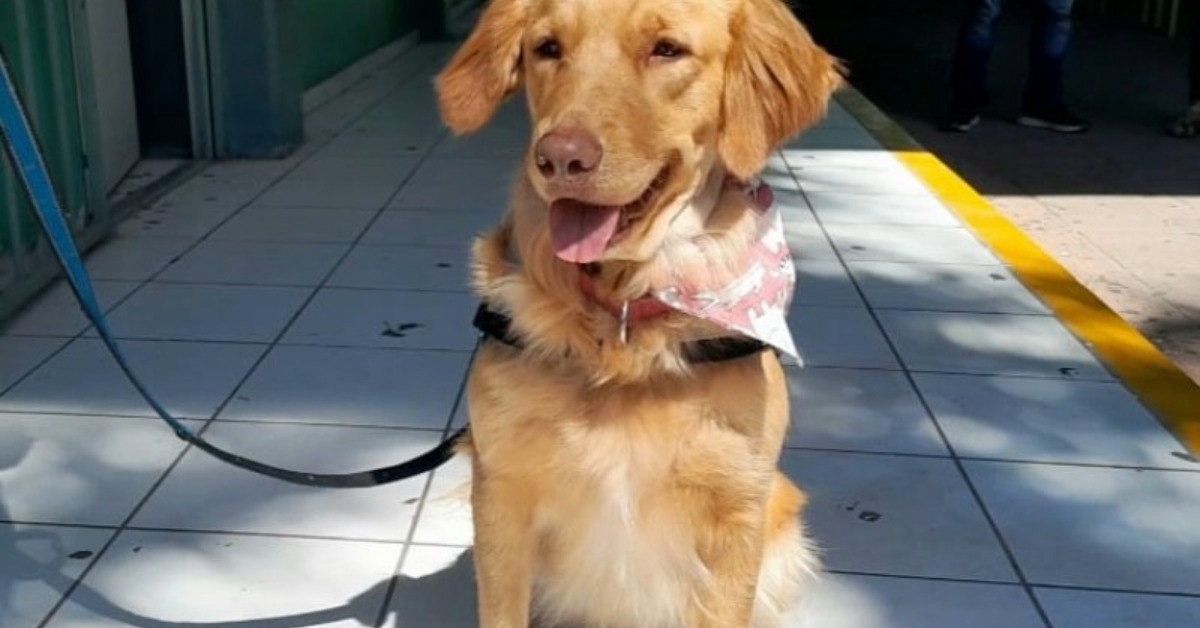
Los Mochis, Sinaloa – In a small, shaded room at the Psychological Care Center in “La Oruga” Park, a silence that usually carries the weight of unease softens the moment Bella enters. The golden retriever, trained as an emotional support therapist, doesn’t give advice or ask for anything. She simply is. In that being, children with anxiety, autism, and emotional barriers find a bridge to feeling safe, seen, and steady.
Through games, contact exercises, and walks, Bella helps break down walls. She makes eye contact without pressure, offers her fur as a calm anchor, and accepts every mood without judgment. “Dogs have that emotional sense, they are beings that do not judge, do not criticize, do not need to use verbal language like we do, and yet they express and receive all the emotions of the patients,” said Bella’s trainer, describing how her presence expands what traditional therapy can reach.
Bella’s work is part of an animal-assisted therapy program run for two years by the Pro Education Trust at the Psychological Care Center in La Oruga Park. She recently joined the center’s summer courses, working alongside psychologists to support group activities. Her presence shifted the tone of the sessions—making them more engaging, emotional, and meaningful for the children involved.
How animal-assisted therapy fills gaps in mental health care
Mexico faces a deep and growing need for effective mental health support among young people. Globally, about one in seven adolescents experiences a mental disorder, with anxiety and depression among the most common. Early intervention matters: a significant share of conditions begin before age 14, and untreated issues can cascade into educational setbacks, social exclusion, and diminished resilience.
In Mexico, the mental health system is fragmented, complicating access to consistent, adequate care for children and adolescents. Structural divides between subsystems—those tied to formal employment, those outside it, and private care—leave many without timely support, and integrated treatment pathways remain scarce.
Estimates for attention-deficit/hyperactivity disorder (ADHD) vary. National and international sources put baseline figures near 5% among children, yet some studies in Mexico report higher localized prevalence, reflecting diagnostic and sampling differences. Anxiety disorders also persist as a leading issue for youth, and their prevalence among adolescents remains high enough to warrant early, creative interventions.
Bella as the quiet catalyst in emotional recovery
Bella’s effect is simple, direct, and rooted in presence. “It helped me a lot with my emotions, I felt very confident,” one student said. “Bella arrived, and I felt peace and happiness.” Another child remembered playing: “Very good, I felt safe, I had a lot of fun, we did activities like jumping through hoops, we gave her toys and kibble.” Those moments, while small on their face, ripple outward—improving how children cooperate, express themselves, and trust both caregivers and their own feelings.
Therapists working with Bella observe outcomes that align with broader evidence for animal-assisted interventions: improved teamwork, increased self-esteem and responsibility, reduced anxiety and loneliness, easier emotional expression, and help in confronting specific fears. Her nonverbal steadiness becomes a tool that complements talk therapy, especially for children who struggle with conventional emotional vocabulary.
Building connection beyond the clinic
Bella’s impact isn’t confined to therapy sessions. Her gentle presence helps families engage differently, letting parents witness their child in a safe, playful dynamic that can soften frustration and open new lines of communication. The bond she models—nonjudgmental, patient, consistent—teaches empathy not as a lesson but as lived behavior.
Program coordinators say the ripple effects also show up in group dynamics. Children who enter guarded or withdrawn begin to mirror Bella’s calm, then take small social risks: asking a peer to join a game, speaking up in a group exercise, or sharing a thought with a therapist. Those shifts, made possible by a dog who “doesn’t judge, doesn’t interrupt, doesn’t demand,” accumulate into a broader sense of belonging.
Scaling empathy in a system under strain
As mental health demand grows among Mexican youth and formal services lag, programs like the one at La Oruga offer complementary pathways that boost existing psychological care. Animal-assisted therapy is not a replacement for clinical diagnosis or treatment, but it becomes a channel where emotional barriers soften enough for deeper work to take root. Bella, with her golden fur and calm gaze, is both symbol and agent of that possibility.
Her work in Los Mochis is a reminder that healing often requires more than words. In a country grappling with fragmented services and rising emotional needs among its youngest, a dog who simply shows up can teach what textbooks cannot: how to feel safe, how to trust, and how to connect—with others and with oneself.