Puerto Vallarta, Jalisco, August 13, 2026 — Puerto Vallarta’s tower boom is moving through a regulatory system that gives two different thresholds on the same seismic soil study. The municipal building regulation requires the study at seven stories, while the complementary seismic standard posted by the city sets the threshold at ten.
The difference is not proof that a current development is unsafe or out of compliance. It is a conflict inside the published rule set at a time when condominium and mixed-use buildings are reaching well beyond both thresholds.
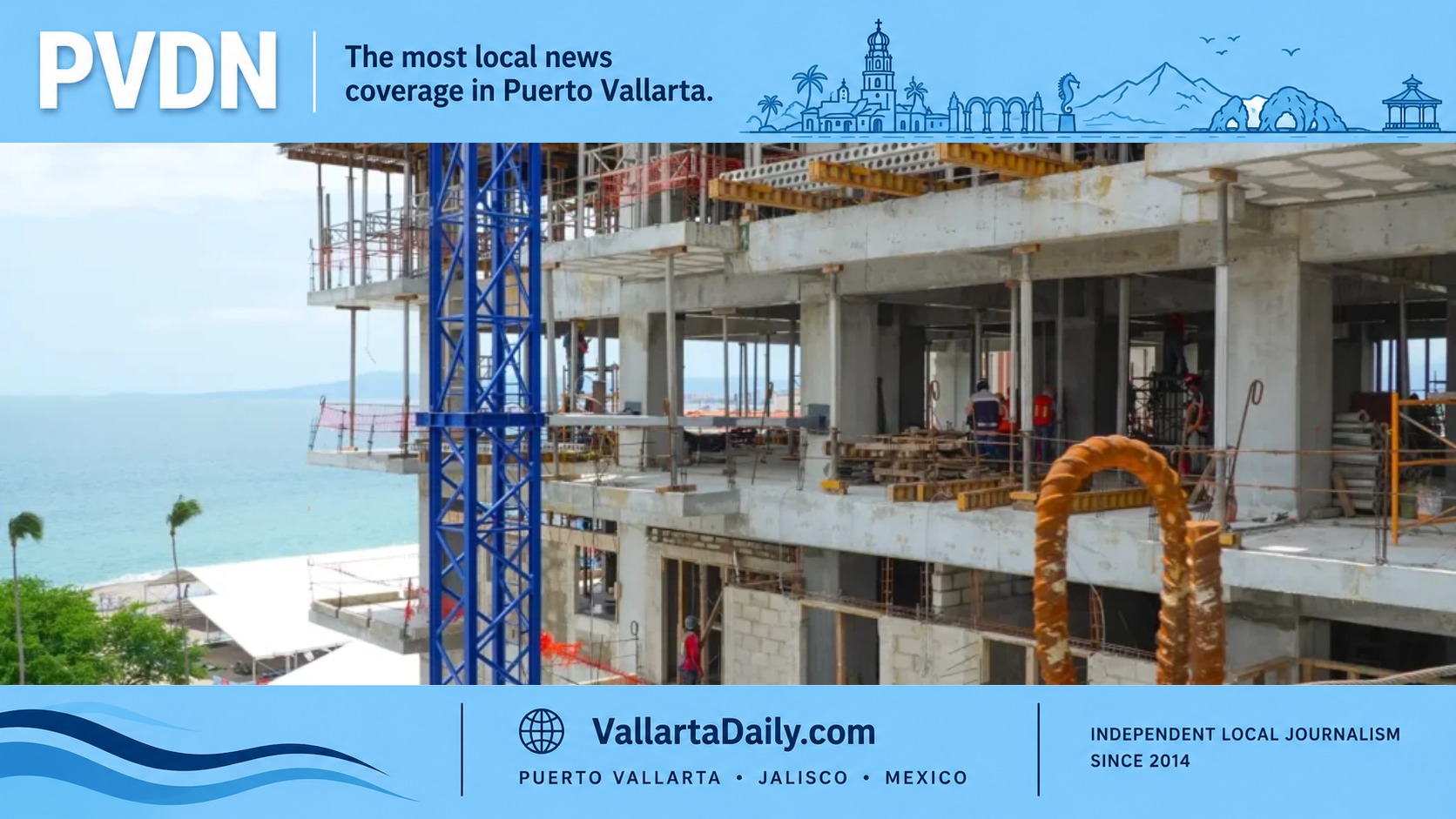
The city’s monthly license records show the pace. The April 2026 urban-development spreadsheet contains 92 license entries, six of them explicitly described as vertical housing. License 6782/2025 covers a mixed-use project with a basement, commercial space and housing extending through the 14th level. Another entry, 5546/2025, covers a project change and expansion involving three towers through the tenth level.
Those entries add a seismic dimension to the wider planning questions documented in PVDN coverage of tower growth outpacing public planning and a development tracker that found addresses, unit totals and infrastructure effects missing from public permit records.
Seven levels in one rule and ten in another
Article 190 of Puerto Vallarta’s current construction regulation says buildings of seven levels or more must undergo a soil site-response study, with printed and digital copies delivered to the municipal authority.
The regulation goes further than that single test. Article 206 requires a geotechnical or soil-and-rock mechanics study in the design of foundations, retaining structures or excavations on any construction. Only studies completed by municipal-authorized geotechnical experts have official validity.
Under Article 208, the report must include field and laboratory tests, groundwater depth when encountered, expected soil behavior during a strong earthquake, the proposed foundation type, bearing capacity, expected settlement and the construction procedure applied to foundations, excavations and retaining walls. Article 218 also requires evaluation of liquefaction potential in specified sandy-soil and groundwater conditions.
The city’s separate complementary seismic standard, however, says the site-response study becomes mandatory at ten levels. Both files were issued as parts of the 2018 building framework and remain posted by the municipality. The reform table in the current regulation records later changes to other articles, not the seven-level language in Article 190.
A developer, engineer or permit reviewer consulting the two municipal files therefore encounters different numerical triggers. The public versions contain no note reconciling them.
Permit listings stop before the engineering record
The technical standard assigns clear responsibilities once a project enters structural design and construction. A specialist in structural safety must design the project and submit the calculation memorandum and structural plans to the city. The supervising specialist must inspect concrete formwork and reinforcing steel, or steel profiles and weld quality in a steel building, then approve each stage in the construction log. Weekly reports carrying quality-control results and copies of the log must also go to the municipal authority.
The construction regulation gives the city power to inspect work, verify compliance with approved plans and quality standards, issue habitability certificates, and apply safety measures when a technical review identifies danger.
None of those engineering records is attached to the April 2026 public spreadsheet. Its document-link field is blank in all 92 license rows. A note directs anyone seeking the physical document to the municipal transparency office.
The blank links say nothing about whether the required studies sit inside each municipal case file. They do mean that the online license list cannot independently confirm which vertical projects submitted a site-response study, who signed the structural calculations, what soil conditions were found, or whether weekly supervision reports reached the city.
That distinction matters. A license number confirms an administrative act. It does not, by itself, display the technical record behind the approval.
Risk-atlas update ended without an award
Puerto Vallarta’s Civil Protection regulation requires urbanization and building works authorized by the municipal development office to be designed in accordance with the municipal risk atlas.
The city opened tender LPM CM/042/2025 in July 2025 to update that atlas. The municipal procurement record shows the process ended without an award on August 1, 2025.
The acquisition commission declared the tender deserted after comparing the lowest technically compliant bid of 1.275 million pesos before value-added tax with a market-study average of 6.16 million pesos. The commission applied a state procurement rule requiring rejection when the lowest compliant offer falls more than 40 percent below the market average. The city now marks the tender as concluded.
A citywide atlas and a project-specific soil study have different jobs. The atlas maps broader hazards and vulnerable zones used in planning. The geotechnical and site-response reports test conditions beneath an individual project. The failed atlas procurement did not remove the project-level requirements in the construction regulation.
The risk has a recent local record
Puerto Vallarta’s seismic exposure is documented rather than theoretical. The National Seismological Service catalog records the magnitude 7.7 earthquake south of Coalcomán, Michoacán, on September 19, 2022. PVDN later reported a magnitude 4.6 earthquake off the Puerto Vallarta coast in April 2023.
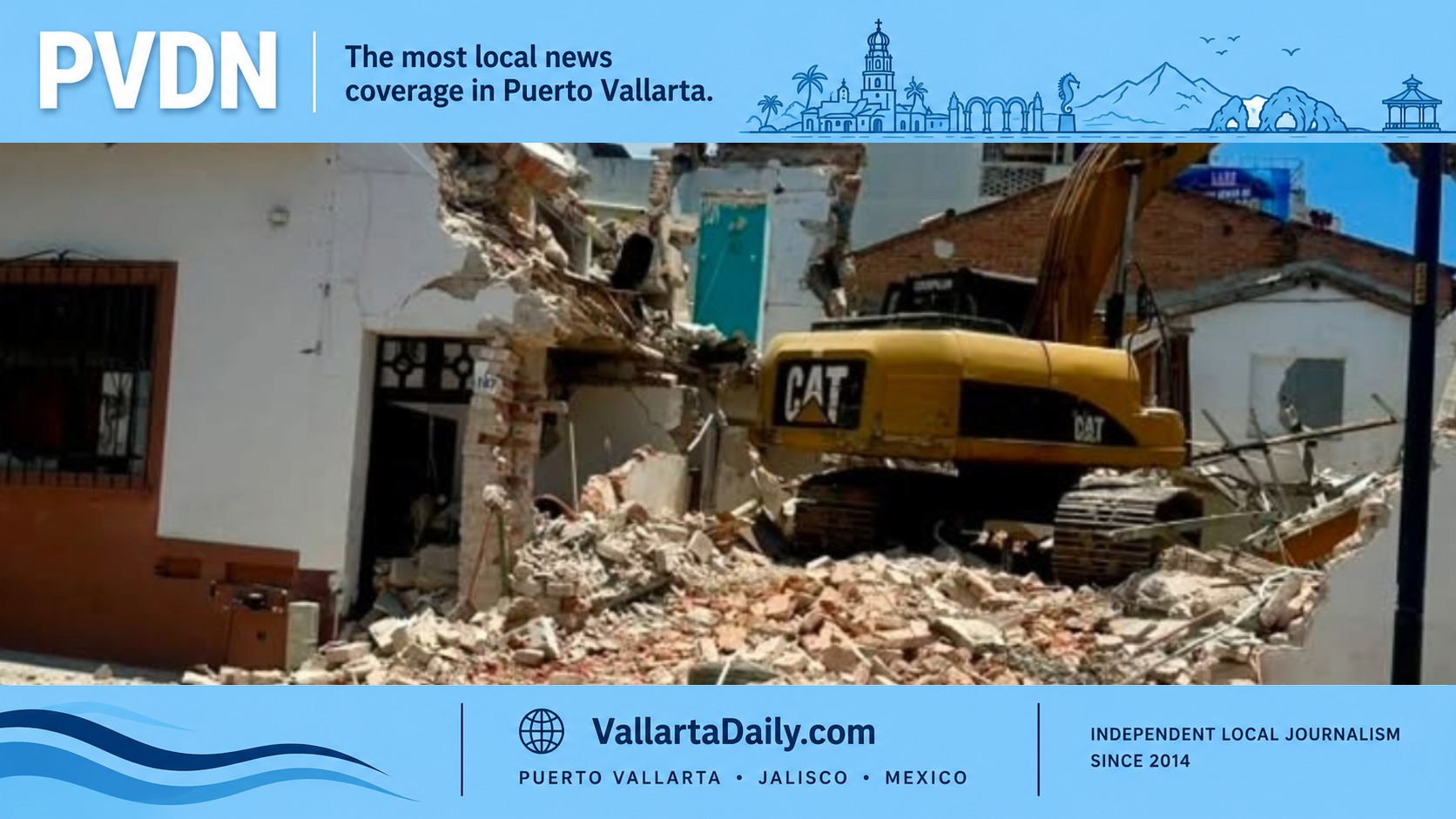
After the 2022 earthquake, a municipal inspection of the Isla 115 condominium found significant structural damage in its parking area, and Civil Protection recommended that the building remain unoccupied pending structural analysis and reinforcement. That case cannot be used to judge newer towers, each of which has its own design, site, and construction history. It shows the practical difference between a permit entry and the engineering evidence needed to evaluate a building.
Puerto Vallarta’s published rules establish substantial requirements on paper. The unresolved issue is whether the seven-level or ten-level trigger is being applied consistently and whether each qualifying project’s file contains the required study, signed structural plans, construction log, supervision reports, completion record and habitability certificate.
Anyone evaluating a seven-story or taller development can request those records by license number through municipal transparency. Until the city reconciles the two thresholds and attaches technical files to its online listings, project records remain the only evidence-based route to checking seismic compliance.