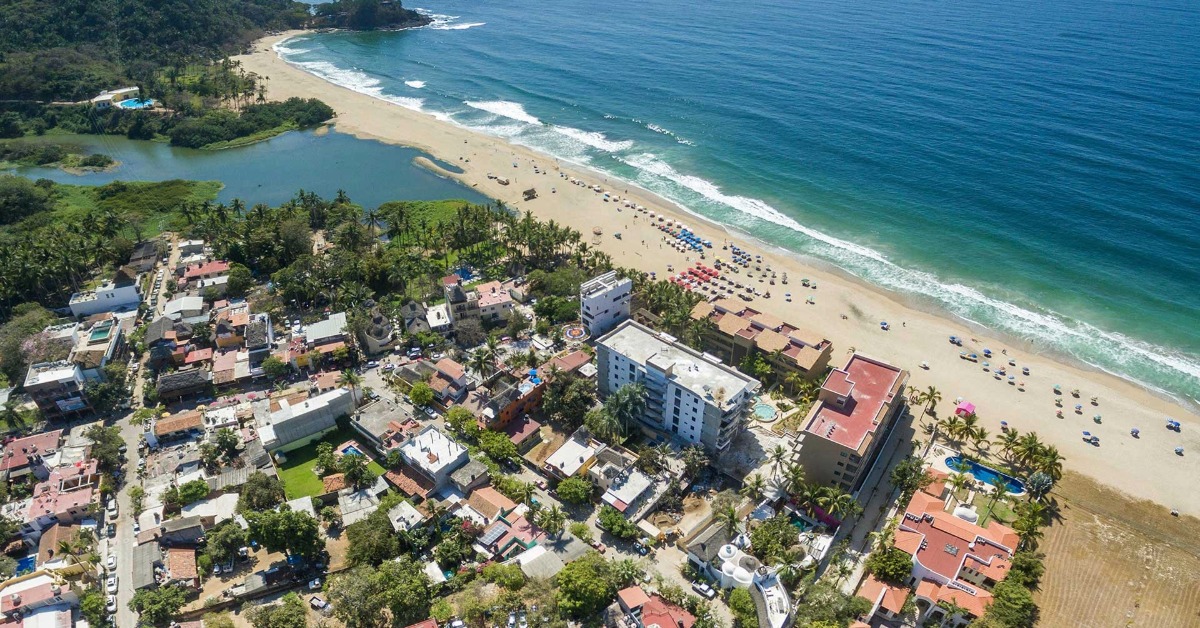
The government of Bahía de Banderas activated an anti-blockade operation on Monday as authorities responded to violence reported in other parts of Nayarit.
Municipal officials said the measure was preventive. They reported no security incidents inside Bahía de Banderas at the time of the announcement. Even so, local security and traffic agencies were placed on alert and ordered to maintain surveillance at key points.
The operation was designed to protect mobility and reduce the risk of road closures. That matters in Bahía de Banderas because the municipality sits next to Puerto Vallarta and forms part of a shared daily corridor for workers, residents, tourists, and transport operators.
Authorities also reported helicopter overflights during the day. The exact scope of those aerial operations was not detailed publicly. Officials said the broader goal was to keep public order while other municipalities in Nayarit dealt with fires and blockades.
No local incidents, but activity was reduced
The municipal government said Bahía de Banderas had no reported incidents, but the situation still affected daily life.
Public events, dances, and celebrations were suspended until further notice. Officials said the decision was intended to lower risk and keep people away from large gatherings while security agencies monitored the situation.
Some public transportation was also affected. Autotransportes Medina suspended service for several hours as a precaution, then resumed normal operations. Bus service matters across the bay because many people travel daily between Puerto Vallarta, Bahía de Banderas, and other Nayarit communities.
For residents and visitors, the message from authorities was direct: stay informed through official channels, avoid spreading rumors, and limit unnecessary movement while the situation remains under review.
Violence elsewhere in Nayarit raised the alert
The preventive operation followed reports of road blockades, vehicle fires, and attacks on businesses in several parts of Nayarit.
The incidents were reported in municipalities including Tecuala, Ahuacatlán, and Ixtlán del Río. In Tecuala, authorities and media reports described fires at businesses and vehicles. Other reports pointed to blocked roads and disruptions that complicated movement between the northern, central, and southern parts of the state.
The Nayarit state government called on residents to remain at home unless travel was necessary. State officials also asked the public to avoid unverified information, saying rumors can create confusion during active security events.
The situation also affected regional travel. Bus departures from Puerto Vallarta toward several Nayarit destinations were suspended during the day. Those included routes toward La Peñita de Jaltemba, Las Varas, Compostela, and Tepic.
Why this matters for Puerto Vallarta and expat readers
For many international residents, Bahía de Banderas and Puerto Vallarta feel like one connected metro area. The state line between Nayarit and Jalisco is easy to overlook in daily life.
That is why a security alert in Nayarit can quickly become a concern for people living in or visiting Puerto Vallarta. Many residents cross the Ameca River for work, shopping, medical appointments, airport access, or family obligations.
Puerto Vallarta officials said there were no incidents inside the municipality. They also said the city remained in coordination with state and federal authorities. A reported vehicle fire in Bahía de Banderas was later described by local officials as a mechanical failure, not an attack tied to the wider violence.
Still, the anti-blockade operation reflects the close connection between the two municipalities. Even when violence is reported outside the tourist zone, transport and public confidence can be affected across the bay.
The arrest behind the wider security response
The regional tension followed the arrest of Audias Flores Silva, known as “El Jardinero.” He has been identified by authorities as a high-ranking figure in the Jalisco New Generation Cartel, or CJNG.
Federal officials said the arrest took place in Nayarit during an operation led by Mexican Navy special forces. International reporting described him as a regional commander with influence along Mexico’s Pacific coast.
U.S. authorities had previously offered a reward of up to $5 million for information leading to his arrest or conviction. He was wanted in the United States on drug trafficking allegations, including accusations tied to cocaine and heroin distribution.
Authorities have not publicly confirmed a direct link between the arrest and every violent incident reported later in Nayarit. However, the timing of the violence placed communities across the region on alert.
A familiar pattern in western Mexico
For readers who live in Mexico but do not follow security issues daily, the concern is not only the arrest itself. It is the pattern that can be observed following high-profile security operations.
In some cases, criminal groups use roadblocks, burning vehicles, or attacks on businesses to slow security forces, create public pressure, or show their presence. These incidents are often designed to disrupt movement and spread fear.
That does not mean every fire or road closure is cartel-related. Officials have urged the public to wait for verified information. That caution is important because false reports can travel quickly on WhatsApp, Facebook, and neighborhood groups.
For now, Bahía de Banderas is treating the situation as a regional security risk rather than a confirmed local crisis. The municipality’s operations are intended to prevent spillover and keep main roads open.
What residents should watch next
The next key issue is whether the Nayarit authorities report new incidents, fully reopen routes, and lift restrictions on events.
For people traveling between Puerto Vallarta and Nayarit, the safest approach is to check official municipal and state updates before taking intercity roads. This is especially important for routes toward Las Varas, Compostela, Tepic, Tecuala, and other communities where disruptions were reported.
Residents should also pay attention to transport companies. Bus operators may adjust routes or schedules if conditions change.
Local officials are asking the public to avoid rumors and rely on official statements. That advice is practical during fast-moving security events, especially when old videos or unrelated images are sometimes shared as current information.
For Bahía de Banderas, the message on Monday was clear: there were no reported local incidents, but authorities were not treating the situation lightly.