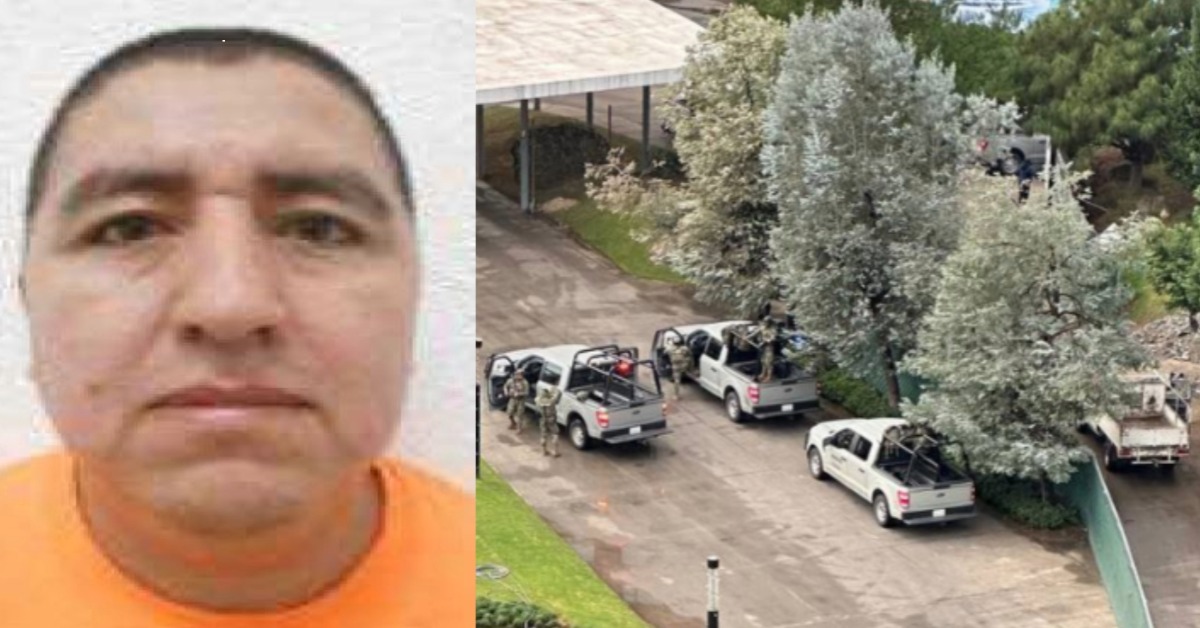
Federal authorities detained Audias Flores Silva, alias “El Jardinero,” in Nayarit on Monday, marking one of the most notable recent arrests tied to the Cártel Jalisco Nueva Generación.
The operation was carried out by special forces from the Secretaría de Marina, according to federal security officials. Authorities said Flores Silva had an arrest warrant in Mexico and was also wanted by the United States for extradition purposes.
The U.S. government had offered a reward of up to $5 million for information leading to his arrest or conviction. That reward placed him among the more visible CJNG figures sought by U.S. law enforcement.
The arrest comes at a sensitive moment for the cartel. After the death of Nemesio Oseguera Cervantes, alias “El Mencho,” federal officials and security analysts have watched for signs of internal reorganization. Flores Silva had been mentioned as one of the possible figures with enough weight to influence that process.
Mexican authorities have not yet announced where he will first face proceedings. That question matters because he is wanted in both countries.
Why Audias Flores Silva matters
Flores Silva has long been described by authorities as a regional commander within the CJNG. His area of influence has been tied to Mexico’s Pacific corridor, including Nayarit, a state that sits between Jalisco, Sinaloa, and important coastal routes.
That geography matters. Nayarit is not only a tourist state. It is also close to ports, highways, and territories where criminal groups have fought for control of trafficking routes, money laundering channels, and local markets.
For years, U.S. authorities linked Flores Silva to drug trafficking activity involving cocaine and heroin. Mexican reporting and official records have also connected him to synthetic drug production and movement through western Mexico.
His importance was not only tied to drugs. He was also seen as part of the CJNG’s regional command structure, which helps explain why his arrest drew immediate attention. Arresting a mid-level operator can disrupt a local cell. Arresting someone with regional authority can create wider uncertainty inside a criminal group.
That uncertainty can matter on the ground. When a cartel loses a high-ranking figure, the result is not always immediate calm. In some cases, it can create disputes over territory, income, and loyalty.
The U.S. case behind the reward
The U.S. government moved publicly against Flores Silva in 2021. That year, he was identified as a significant foreign narcotics trafficker under the Kingpin Act, a tool used to target people and entities tied to major drug trafficking organizations.
U.S. authorities also unsealed an indictment in the District of Columbia. The case accused him of drug trafficking and weapons-related offenses. The allegations included a conspiracy involving cocaine and heroin intended for importation into the United States.
The U.S. reward offer helped raise his profile outside Mexico. Rewards of that size are usually reserved for people U.S. officials view as important to a criminal organization or drug supply chain.
The DEA also listed Flores Silva as wanted for alleged federal violations tied to cocaine and heroin distribution for importation into the United States. The agency identified several aliases, including “Comandante,” “El Bravo 2,” “Audi” and “Mata Jefes.”
For readers outside the security world, the point is simple. This was not a local arrest of an unknown suspect. Flores Silva had been on the radar of both Mexican and U.S. authorities for years.
The CJNG context after “El Mencho”
The CJNG became one of Mexico’s most powerful criminal organizations under Nemesio Oseguera Cervantes, better known as “El Mencho.” The group expanded far beyond Jalisco and became a major concern for Mexican and U.S. authorities.
The cartel has been linked to drug trafficking, extortion, weapons activity, and violence in several regions. It has also been tied to more complex financial schemes, including fraud networks and the use of businesses to move or protect criminal proceeds.
After El Mencho’s death, authorities began looking more closely at possible successors and regional figures with enough influence to shape the cartel’s next stage. Flores Silva was one of the names repeatedly mentioned in that context.
That does not mean he was confirmed as the cartel’s new leader. It means authorities considered him a figure with enough standing to matter during a power transition.
In cartel structures, leadership is often less formal than it appears from the outside. Power can be divided among relatives, armed commanders, financial operators, and regional bosses. That makes succession difficult to read and harder to control.
Why Nayarit matters in this case
Nayarit’s role in this case is important for both geographic and security reasons. The state borders Jalisco and sits close to areas where the CJNG has had a strong presence.
It also has links to tourist corridors that matter to foreign residents and visitors. That does not mean ordinary tourists are the target of this specific case. But it does mean organized crime cases in the region can have wider effects on security policy, federal deployments, and public perception.
In recent years, U.S. sanctions have also pointed to alleged CJNG-linked financial activity in coastal areas near Puerto Vallarta and Nayarit. Those cases have included allegations involving timeshare fraud and business networks used to generate revenue.
For foreigners living in Mexico, this is where the story becomes more relevant. Cartel activity is not limited to street-level violence. It can also touch real estate, fraud schemes, tourism businesses, and cross-border financial crimes.
The arrest of Flores Silva fits into that wider picture. It shows how federal authorities are targeting figures tied not only to trafficking, but also to the command structures behind those operations.
What could happen next
The immediate question is whether Flores Silva will remain in Mexico for prosecution or face extradition to the United States. Federal officials have said he is wanted by U.S. authorities, but the timing of any extradition process can vary.
Extradition cases often depend on court challenges, diplomatic coordination, and the status of pending charges in Mexico. Some suspects are sent quickly. Others remain in Mexican custody for months or years.
There is also the security question. Authorities will be watching for possible retaliation, internal movement, or attempts by other CJNG figures to take over territory linked to Flores Silva.
A major arrest can weaken a criminal network, but it can also trigger a reshuffling. That is why officials often treat the days after a capture as an important period for intelligence gathering and prevention.
For Mexico, the arrest gives federal forces a visible success against one of the country’s most powerful criminal groups. For the United States, it brings a long-wanted suspect closer to court. For communities in western Mexico, the impact will depend on what happens after the headlines fade.
The larger meaning of the arrest
The detention of “El Jardinero” is not the end of the CJNG. Criminal organizations this large are built to absorb losses. They often replace commanders, shift routes, and move money through different channels.
Still, some arrests matter more than others. This one matters because Flores Silva was not only wanted for alleged trafficking activity. He was also linked to the cartel’s regional command and had been discussed as part of the CJNG’s post-Mencho power map.
That makes the case important beyond Nayarit. It is part of a broader test for Mexico’s security strategy and for U.S.-Mexico cooperation on organized crime.
The next steps will show whether the arrest becomes a short-term disruption or a deeper blow to the cartel’s structure.