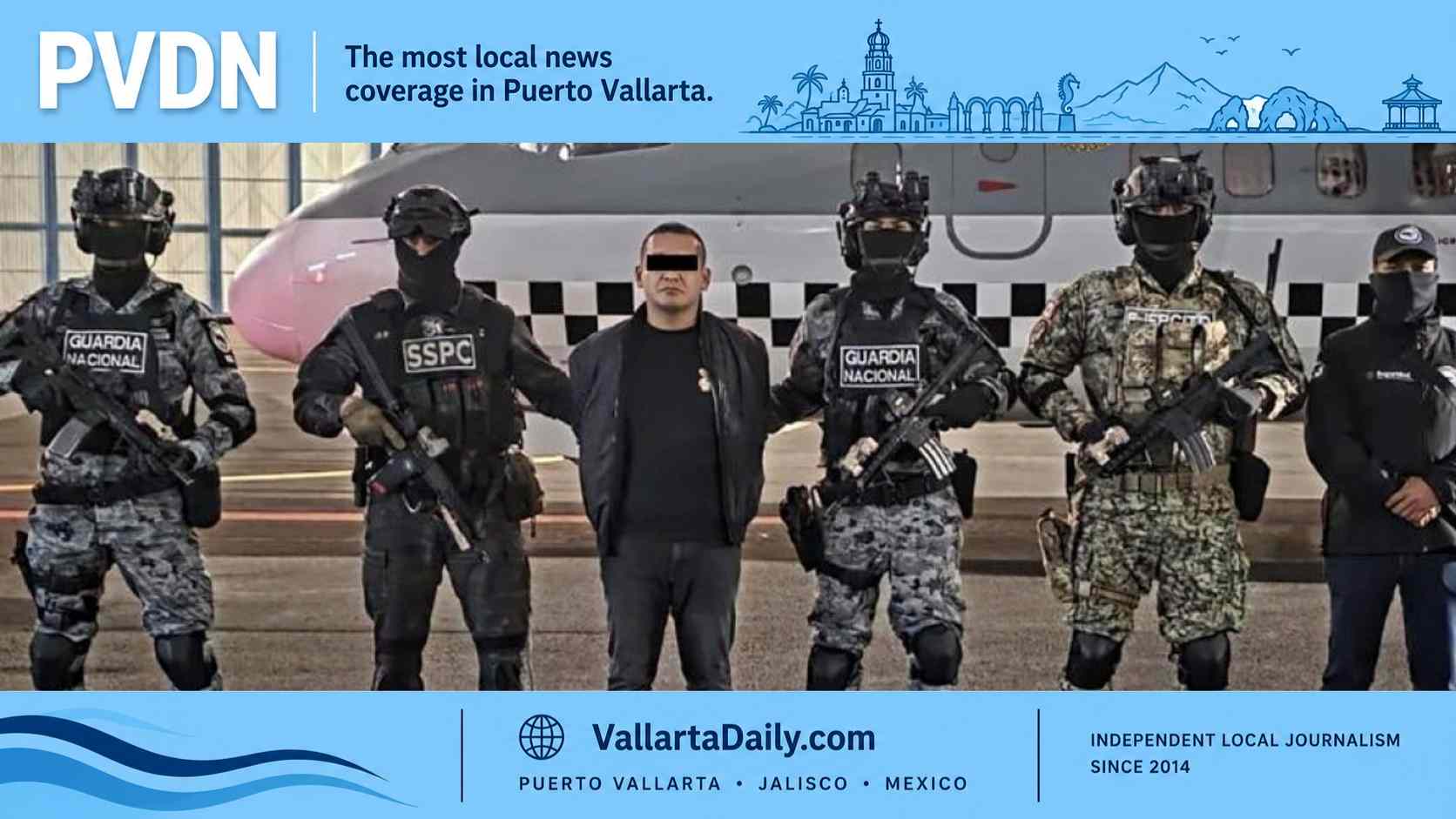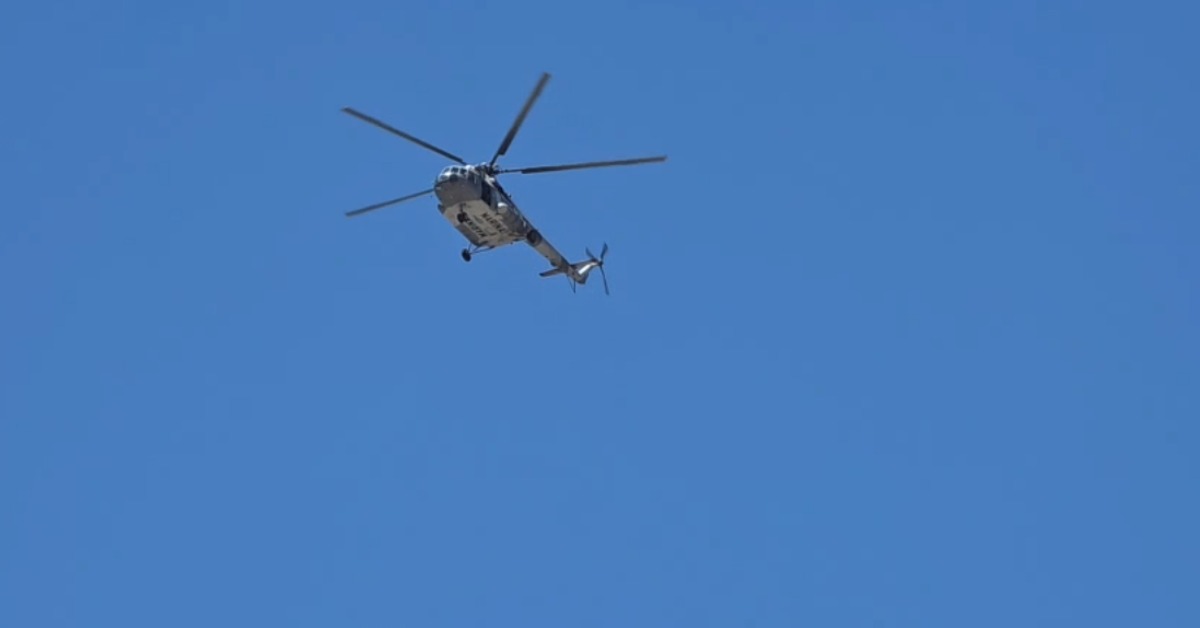
The Mexican Navy increased aerial surveillance over Puerto Vallarta after the arrest of Audias Flores Silva, alias “El Jardinero,” in Nayarit.
The overflights were described as preventive patrols meant to discourage any possible reaction from organized crime. At the time of publication, authorities had not reported major violent incidents in Puerto Vallarta tied to the arrest.
The flights were visible in parts of the city and drew attention because Puerto Vallarta sits near the Jalisco-Nayarit border. That location matters when federal operations take place in nearby communities.
For residents and foreign visitors, the immediate takeaway is narrow but important. The surveillance was a security measure after a high-profile arrest, not confirmation of an active public emergency in the city.
Who is Audias Flores Silva
Audias Flores Silva is identified by Mexican and U.S. authorities as a senior figure linked to the Cártel Jalisco Nueva Generación (CJNG).
U.S. authorities previously offered a reward of up to $5 million for information leading to his arrest or conviction. He had also been sanctioned by the U.S. Treasury, which described him as a regional commander with influence along Mexico’s Pacific coast, including Nayarit.
Federal security officials in Mexico said the arrest took place in Nayarit during an operation by Navy special forces. They also said Flores Silva had an arrest warrant in Mexico and was wanted by U.S. authorities.
The arrest comes during a sensitive period for the CJNG. The group has faced renewed scrutiny after the reported death of Nemesio Oseguera Cervantes, alias “El Mencho,” earlier this year.
Why the arrest matters for Puerto Vallarta
Puerto Vallarta was not reported as the site of the arrest. Still, the city is part of a wider regional security picture.
The Bay Area connects Jalisco and Nayarit through daily travel, commerce, tourism, and residential movement. That makes federal activity in one state relevant to people in the other, especially when the operation involves a high-profile criminal suspect.
The Navy’s overflights appear to have been aimed at prevention. In practical terms, that means federal forces were watching for possible movement, retaliation, or attempts to disrupt public order.
This kind of response is common after operations involving cartel figures. Authorities often try to show a visible presence to reduce the chance of roadblocks, attacks, or other public-security incidents.
What officials have and have not said
Authorities confirmed the arrest of Flores Silva and linked the operation to Navy special forces. They also confirmed that he was wanted in both Mexico and the United States.
What has not been fully detailed is the exact operational footprint around Puerto Vallarta. There was no detailed public statement explaining the number of aircraft used, the routes flown, or how long the surveillance would continue.
That leaves some room for uncertainty. Residents may see or hear aircraft and not know whether the activity is routine, preventive, or tied to a specific alert.
Based on the available information, the most accurate description is that Puerto Vallarta saw preventive aerial surveillance after a major arrest nearby. It should not be described as a confirmed outbreak of violence in the city.
The broader security context
The CJNG remains one of Mexico’s most closely watched criminal organizations. It has been linked by U.S. authorities to drug trafficking, weapons offenses, money laundering, and fraud schemes.
The group’s presence in western Mexico has made Jalisco and Nayarit important areas for federal security operations. Puerto Vallarta’s tourism economy also adds another layer of concern whenever criminal groups are mentioned in the region.
That does not mean tourists or residents are direct targets in every security operation. In many cases, federal activity is focused on specific suspects, safe houses, routes, or financial networks.
Still, organized crime can affect daily life when operations trigger visible patrols, road checkpoints or temporary tension. That is why local updates matter, especially for foreigners who may not fully understand the regional geography.
What residents and visitors should watch for
For now, the most useful guidance is simple. Residents and visitors should follow official updates, avoid spreading unverified rumors, and stay clear of any police or military activity.
Anyone who sees patrols, aircraft, or checkpoints should treat them as official operations and give authorities room to work.
There was no public report of a major violent incident in Puerto Vallarta linked to the operation at the time of publication. That point matters because social media often turns security activity into speculation before facts are confirmed.
Puerto Vallarta continues to function as a major tourism city. But the overflights are a reminder that the region is also part of a larger security map shaped by federal operations in Jalisco and Nayarit.