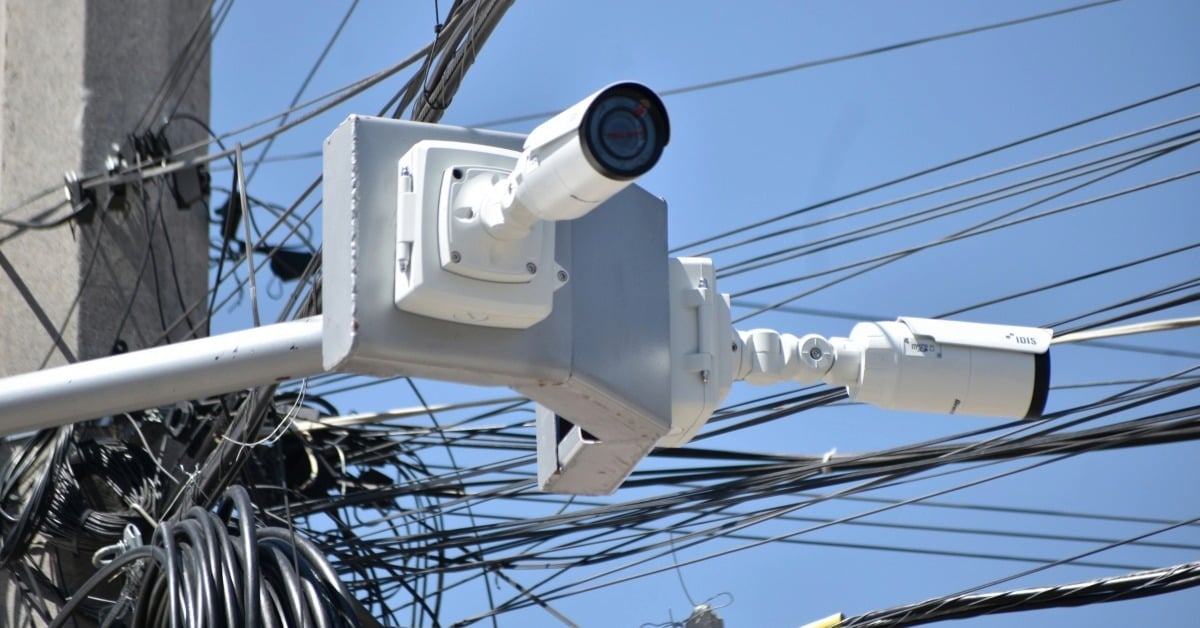
Baja California lawmakers approved a tougher Baja California halconeo statute that raises prison terms to as much as eight years and adds fines tied to the UMA. The reform targets cartel “lookouts” who install or tamper with public video systems to track police or rivals, while carving out protections for home and business cameras. Supporters argue that the change addresses a genuine street-level issue. Free-expression groups warn that poorly written or misused laws elsewhere have swept up reporters and citizens. Here’s what the new rule actually does—and what it doesn’t.
Baja California halconeo
Baja California’s Congress approved a reform that stiffens penalties for halconeo, the cartel “lookout” practice of gathering and relaying police movements. The measure amends Article 317 Ter of the state’s Criminal Code and sets prison terms from three to eight years, plus fines and restitution. The reform was passed on August 28, 2025, in the XXV Legislature.
Under the new text, authorities can prosecute individuals who install, use, interfere with, or damage public surveillance systems, or who set up camera networks in public spaces to aid in crimes or obstruct government functions. The statute preserves an explicit exemption for private cameras: systems placed inside homes, shops, or industrial sites that stay within property lines are not criminalized.
What the penalties look like in practice
The law pairs prison time with financial sanctions of 200 to 400 UMAs, Mexico’s inflation-indexed unit. INEGI pegs the 2025 daily UMA at $113.14 pesos, which translates to fines of roughly $22,628 to $45,256 pesos at current exchange rates, in addition to any restitution a judge may order.
Local outlets reported that earlier drafts contemplated punishment ranging from five to eight years; the approved version fixes the range at three to eight years. That shift matters for proportionality, and for first-time offenders, a court might consider a lower-end sentencing option.
Why Baja California moved now
State officials argued that halconeo has evolved beyond kids with radios. Authorities have repeatedly found clandestine cameras aimed at police routes, precinct gates, and rival turf. Those networks let criminal groups time ambushes or evade raids. Lawmakers said the reform closes gaps by covering installation, manipulation, and disruption of public systems, not just lookouts with phones.
The push came from Governor Marina del Pilar Ávila, backed by members of the Justice Commission, with the language ultimately approved by the full chamber. Media briefings and a state press note previewed the UMA-based fines, clarifying that the law exempts legitimate private security systems.
How this compares to other states
Baja California is not alone. San Luis Potosí implemented a halconeo offense in March 2025, which carries penalties that can reach 12 years in specific scenarios, signaling a national trend to codify “lookout” conduct. Tamaulipas has long had a severe halconeo article as part of its organized crime response. Aguascalientes added the crime in 2023. These parallels help explain the legal playbook Baja California chose—higher ceilings, specific conduct, and UMA-indexed fines.
Press-freedom concerns and guardrails
Human-rights groups caution that poorly drafted or overly broad halconeo statutes can chill reporting or criminalize routine newsgathering. ARTICLE 19 has criticized similar laws for risking misuse against journalists and citizens documenting police activity. The concern is heightened in Baja California, where the group recently denounced official pressure on a local reporter. Those warnings don’t mean the new law targets the press—but they do underline the need for narrow application and clear prosecutorial criteria.
The text approved in Baja California explicitly excludes private cameras on homes and businesses, focusing instead on public systems or devices installed to facilitate crime. That carve-out, if honored, serves as the firewall between a security tool and a free-expression issue. Courts will still play a decisive role in interpreting the terms “facilitate” and “obstruct,” and defense counsel will test those boundaries.
What changes on the street
For police and prosecutors, the reform creates a cleaner hook to investigate camera grids and signal jammers tied to ambushes or drug routes. For residents and shops, nothing changes if their cameras face inward or stay within the property line. For journalists and citizen observers, the key risk lies not in the letter of the law, but in how it is enforced. Documenting events in public remains lawful, and the exemption for private systems should shield routine safety setups.
Baja California’s new halconeo rule is designed for a particular slice of organized-crime logistics: the surveillance layer that keeps crews one step ahead of the state. The three-to-eight-year range, UMA-based fines, and explicit private-camera exemption position the statute near the stricter end of Mexico’s state codes, while attempting to avoid civilian dragnet effects. Whether it works as intended will depend on making tight charging decisions, providing transparent guidance to the police, and ensuring judicial oversight when cases test the limits.