Baja California Sur School Garden Program
Baja California Sur is doubling down on school gardens as an education tool with a new cohort of fourteen campuses selected for the 2025–2026 cycle. The state’s Secretariat of Urban Planning, Infrastructure, Mobility, Environment, and Natural Resources (Sepuimm) confirmed the list after closing its public call for applicants. The announcement came on August 15, setting the stage for gardens to reopen as students return from vacation.
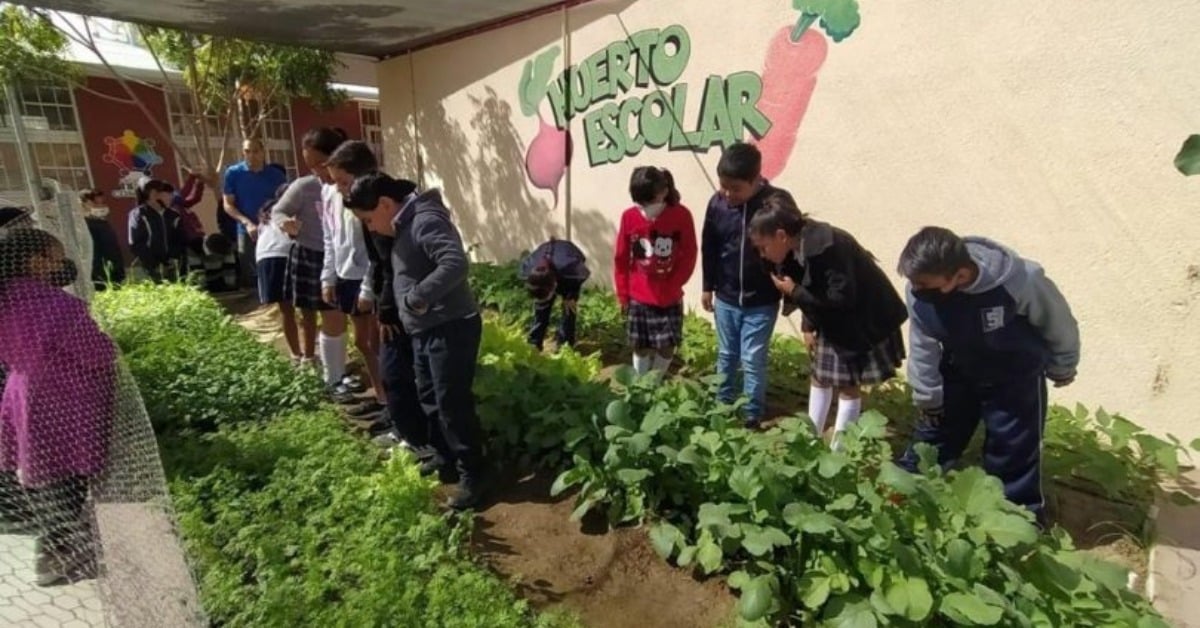
Sepuimm describes the gardens as “living classrooms,” places where a lesson about germination or soil health is not theoretical. Students prepare beds, plant, water, observe, and eventually harvest, while teachers connect that work to core subjects. The program’s sustainability outreach lead, Selma Rodríguez Orozco, frames it as an integrated approach that fosters responsibility, teamwork, and respect for nature—skills that stick because they’re practiced, not merely taught.
Where the program is growing
This year’s roster spans four municipalities. In Los Cabos, support goes to Leonardo Gastélum. Comondú adds five primarias—General Plutarco Elías Calles, Profa. Asunción González, General Lázaro Cárdenas, Emiliano Zapata, and the No. 30 school for migrant children. Loreto brings in Olivia Perpuly de la Toba. La Paz rounds out the list with Leona Vicario, Ignacio López Rayón, Jesús Castro Agúndez, Francisco Cota Moreno, Celerino Cano, and 5 de Abril. The state says the strategy has already benefited more than 9,800 people to date, counting students, teachers, and families who participate in workshops and garden workdays.
What matters here is the mix. Schools serve different neighborhoods and needs, which should translate to gardens that look and feel different on the ground. A campus in La Paz might focus on improving soil and water stewardship; a school in Comondú may lean into nutrition or local crops. The program’s structure allows for that flexibility while keeping the same core goal: to make learning tangible.
Beyond the classroom walls
One notable addition this cycle is outside a traditional school. The Espacio Alas State Shelter, operated by the South Californian Institute for Women, will participate to extend the program’s social and educational reach. Authorities describe the move as part of a strategy to support resilience for women in vulnerable situations. In practice, this means the shelter’s residents will have a space to cultivate, learn, and heal—another way the garden model adapts to context while preserving its educational core.
The program’s expansion follows a clear arc. Earlier this year, the state opened its call with a push to bring in new campuses rather than repeat participants, seeking broader community reach. At that time, officials highlighted how gardens anchor lessons in healthy eating, soil recovery, and responsible food handling. They also noted that, even when full gardens exist in a limited number of schools, the programming radiates outward through talks and workshops to thousands of students.
How the learning actually works
The pedagogy is deceptively simple. Students move through the cycle—from site preparation to planting and harvest—while teachers align activities with the curriculum. Science comes alive in germination tests and composting. Math shows up in measuring beds, tracking growth, and tallying yields. Art is there in garden design and signage. The whole effort leans on teamwork. When a class shares a plot, responsibility is shared too, and that soft skill may be the most durable harvest.
Programs like this also thrive on partnerships inside the school community. Families often help during setup or maintenance. PTA meetings turn into seed exchanges. The result is a campus space that belongs to more than just the school day.
What to watch this school year
Two markers will tell us if the 2025–2026 cohort delivers. First is classroom adoption: are teachers using the garden to teach core subjects regularly, not as a special event? Second is community involvement: do families and local groups show up for workdays and workshops? Sepuimm’s own data suggests that outreach beyond the garden beds is crucial, and the state says its workshops and talks have already extended to thousands of students. Continued tracking will show whether that momentum holds with the new campuses.
The inclusion of Espacio Alas adds a social dimension worth following. If the shelter’s garden succeeds, it could serve as a template for other resilience-focused spaces—youth centers, community kitchens, or rehabilitation programs—where the benefits are educational and therapeutic at once. The model is adaptable; the question is how far it can stretch without losing the classroom connection.
Accountability and transparency
It matters who runs a program and how. The School Garden Program sits under Sepuimm’s Directorate of Sustainability Outreach, led by Selma Rodríguez Orozco. The agency published the call for applicants earlier this year and later named the selected campuses, which allows the public to track commitments over time. Clear points of contact and a public roster may sound procedural, but these details are exactly how a small initiative avoids becoming a photo op.
The real test arrives when seeds hit the soil. If students feel ownership of the space and teachers have planning support, gardens tend to endure beyond the initial push. That’s the challenge and the opportunity for the fourteen schools—and for Espacio Alas—now on the list.