Infonavit’s Brisa Vista Acapulco project brings 1,080 low-cost homes to a hillside that city risk maps flag as hydrologically and flood-prone.
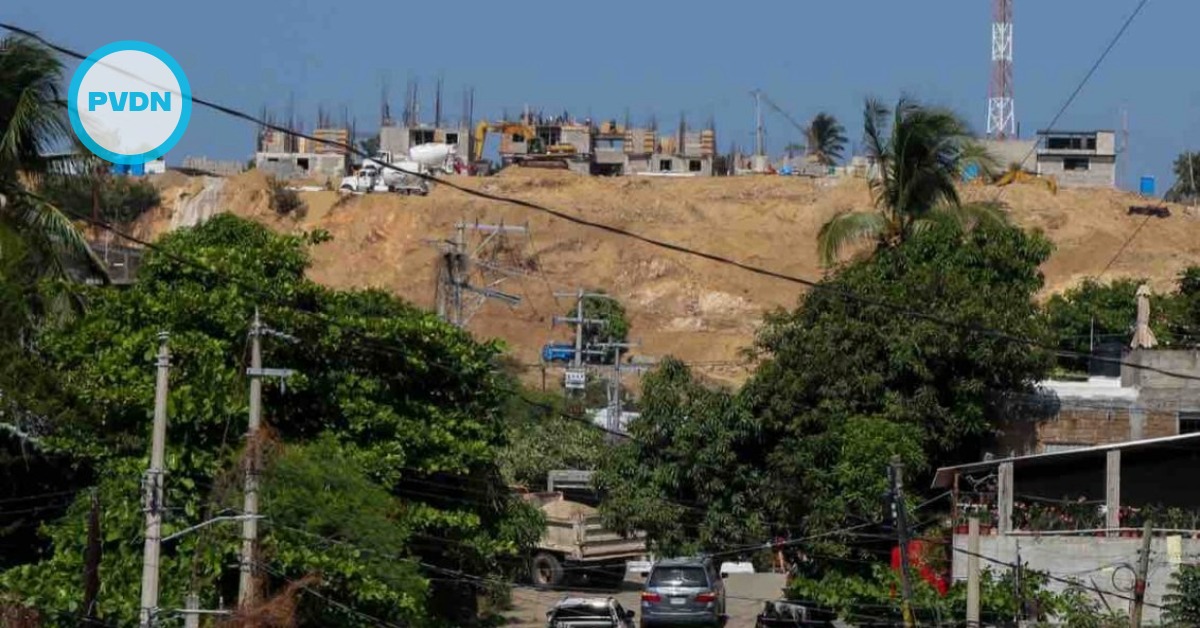
On a steep hillside in eastern Acapulco, rows of new housing shells mark the outline of Brisa Vista Acapulco. This social housing project promises 1,080 small homes for low-income workers. The development, led by the federal housing institute Infonavit under the Vivienda para el Bienestar program, is meant to offer families earning one or two minimum wages a chance at a formal home.
Yet the project rises right beside a strip of land that the city’s own risk atlas classifies as “high hydrologic risk”. Below the new construction, sewage water already runs in the open, streets are fractured by heavy machinery and an arroyo that carries rain and wastewater in storm season cuts across the neighborhood of Navidad de Llano Largo.
Brisa Vista is being carved out by cutting into a hill above the Pacífico Dorado subdivision, reached by the narrow street Las Palmas near the Cayaco–Puerto Marqués road. Infonavit’s own delivery schedule, made public this year, lists 1,080 homes on this site, with 85 to be handed over in late 2025 and the remaining 995 during 2026. Workers on the ground now estimate that the first houses will not be ready before March, after about three months of earth-moving and foundation work.
The subdivision is part of a larger federal push to reduce the housing deficit. In March, the Guerrero state government and the federal urban development ministry signed a collaboration agreement to implement Vivienda para el Bienestar in the state. Officials at that event spoke of a goal of 50,000 new homes for Guerrero over the current six-year term, combining units for Infonavit rightsholders with others built through the national housing commission Conavi.
Brisa Vista Acapulco
Brisa Vista Acapulco is one of those projects. According to federal planning documents, the Acapulco development alone would account for 1,080 homes, a sizeable share of the first phase in Guerrero. A separate national plan sets an even bigger horizon: one million low-cost homes across Mexico in six years, backed by Infonavit financing and federal investment.
On paper, the Acapulco complex targets workers with limited income who today rent informally or live in self-built housing on unstable land. The new homes are planned as compact units, grouped in rows that climb the slope. From the hill, residents would overlook the Tres Palos lagoon and the resort towers of the city’s Diamond Zone.
At the foot of the hill, the picture is very different. Pacífico Dorado and neighboring streets in Navidad de Llano Largo show the scars of uneven growth. Many houses are of wood and sheet metal. Neighbors have put up handwritten signs asking that the remaining trees on the sidewalk not be cut down. Heavy trucks moving up to the construction zone have already cracked the asphalt in several spots, residents say, and there have been complaints of weaker electricity service during the workday.
Drainage is the most visible problem. The sewer line from Pacífico Dorado discharges into an arroyo just a short walk below the new site, roughly 100 meters away, where wastewater runs across the street before continuing downhill. During the rainy season, residents say, the mix of runoff and sewage overflows brings foul odors and occasional flooding.
The current municipal risk atlas, approved in 2021 and updated with federal support, marks that arroyo and the lower crossing of the Cayaco–Puerto Marqués road and Las Parotas Avenue as an inundation zone and a “high hydrologic risk” area. Citywide, the atlas identifies 104 such high hydrologic risk zones and another 108 sites of hydrologic risk, many of them in the hills and suburban neighborhoods that ring Acapulco’s bay.
Residents weigh promises against risk
The tension between housing need and exposure to disaster is not abstract in Acapulco. The city has endured repeated tropical storms and hurricanes, and its own risk studies indicate a high probability that a tropical system will affect the municipality in any given year. Large parts of the population already live in housing made from poor-quality materials on steep slopes or near arroyos.
Navidad de Llano Largo, the neighborhood next to Brisa Vista, is among the areas that federal authorities have singled out in a security strategy aimed at reducing violence through social programs and improved services. Basic infrastructure there still lags. Main avenues were paved only in recent years, dust is common and public transport coverage is limited.
Against that backdrop, the promise of new, formal housing is powerful. Infonavit has framed Vivienda para el Bienestar as a way to give workers and families on the margins a path to stable housing with services, regularized land and access to credit. In public events, federal officials have also linked the program to efforts to rehouse families whose homes were lost or damaged in recent hurricanes.
At the Brisa Vista site, however, residents say they have seen little sign that long-standing drainage and sewage problems will be resolved before hundreds of new homes are added uphill. In several streets of Pacífico Dorado and Ampliación Navidad de Llano Largo, wastewater continues to flow over the pavement. In some corners, the smell intensifies, and people step around puddles to reach small shops and houses.
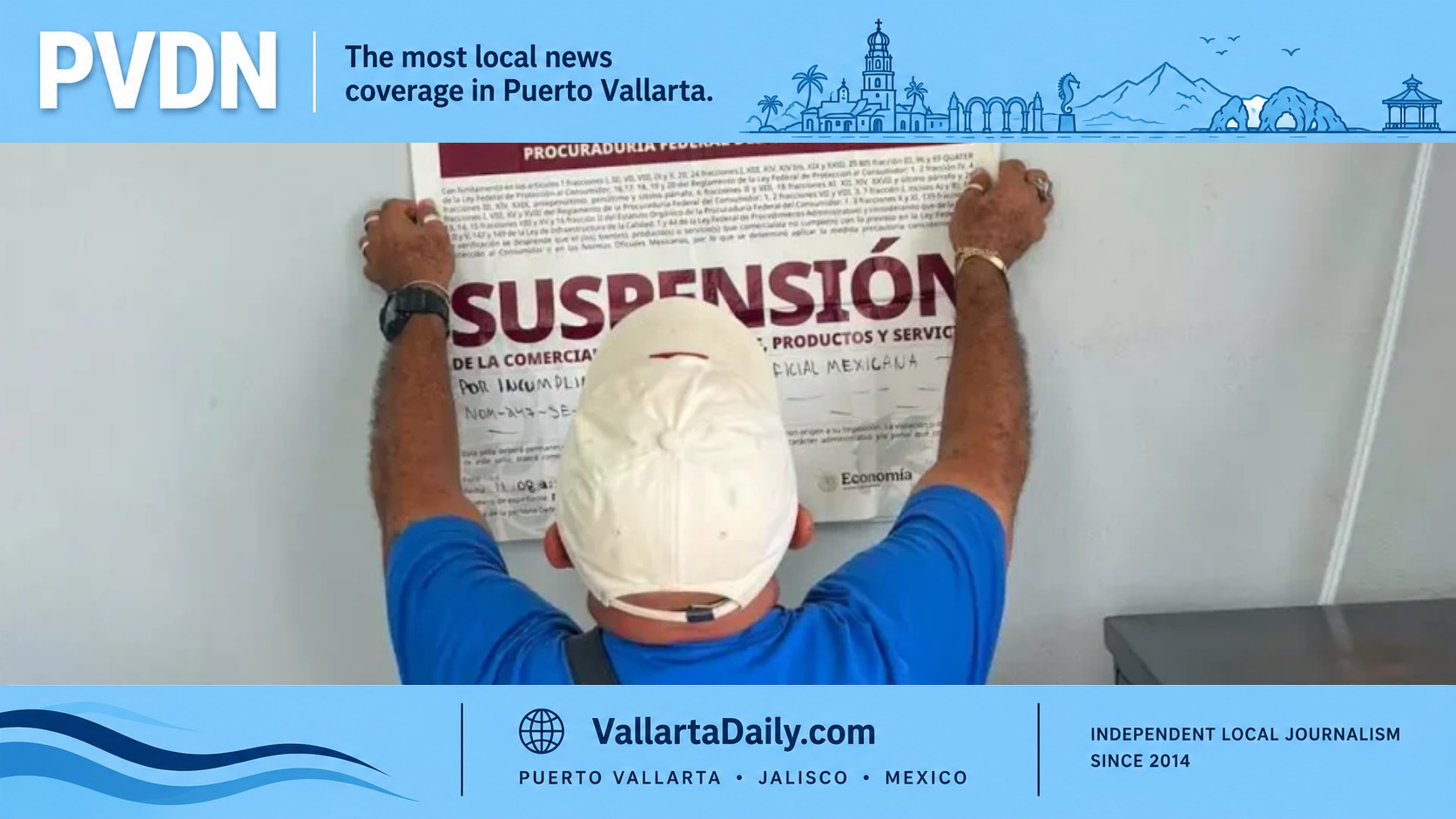
Environmental authorities briefly halted work as these concerns mounted. On the first weekend of December, the municipal ecology and environment department placed partial closure seals on the construction, citing the lack of a construction license, an environmental impact authorization and permits for hauling material. The department’s director later explained that inspectors found slopes of more than 20 meters, machinery generating hazardous waste and tree cutting without the required approvals.
After ten days, those seals were removed. City officials said the developer had begun to provide missing documentation and was “on the way” to full technical and legal compliance. The mayor defended the intervention as a matter of procedure, arguing that while the municipality supports federal investment in housing, local regulations must still be followed.
For residents watching from below, the quick reopening of the site did little to answer deeper questions. They want clear answers on how stormwater from the new subdivision will be managed, what will happen with the arroyo that now carries wastewater, and whether the existing drainage network will be reinforced before hundreds of new homes connect to it.
Those questions go to the heart of Acapulco’s broader dilemma: how to expand housing for families who need it most without locking them into new forms of risk. Brisa Vista could still become a model of safer social housing on a complex site, but that would require transparent risk management, investment in drainage and clear communication with the communities that already live in the shadow of the hill.