Baja California Sur authorities say they have identified at least six people they believe are promoting land invasions in Los Cabos and are preparing legal action against them. The state’s message was direct. Officials say they want to go after the organizers, not just the families who end up on contested land.
According to state officials, the concern is not only illegal occupation. It is also the way these occupations can spread. Authorities say certain people move families onto land that is not legally theirs, collect payments, and create new settlements without clear title, basic services, or legal certainty. In some cases, officials have also said families are displaced if they cannot keep paying informal fees.
The government’s public framing matters. This is not being presented as an isolated dispute over one parcel. It is being described as part of a wider pattern tied to housing shortages, rapid population growth, and the use of vulnerable people as a market for irregular land deals.
What “land invasion” means in this case
For international readers, the term “land invasion” may sound unusual. In Mexico, it often refers to the illegal occupation of land, sometimes by groups that encourage or organize people to settle on property without clear title. Those occupations may occur on ejido, private, or federal land, including dry riverbeds and flood channels.
That does not mean every family living in an irregular settlement is part of an organized scheme. In many cases, families arrive because formal housing is out of reach. They are looking for a place to live near jobs, schools, or transport. The problem for authorities is that these settlements can grow quickly, often outside urban plans and without legal ownership documents.
That is why the current case carries two layers. The first is the criminal or legal question of who may be organizing or profiting from the occupations. The second is the social question of why so many families remain vulnerable to these offers in the first place.
Why arroyos and federal land are at the center of the dispute
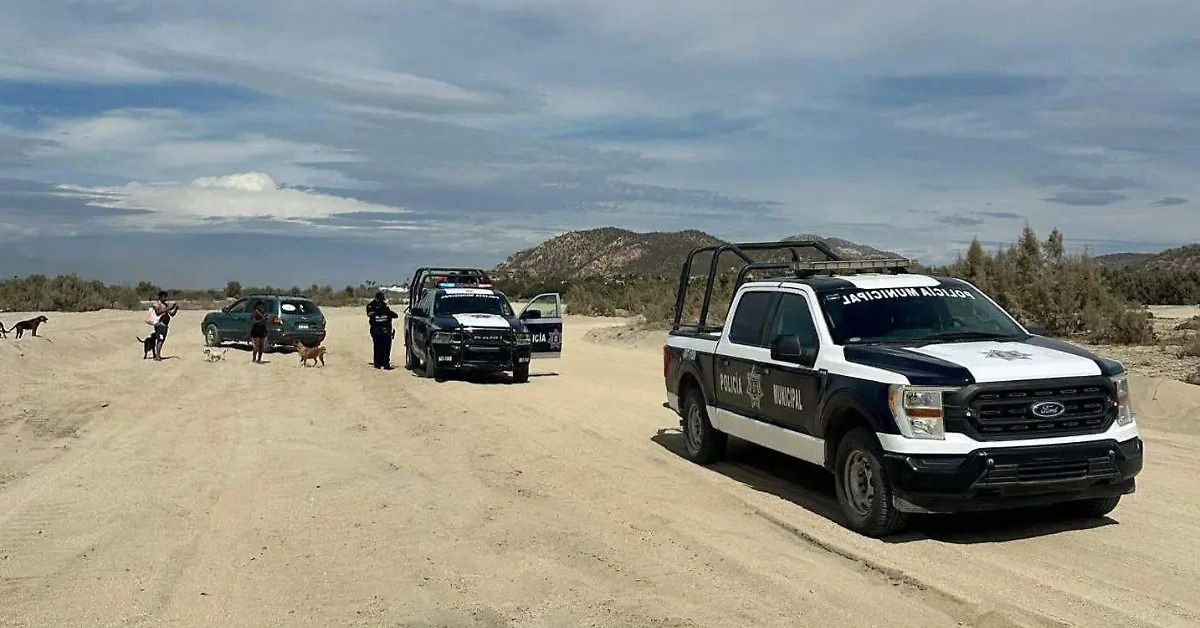
State officials say many of the invaded areas in Los Cabos are located in arroyos or other federally controlled spaces. That point is important. Arroyos may look dry for long periods, but they are natural drainage channels that can become dangerous during heavy rains and tropical weather.
In a place like Los Cabos, that risk is not theoretical. Storms can turn dry channels into fast-moving waterways. Building informal settlements in those zones can expose families to flooding, sudden water flows, and emergency evacuations. It also complicates long-term planning for roads, drainage, water service, and civil protection.
Authorities have also argued that irregular settlements in these areas create legal confusion. If land is under federal control, or if its ownership is unclear, families may spend money on lots that cannot be regularized easily, or at all. That leaves them without legal certainty, which is one of the most important phrases in this story. In practice, it means people can be left without secure ownership even after investing their savings.
The housing pressure behind the crackdown
The state says this crackdown is tied to a broader housing challenge. Officials argue that irregular occupations make it harder to carry out public housing plans because new invasions can appear as quickly as authorities try to open formal options.
That pressure is especially visible in Los Cabos. The region remains one of Mexico’s strongest tourism engines, but job growth and migration have outpaced the supply of affordable homes. Over time, that has pushed many workers and lower-income families toward informal markets, distant neighborhoods, overcrowding, or land with uncertain status.
The state government has linked its response to the federal housing push now underway in Baja California Sur. Officials have said the first phase has already started in Cabo San Lucas, where hundreds of homes are under construction, and that Los Cabos is expected to receive a large share of future units. The official argument is simple. If the government is trying to build formal housing, it does not want irregular occupation networks expanding at the same time.
That does not solve the deeper issue on its own. Enforcement may disrupt organizers, but it does not remove the demand that helped those settlements grow. As long as workers cannot find housing near where they earn a living, pressure on land will remain.
A legal story and a social story at the same time
It is important to separate what has been proven from what has been alleged. Authorities have said they identified six leaders and intend to act. That does not mean guilt has been established in court. At this stage, the most accurate reading is that the state is publicly signaling a tougher approach against people it says are promoting illegal settlement activity.
At the same time, the government is also trying to show that it sees the families involved as more than trespassers. Officials have spoken about working with ejidos and other entities to find ways for families to access land with legal backing. That is an acknowledgment that the problem cannot be addressed solely through arrests.
This is why the story may resonate beyond Baja California Sur. It reflects a wider tension seen in high-growth parts of Mexico. Tourism, construction, and migration create jobs, but they also increase rent, strain infrastructure, and push the housing problem onto people least able to absorb the risk.
What happens next in Los Cabos
The next step will be whether authorities move from public statements to specific cases, arrests, or formal charges against the alleged organizers. Readers should also watch whether the government pairs enforcement with faster delivery of legal housing options. Without that second part, the cycle can repeat.
There is also a practical question for residents. If more operations target irregular settlements in flood-prone or federally protected areas, some families may face displacement, legal uncertainty, or pressure to relocate. That makes the government’s promise of reubicación and certeza jurídica central to the story, not secondary.
For Los Cabos, this is now a test of whether officials can do two things at once. They need to stop illegal occupation networks if the allegations hold up. But they also need to show that people who need housing are not being left with only one option: buying into the next irregular settlement.