Cabo San Lucas has heard water promises before, which is why this latest investment matters. Authorities say more than 80 million pesos is now backing five projects aimed at strengthening distribution and easing pressure on a strained system. Officials also say the work should benefit more than 65,000 residents. The bigger question is whether these projects will bring more reliable service to neighborhoods that still depend on storage tanks, water trucks, and long waits between deliveries.
What the new investment is meant to change
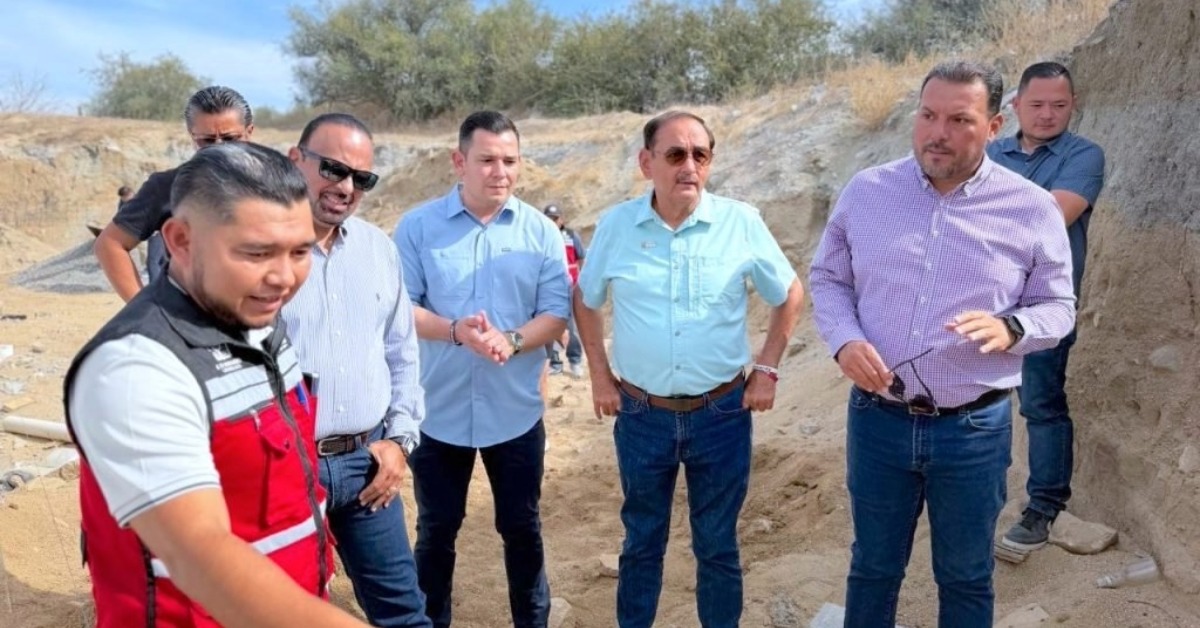
Los Cabos officials say more than 80 million pesos have been committed to five water infrastructure projects in Cabo San Lucas, with the goal of improving distribution in one of the municipality’s most stressed service areas. The announcement came after local authorities conducted a supervisory visit to the La Sanluqueña pumping station, where they reviewed work under the current package.
According to municipal officials, the projects include conduction lines, retaining walls, and deep well equipment. The city says those works should strengthen the local network and improve how water moves through the system. Authorities also say the projects are expected to benefit more than 65,000 people. That is a large number for a city where water service has become a regular source of frustration for residents and businesses.
The municipality says the works are being financed through the Fondo de Aportaciones para la Infraestructura Social, or FAIS, a federal fund used for basic public infrastructure. Officials have said the projects will later be turned over to OOMSAPAS Cabo San Lucas, the local water utility, for operation. City leaders have also said the projects are expected to be formally delivered in the coming weeks.
Why this matters beyond one announcement
For many readers outside Baja California Sur, this may sound like a standard public works update. In Cabo San Lucas, it is not. Water access has been one of the municipality’s most persistent pressure points. The local economy keeps growing. So does the population. But the water system has struggled to keep pace with demand, especially in fast-growing neighborhoods and areas that depend on scheduled distribution.
That gap between growth and service is what gives this story real importance. When officials announce new wells, new lines, or added pumping capacity, residents tend to judge those promises in practical terms. They want to know whether the tap will run longer, whether pressure will improve, and whether they will need fewer emergency deliveries by pipa, or water truck. In that sense, the headline number matters less than what the projects change on the ground.
The city has also linked the current works to an expected increase of 80 liters per second into the potable water network in Cabo San Lucas. That figure is important because it points to added capacity, not just repairs. If that increase is fully incorporated into daily service, it could help reduce pressure on a system that has often been stretched by high demand and uneven distribution.
The bigger water picture in Los Cabos
The new investment does not stand alone. In its first-year report, the municipality said OOMSAPAS had already directed more than 65 million pesos toward expanding and rehabilitating distribution networks and treatment facilities. Officials said that work included the rehabilitation of 12 deep wells, the installation of more than 9 kilometers of conduction lines, and the replacement of 1,800 meters of pipe. The municipality also said it carried out geophysical studies for new wells in areas including Migriño, El Tule, El Zacatal, and San José del Cabo.
That broader context helps explain why the latest announcement should be read as part of a long campaign rather than a quick fix. Los Cabos is trying to increase supply, improve water distribution, and reduce losses, all while serving a municipality that continues to expand. Officials have also pointed to larger structural projects, including a second desalination plant for Cabo San Lucas. In the same municipal report, authorities said that the project was designed for 250 liters per second and had reached just over 42% completion.
Those long-term projects matter because they show the city is pursuing several layers of response at once. Some works are meant to improve immediate distribution. Others are meant to add a new supply. Others focus on treatment, sectorization, and system control. For residents, however, the test remains simple. A stronger water strategy should mean more regular service and fewer days organizing life around shortages.
What shortages have looked like on the ground
The municipality’s own reporting offers a clue about how serious the problem has been. In its first-year summary, Los Cabos said it delivered 10,424 water-truck supports to areas without infrastructure in Cabo San Lucas alone. That number helps explain why even routine infrastructure updates get close attention. It also shows that the city has had to rely on emergency or supplemental delivery while improving the permanent network.
For households, that often means added cost, extra storage, and daily uncertainty. People buy rooftop tanks, ground cisterns, and private deliveries because they do not fully trust the schedule. Businesses face the same calculation. Hotels, restaurants, small shops, and service providers all depend on reliable water. That is one reason water policy in Los Cabos is not only a public service issue. It is also an economic issue.
This is also why international readers should pay attention. Cabo San Lucas is often seen through the lens of tourism, real estate, and beach living. But the city’s basic infrastructure tells a more important story. Rapid growth can put heavy pressure on systems that were not built for the pace of expansion. Water is where that pressure becomes visible.
What to watch next
The next stage will matter more than the announcement itself. Residents should watch for the formal delivery of the five projects, whether the added 80 liters per second is integrated on schedule, and whether service actually improves in neighborhoods that have faced long interruptions. It will also be worth watching how these works fit with the municipality’s greater efforts on desalination, new wells, and network modernization.
If the projects perform as promised, they could become one of the more concrete recent steps toward easing Cabo San Lucas’s water strain. If they do not, the city will still be left with the same question it has faced for years: how to keep a fast-growing destination supplied with a resource that remains limited, expensive to manage, and central to everyday life.
Deep Dive:
Cabo water shortage worsens as key wells stay offline
Los Cabos colonias report two months without water
Cabo desal plant output rises as city takes control