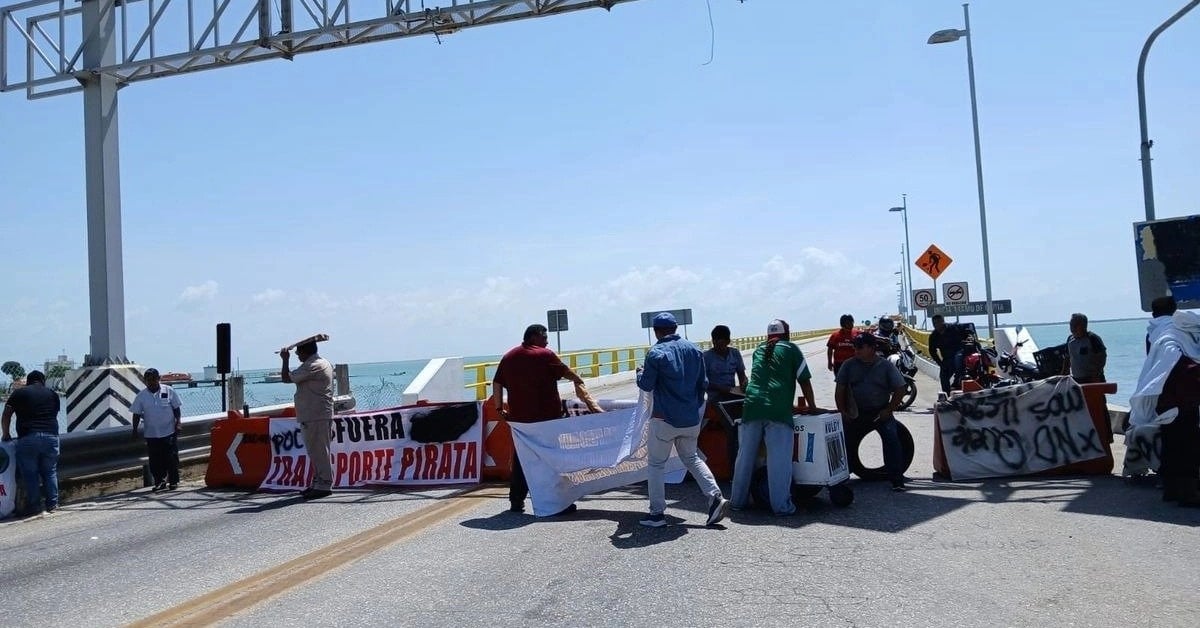
Hours after police used tear gas to break up a taxi blockade on the Zacatal bridge in Ciudad del Carmen, Campeche’s interior secretary urged all sides to sit down and sort the rules of the road. Drivers say unlicensed “pochimóviles” and app cars are undercutting them; the state says apps must be formalized and safety rules enforced. Detainees from the operation were later released, but accusations over the use of force are piling up. What’s at stake is more than a feud—it’s the peninsula’s main road link.
Zacatal bridge taxi blockade
After municipal police used tear gas to clear a taxi protest on Ciudad del Carmen’s Zacatal bridge, Campeche’s interior secretary, Elisa Hernández Romero, called for talks among the city, the state transport regulator (ARTEC), and driver groups, the goal is a “viable solution” that avoids new disruption, she said.
Authorities reported at least three detentions during the clearance. Those drivers were released the following day, the state confirmed. Some drivers now allege excessive force, while officials initially reported no injuries.
What the drivers want
The protest targeted what taxi unions describe as illegal competition: unlicensed app-based cars and “pochimóviles,” the small motorcycle-based carts popular in nearby neighborhoods. Drivers insist ARTEC step up enforcement against vehicles operating without the concessions state law requires.
Campeche’s government has stated that “pochimóviles” are not authorized to serve in municipal seats due to safety concerns; the law does not grant them city concessions. By contrast, platforms can operate if they’re formalized under ARTEC rules. That legal backdrop is central to the dispute.
Why this link matters
The Zacatal bridge carries Federal Highway 180 over the Laguna de Términos, connecting the Atasta peninsula with Isla del Carmen. It is a primary gateway into the Yucatán Peninsula, so that a closure can snarl long-distance traffic, freight, and local commutes alike.
This week’s action wasn’t a one-off: driver blockades at the bridge have recurred when promised enforcement stalls, raising the stakes for a negotiated fix.
Hernández Romero urged a roundtable to clarify enforcement, temper political heat, and keep essential corridors open. ARTEC says it will coordinate operations to verify compliance and sanction irregular service. Whether that calms the streets—or triggers fresh protests—will depend on visible, even-handed enforcement and whether all sides stick to any commitments made at the table.