Puerto Vallarta, Jalisco, August 28, 2026 – Puerto Vallarta will carry a five-part internationalization strategy through 2031 into sector worktables designed to turn broad ambitions into projects, partnerships and outside financing, but the version disclosed this week does not yet contain a public timetable or numeric targets.
The strategy, called Nuestra Ciudad de Puertas al Mundo, places the Directorate of Economic Promotion and Tourism in the lead role. The city’s announcement says the plan took eight months to prepare with technical support from Colombia-based PMO Latam and participation by Institución Universitaria Colegio Mayor de Antioquia. The municipal government said that work carried no cost to the city.
Its five pillars cover international positioning, tourism diplomacy and international cooperation, international connectivity and tourism mobility, investment and major-event attraction, and sustainable tourism linked to development cooperation.
The published descriptions add more detail to those headings. The city plans to strengthen its presence in priority markets, build relationships with cities and international networks, pursue new air and maritime links, attract sustainable tourism projects and global events, and use international cooperation to support conservation, innovation, resilience and protection of natural and cultural heritage.
That framework expands on PVDN’s initial coverage of the strategy through 2031. The new question is how the city will measure the promised results.
A voluntary manifesto and a second phase
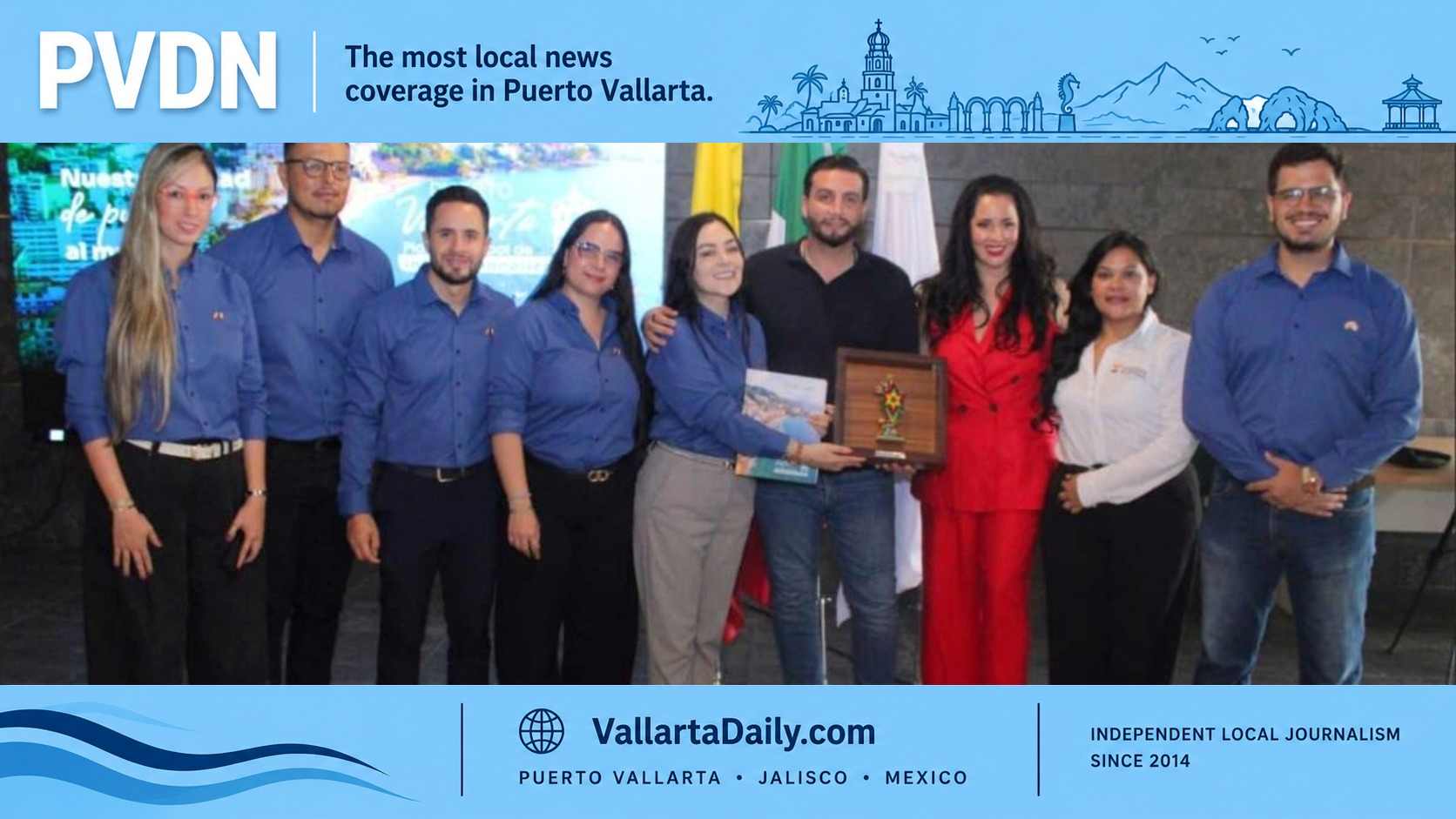
The document signed at the presentation is a manifesto rather than a binding project order. Its published terms describe participation as symbolic, declarative and voluntary, with no legal, financial, contractual or administrative obligations. The signatories agree to learn about the plan, accompany it, promote it and pursue continuity beyond a single administration.
Mayor Luis Ernesto Munguía González, tourism and economic promotion director Alejandra Cornejo, internationalization adviser Carolina Díaz Rivera, and council members Laurel Carrillo Ventura and Arnulfo Contreras signed the manifesto.
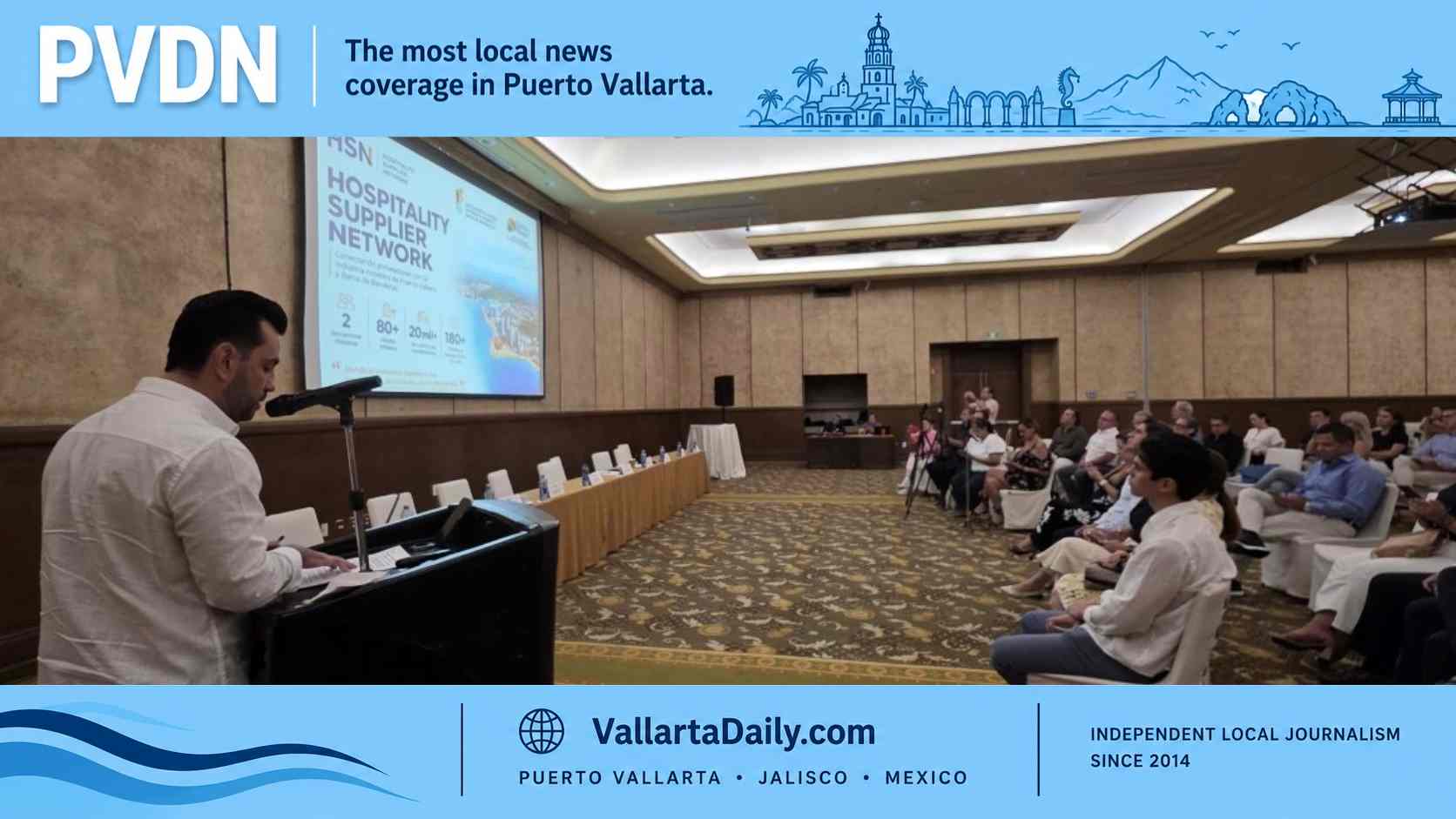
The presentation was described locally as the result of a first planning stage. The next confirmed step is a set of worktables involving municipal officials, businesses, universities, civil society and state tourism authorities. Local business representatives said the sessions would begin in the coming days, first checking the existing diagnosis against current local conditions and then identifying viable financing routes. Sustainable tourism funding is expected to receive early attention.
As of Friday morning, the municipal government had not attached the complete technical plan to its official announcement, and the document did not appear on the city’s public listing of municipal planning instruments. The public deadline is therefore broad. The strategy spans 2026 through 2031, while the worktables were announced only as beginning in the coming days.
No published calendar sets dates to select priority projects, submit funding applications, report annual progress or complete each pillar. The released material also does not assign individual projects to specific municipal departments beyond the lead role held by the Directorate of Economic Promotion and Tourism.
IMCO supplies a starting line
Puerto Vallarta begins this effort with a strong national ranking and a detailed list of weaknesses that can serve as an external baseline.
The Mexican Institute of Competitiveness released its 2026 Urban Competitiveness Index on June 2. It examined 72 urban areas through 35 indicators grouped into six subindices. Puerto Vallarta placed first among cities with 500,000 to 1 million people, a result PVDN reported on June 12.
The IMCO profile shows why the city enters the new strategy from a relatively strong position. Hotel occupancy reached 73.4 percent, second among all 72 urban areas. Locally generated revenue represented 46.8 percent of total public income, the highest share in Puerto Vallarta’s population group. The city also recorded the highest perceived safety rate in its group at 59.1 percent and led the national water-treatment-capacity indicator at 4.3 liters per second per 1,000 people.
The same city scorecard places Puerto Vallarta third in Innovation and Economy within its population group and first in Political System and Government. Its weaker group results were 16th in Infrastructure and 11th in Society and Environment.
Several individual indicators give the 2031 plan a measurable starting point. Only 0.6 percent of new housing was built inside the established urban area, placing Puerto Vallarta 62nd nationally. Homes equipped with both a computer and internet reached 28.8 percent, ranking 57th. Solid waste averaged 1.5 kilograms per person each day, ranking 71st. Economic diversification stood at 587 sectors, ranking 41st, while patent applications reached 0.9 per 100,000 economically active people, ranking 44th.
Those figures matter because a city can add international routes, sign partnerships and win events while still carrying weak local infrastructure, limited innovation and high waste production. The worktables will determine which of those conditions become named projects under the internationalization strategy.
The missing public scorecard
The five pillars can be measured without inventing a new competitiveness index. International positioning can be tracked through priority markets and sustained demand. Diplomacy can be judged through partnerships that produce funded programs or exchanges. Connectivity can be measured through new routes, added frequencies and service retention. Investment and events can be reported through capital secured, projects completed and bids won. Sustainable tourism can be measured through money obtained and documented changes in waste, water, mobility and heritage protection.
None of those targets has been published as a starting value, annual milestone or 2031 commitment under the new plan. IMCO provides baselines across several related areas, but the city has not publicly adopted them as the strategy’s scorecard.
The worktables are now the first results test. A public project list with responsible departments, dates, financing sources and target values would turn the five pillars into commitments that can be checked through 2031.