Quintana Roo wants property owners in Cancun’s hotel zone to bankroll overdue infrastructure after Fonatur’s exit, sparking debate.
Quintana Roo’s government wants the people and companies that own property along Cancun’s hotel strip to help pay for keeping it running. As part of the 2026 economic package now before the state Congress, the administration is proposing a new contribution aimed solely at owners and holders of real estate in the hotel zone, with the money reserved for public works and basic services in that corridor.
The measure is presented as a response to a structural gap that opened when the federal tourism agency Fonatur stopped maintaining the area and handed those duties to the state. For decades, Fonatur was responsible for the boulevard, drainage, lighting, landscaping and other services that support one of Mexico’s most visited destinations. Those responsibilities now sit with a state trust, but officials and business leaders have been warning for months that current resources do not match the scale of the needs.
Under the initiative, the new charge would apply to almost every privately held property in the hotel zone. That includes full hotel lots and commercial buildings, but also individual apartments, homes and storefronts inside condominiums. Public assets owned by federal, state or municipal governments would be exempt as long as they are used strictly for public purposes. If a public building is leased or used commercially, it would have to contribute in proportion to the benefit it receives from the works.
How the Cancun hotel zone tax would work
The proposal creates a scheme of “contributions for improvements” in what the state defines as Priority Zones for Sustainable Tourism Management. In practice, the first such zone is Cancun’s hotel corridor. Each time the state decides to undertake a public work there, such as resurfacing a stretch of Boulevard Kukulcán or upgrading drainage, it would calculate the total cost of the project and distribute that amount among the properties that stand to benefit.
The text of the reform says the base for calculating the payment will be the value of each property and the share of benefit it receives from the work. It also gives the tax authority wide leeway to decide which value to use, allowing it to pick the highest figure among cadastral valuations, commercial appraisals, bank valuations or declared purchase prices. That flexibility could increase the bill for high-value hotels and luxury condos, while also raising questions about how predictable the final charge will be for owners.
Once a project is approved, the state Tourism Secretariat must publish a specific agreement detailing the work, its total cost and the execution timeline. From the date that document takes effect, owners would have three months to pay their share in a single installment. The law clarifies that the total amount collected cannot exceed the cost of the work. If the money falls short, the state will cover the difference in a future budget. If there is a surplus, it must be spent on complementary works in the same zone.
All of the revenue would flow into the Fideicomiso para el Fortalecimiento a la Actividad Turística en Quintana Roo, the state trust created to take over hotel-zone maintenance after Fonatur’s exit. Analyses of the trust’s finances indicate that its current resources are roughly half of what the federal government once invested in the same tasks, even as the infrastructure continues to age and visitor numbers remain high.
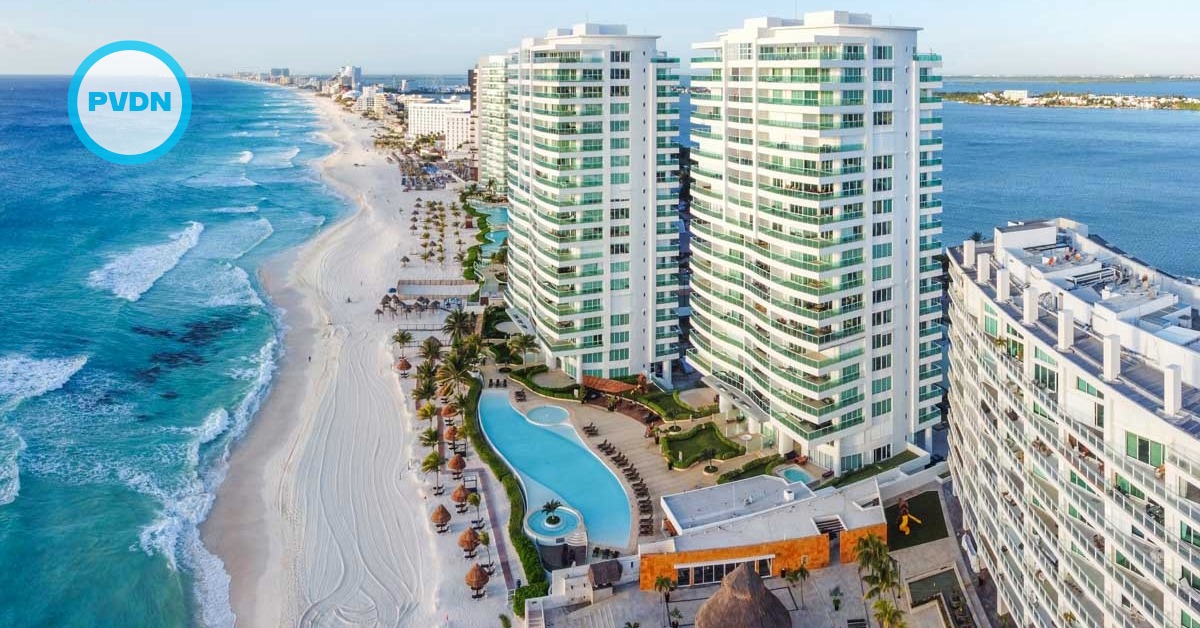
Cancun’s hotel zone now concentrates more than 40,000 rooms and a backbone of pipes, cables and roadways first laid out more than fifty years ago. State tourism officials have described a long list of pending works, from modernizing wastewater treatment plants to renewing lighting, sidewalks and green areas. The new levy is pitched as a way to ensure that those projects can go ahead without diverting funds from other regions of the state.
Who stands to win and lose from the Cancun hotel zone tax
Supporters inside government argue that the Cancun hotel zone tax follows a simple principle: those who see their property values and profits rise thanks to public works should help pay for them. They also say the measure will protect tourism by avoiding visible deterioration in the destination’s most important showcase and by giving the maintenance trust a more stable source of income.
But even before the full text of the 2026 fiscal package was made public, business groups in the state were already bristling at the idea that large hotels, high-value properties and condo owners would shoulder more of the burden. Industry representatives have spent the past year warning that existing local charges, including the environmental sanitation fee and the visitor tax paid by foreign tourists, are already significant. The new contribution arrives just as the state is also seeking to tighten collection of that visitor fee, even while keeping its rate unchanged.
The way the law is written has drawn legal and practical questions. The initiative leaves the exact tariff table for the contribution to be defined later by the authorities, rather than spelling out clear brackets in the law itself. It also does not specify how owners will be notified of the exact amount they owe beyond the publication of the project agreement. In a corridor filled with offshore companies, timeshare schemes and absentee condo owners, critics worry that this could complicate enforcement and fuel disputes.
Another point raised in early reactions is the precedent the reform sets. Because the contribution is tied to “priority tourism zones” rather than naming Cancun alone, the same model could be extended to other resort areas in Quintana Roo. State officials have already pointed to the Marina of Cozumel as a likely candidate for similar treatment. That opens a broader debate about how much of the cost of tourism infrastructure should be shifted from general taxpayers and visitors to the owners of the land under the hotels themselves.
For now, the proposal remains under discussion in the state Congress. Lawmakers will have to decide how far they want to adjust the text to address the concerns of hoteliers and property owners without undermining the central goal of securing stable funding for Cancun’s infrastructure. Whatever version is ultimately approved will signal how Quintana Roo plans to balance public responsibility and private benefit in the country’s flagship beach destination for years to come.