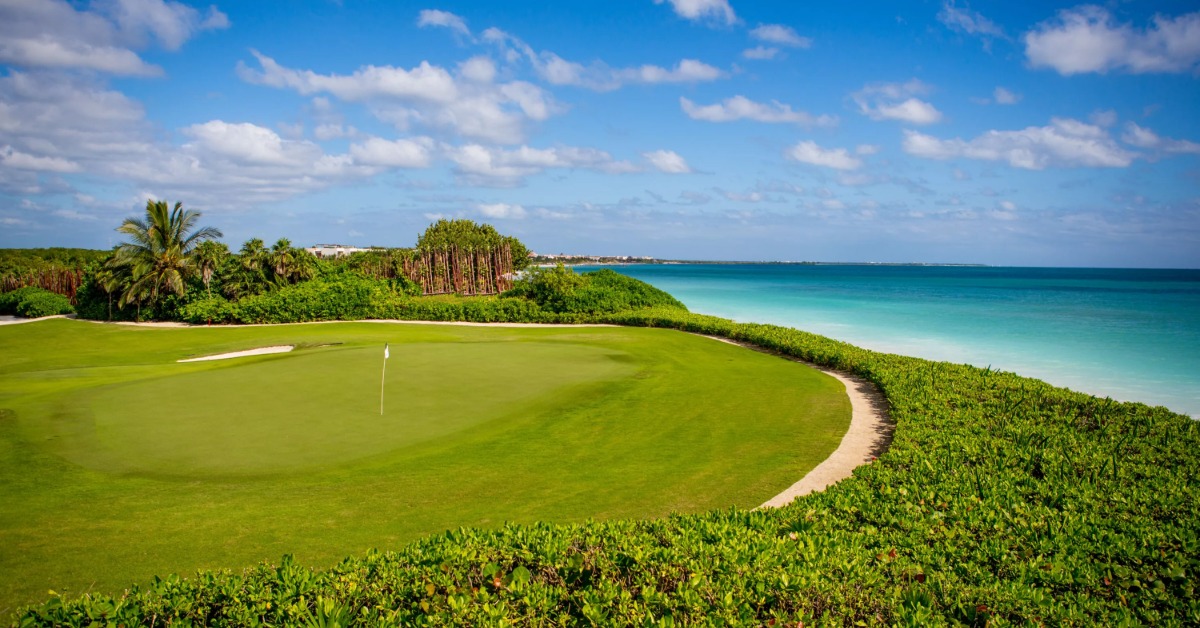
The LPGA is heading back to Mayakoba for the second edition of the México Riviera Maya Open at Mayakoba, bringing another high-profile week of women’s professional golf to El Camaleón in Playa del Carmen.
Tournament week runs from April 27 to May 3, with official competition rounds scheduled for April 30 through May 3. The event is expected to feature a 144-player field competing for a $2.5 million purse, a scale that puts the stop in line with serious LPGA events and not simply a regional exhibition.
For international readers, that matters because this is not a one-off destination tournament built only for visitors. It is part of the LPGA calendar and returns after a successful debut in 2025, when Chisato Iwai won the inaugural edition. That first event also marked the tour’s return to Mexico after an eight-year absence, giving Mayakoba a role in restoring the country’s place on the women’s professional circuit.
The 2026 field is expected to include major names, with Nelly Korda and Mexico’s Gaby López among those listed by LPGA materials. That gives the event both international reach and strong local relevance, which is exactly what organizers appear to want.
Why Mayakoba matters beyond golf
There is a reason this event keeps drawing attention, even from people who do not follow golf closely. El Camaleón is already one of Mexico’s best-known tournament courses. Over the years, it has hosted top-level events tied to the PGA Tour, LIV Golf, and now the LPGA.
That history gives Mayakoba something many resort destinations chase but rarely achieve. It can market itself not only as a luxury place to stay, but also as a venue that can stage international sport under pressure. In practical terms, that means television crews, sponsors, hospitality operations, transport logistics, and a visitor experience that has to work at a high level for several days in a row.
For Playa del Carmen, that is part of the broader message. This event is being presented as a signal that the Riviera Maya can continue to expand its tourism identity beyond beaches, nightlife, and all-inclusive resorts. Sports, especially televised sports, create a different kind of exposure. They put the destination in front of audiences who may never have considered it for a trip, an investment, or a repeat visit.
That does not mean golf suddenly replaces traditional tourism. It means local officials and private operators are trying to add another layer to the region’s appeal.
A bigger sports-tourism strategy is taking shape
Organizers have been direct about the economic and promotional value of the tournament. Their pitch is not only about elite competition. It is also about visibility, international branding, and the opportunity to reinforce the Riviera Maya as a destination capable of hosting large-scale events with global reach.
That strategy fits a wider pattern in Quintana Roo. The state has been leaning harder into event-based tourism, from sports to entertainment, as it looks for ways to keep demand strong and diversify the reasons people travel there. Golf fits neatly into that plan because it attracts a mix of fans, sponsors, business travelers, and high-spending visitors.
For expats and long-term foreign residents in Mexico, this matters in a more practical way, too. These events often shape local traffic, hotel demand, restaurant activity, and short-term pricing. They also influence how cities like Playa del Carmen present themselves to the outside world. The story is not just about whether a champion lifts a trophy on Sunday. It is also about how a destination uses that moment.
In that sense, the LPGA stop is a test case. If attendance, television reach, and local spending meet expectations, it strengthens the argument for more sports events in the region. If it falls flat, the tourism value becomes harder to sell.
What readers should understand about the LPGA stop
For readers new to the tournament, one detail is worth noting. The event is being promoted as the LPGA’s only stop in Latin America, which gives it weight beyond Quintana Roo. It places Playa del Carmen on a calendar that is otherwise dominated by the United States, Asia, and a small number of other international markets.
That status also helps explain why organizers are emphasizing both Mexican talent and global stars. A tournament like this works best when it can sell two stories at once. One is the tour’s international field and prestige. The other is the local connection, especially through Mexican players who give home fans a direct reason to watch.
The result is a tournament that carries more significance than its size alone might suggest. It is a golf event, but it is also a branding exercise, a tourism bet, and a statement that Mexico wants to stay visible in elite women’s sports.
Whether the Riviera Maya can turn that into a longer-term advantage will not be decided in one week. But the return of the LPGA to Mayakoba suggests the region believes the opportunity is real, and worth building on.