Cancún didn’t just happen. It was built when Cuba’s revolution and U.S. travel bans rearranged the Caribbean’s tourism map. That Cold War detour helped turn a mangrove island into Mexico’s best-known resort. Now Cuba is back in the region’s headlines. Washington is tightening pressure on Havana, with oil and sanctions at the center. The next ripple could touch Quintana Roo in surprising ways: altered flight patterns, shifting vacation demand, and more people risking the sea. The past may be closer than it looks.
A resort built in Cuba’s shadow
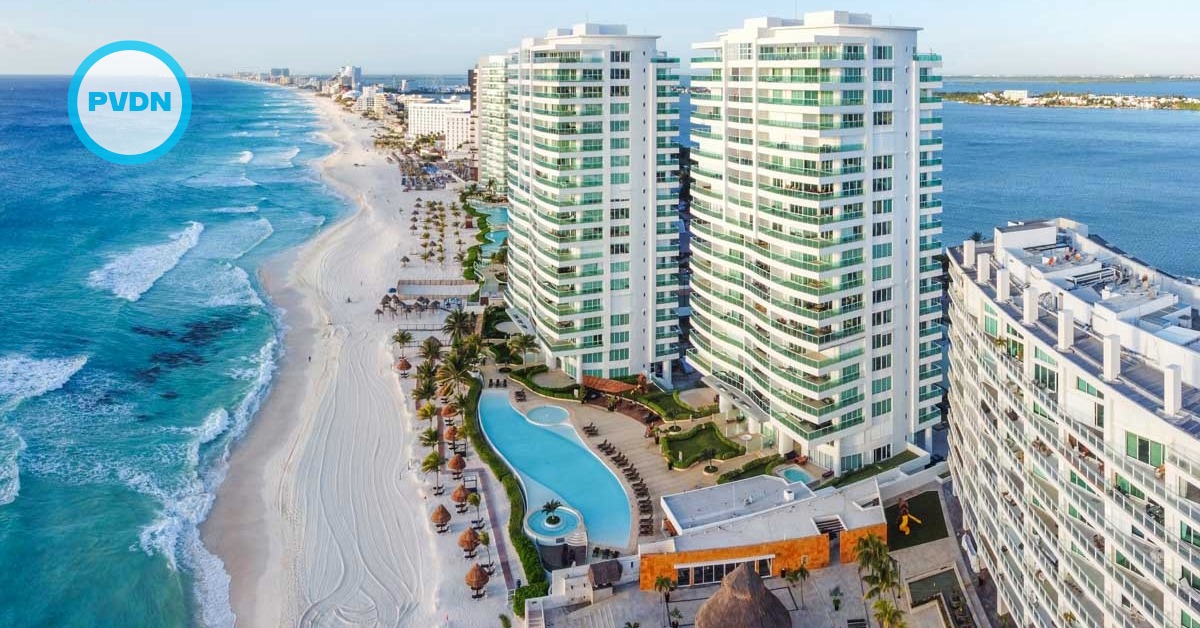
To most visitors, Cancún feels like pure geography: turquoise water, white sand, easy flights. Its origin, though, was also politics. When Cuba’s revolution succeeded, and Washington later shut the door to regular U.S. travel there, the Caribbean map shifted overnight. A growing pool of American travelers still wanted sun, rum, and warm water. But now they needed a new address. Mexico’s planners saw the opening. They looked along the Yucatán Peninsula’s empty northeast edge. They picked a barrier island and a lagoon on the same sea lanes as Cuba. The bet was simple: build a modern resort, market it hard, and let proximity do the rest. In a February 4, 2026, column, a local writer reminded Quintana Roo readers of that story. Cancún’s rise was never just about beaches. It was about timing, and about being the closest “safe” alternative when Cold War lines hardened. That old logic matters again today, as Cuba’s crisis deepens and regional travel patterns start to wobble.
Cold War math and the making of Cancún
Before the first hotel rose from the mangroves, Mexico’s tourism agency and the central bank ran the numbers. Their feasibility work argued that Cuba’s sudden absence from the U.S. tourist circuit created a vacuum. It warned that the rest of the Caribbean would fill it fast. The solution was a state-built scale. Construction began in 1970 with roads, a bridge to the island, and an airport designed for international jets. Early investment came largely from the federal government because private investors were skeptical at first. Then the curve took off. By the mid-1970s, Cancún had become a resort town. Within a decade, it had become a headline destination for North American and European package travelers. Its growth also pulled workers from across Mexico. A planned hotel zone became a much larger city with real social needs. That two-track model—tourism paradise on one side, booming service city on the other—remains Cancún’s defining feature.
Why the Cuba question is back
Now the regional chessboard is moving again. On January 29, 2026, the U.S. president signed an executive order that threatens tariffs on countries that supply oil to Cuba. Mexico has become a major lifeline in that trade, and the pressure is already rattling energy flows. For Cubans, fuel is not a luxury. It powers hospitals, water pumps, transport, and the basic rhythm of daily life. When diesel runs short, blackouts spread, food spoils, and tourism—a pillar of cash income—shrinks further. That kind of squeeze tends to spill outward. It can push people to leave, and it can also change where tourists book their next winter escape. There is a second, longer-term twist. If U.S. travel rules ever loosen, Cuba could rebuild reliable services. It would then compete for the same sun-seeking market that Cancún was built to capture. Analysts have long warned that a broad opening could redraw the Caribbean market share, even as overall tourism continues to grow.
What Quintana Roo should watch
For Quintana Roo, the near-term risk is less about competition and more about crisis management. Cuban migrants already show up by sea near Isla Mujeres and Cozumel. Some are rescued by the navy or by passing ships. Cruise ships have also reported finding small, overcrowded boats adrift. Migrants are often brought to Puerto Juárez or Cancún for medical checks and processing. A deeper humanitarian breakdown could increase those crossings. The first landing point could be the same beaches tourists photograph at sunrise. Local authorities would face a familiar dilemma. They must offer emergency care and process immigration status quickly. They also have to keep politics out of it. Hotels and airlines will watch the calendar. If Cuba’s situation worsens, some travelers may reroute to Mexico for stability. If Cuba later opens up further, some demand could shift back east. Either scenario lands on Cancún’s doorstep. For expats, the takeaway is simple. The Caribbean is one shared system, and Havana’s shocks reach Mexico quickly.
With information from El Heraldo de México Quintana Roo, IMF Working Paper, IMF Caribbean Corner, Revistes UB, AP News, Reuters, El País