Cancun’s planned Financial and Technology District is being framed as a new engine for real estate finance before the World Cup. Serfimex Capital says the project could draw large foreign investment and spur demand for bridge loans, while state and municipal officials are promoting a 100-hectare district near the airport, Highway 307, and the Tren Maya. The proposal now sits at the intersection of tourism pressure, business services, and a long-running effort to diversify Quintana Roo’s economy.
Serfimex ties district to real estate financing
Serfimex Capital is pitching Cancun’s planned Financial and Technology District as a real estate growth driver before the 2026 World Cup, saying the project could help attract more than $1.3 billion in foreign direct investment tied to business services, technology, and property development. ContraRéplica Puebla reported the estimate on Monday, May 25, citing Serfimex Capital.
In the same report, Serfimex said it expects to place 2.5 billion pesos in bridge loans in Quintana Roo over the next two years. The company described the financing as aimed at developers working in housing, hospitality, mixed-use projects, and other property segments connected to the planned district.
What is planned for the district
The district was announced in March at the Banking Convention in Cancun, and El Economista reported that its creation was published the following day in Quintana Roo’s official gazette. That report described a government-owned zone with a first stage of up to 100 hectares and a broader district surface of five kilometers.
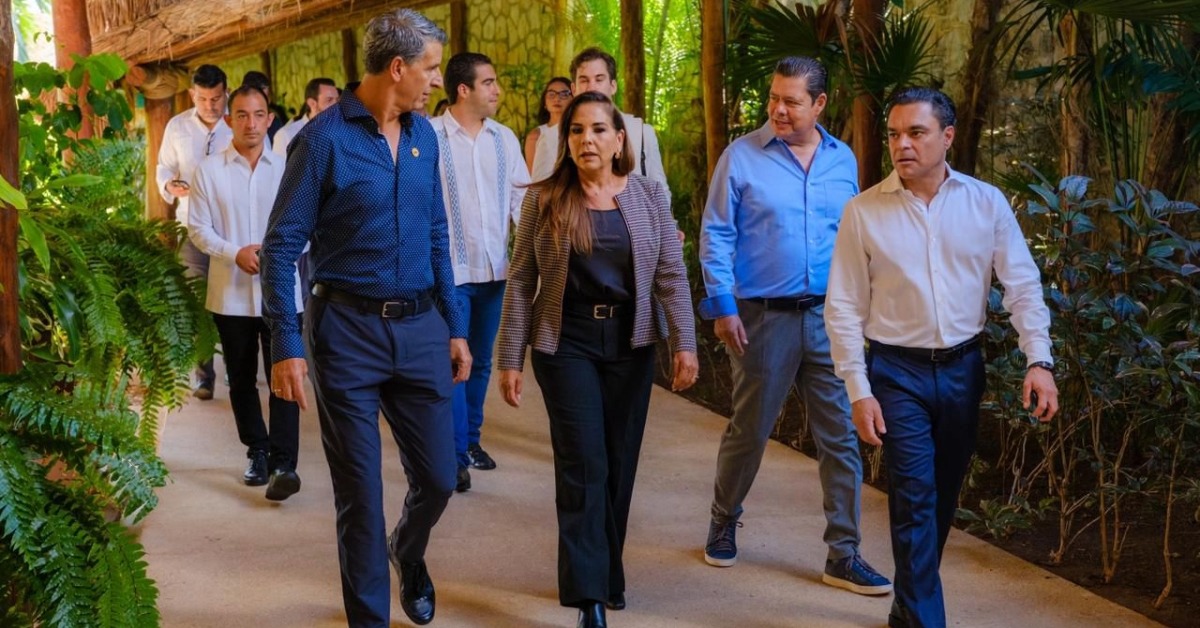
State officials later presented the plan to more than 200 business representatives at a May 7 meeting of the Caribbean Business Coordinating Council. According to the Quintana Roo government, the project is planned near Cancun International Airport, Federal Highway 307, and the Tren Maya, with space for corporate offices, technology research centers, specialized hospitals, convention hotels, and business-acceleration areas.
Municipal and state officials have pointed to tax incentives as part of the offer to investors. Benito Juárez Mayor Ana Paty Peralta said the municipality would provide full discounts on property tax and the real estate acquisition tax, known as ISABI, along with a 50% discount on construction licenses for 10 years.
World Cup timing and Cancun’s role
The World Cup connection is indirect. Mexico’s tournament matches are scheduled for Mexico City, Guadalajara, and Monterrey, while Cancun is being discussed as a tourism and logistics gateway rather than a match venue. Vallarta Daily previously reported that Cancun International Airport is included in Mexico’s broader airport modernization plans before the tournament, including planned work at Terminal 1.
That timing gives Serfimex’s pitch a business context. The company is linking demand for real estate financing to the planned district, while officials are presenting the project as a way to attract financial, corporate, health, education, and technology activity beyond Quintana Roo’s hotel economy.
The exact level of private investment remains a projection. Serfimex described the $1.3 billion figure as a potential investment the district could attract, while its own near-term financing plan is the projected placement of 2.5 billion pesos in bridge credit over two years.