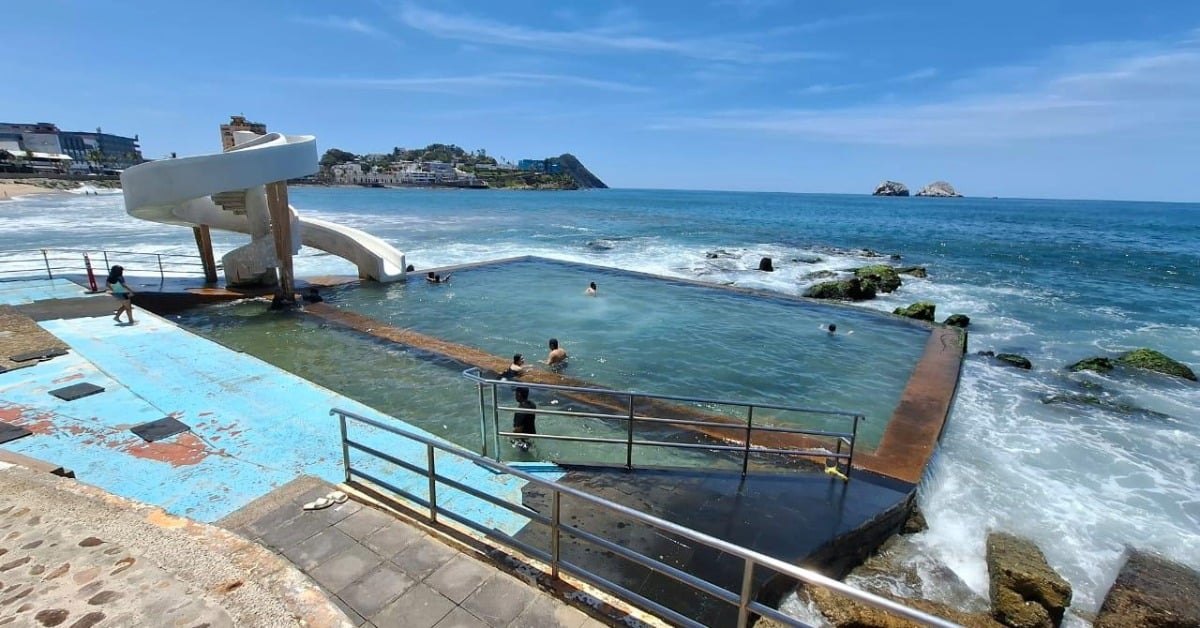
Carpa Olivera pool reopens
Carpa Olivera pool reopens to swimmers on Sunday, August 17, 2025, after seven days of closure that turned the ocean landmark into a look-but-don’t-touch attraction. Tour groups and local families arrived early and stayed through the afternoon, making the most of milder seas along Paseo Claussen. Conditions were favorable but not trivial: wave heights topped out at one meter, enough to create motion in the basin without the pounding that forced the shutdown.
Reopening day doubled as a stress test. The surf had ripped up floor tiles at the ends of the structure and near the spiral slide, leaving edges that could cut feet or snag a fall. Attendants marked those portions with yellow tape and kept swimmers to the central, safer zones. The city also deployed a lifeguard from the Aquatic Rescue Squad to keep eyes on crowds that swelled as temperatures hit 31°C, with a heat index around 36°C.
A week of caution gives way to a careful restart
The closure covered the previous week, when waves reached about 1.8 meters and hammered the pool’s exposed corners. Shutting the gates kept people off the slick concrete and away from the slide, a decision that likely prevented injuries while crews assessed the structure. Visitors still came, taking photos from the malecón and the stairs that trace the cliff, a reminder that this isn’t just a place to cool off—it’s one of Mazatlán’s calling cards.
With access restored, the city is trying to strike a balance. On one hand, the natural pool is a reliable magnet for day-trippers. On the other hand, it needs repairs that can’t be rushed between crowds. Officials had signaled maintenance for bathrooms and floors, and even a cleanup to cover graffiti; the public saw the gates open first. The reality on Sunday was a compromise: swim, but mind the tape.
What stayed closed and why it matters
The unstable pieces are the pool’s ends and the signature spiral slide. Tiles loosened by repeated impact leave uneven edges and missing sections underfoot. Those details sound minor until you picture a crowded basin, a misstep, and a sharp edge hidden under cloudy water. Restricting these areas is less about optics and more about keeping the injury count at zero while crews plan the fix.
Attendants reported steady compliance, helped by visible tape lines and the lifeguard’s presence. Swimmers clustered in the central bowl where the surge is gentler and footing is better. Parents encouraged kids to stay within reach as sets rolled through, a rhythm familiar to anyone who has used the Carpa on energetic days.
The draw remains, the work remains too
Sunday’s turnout underscored why the city moved to reopen as soon as the seas calmed. The Carpa is free, central, and iconic—a place where grandparents can perch on warm concrete while kids bob in saltwater safe from open swell. That civic value is exactly what argues for finishing the postponed maintenance. Bathrooms and floor repairs are not glamorous projects, but they’re the difference between a quick reopening and a reliable season.
The ocean helped make the case. One meter on the wave buoy reads as playful; a week earlier, 1.8 meters read as risk. The structure lives at that mercy. Keeping it safe means staying ahead of small breaks before they multiply, then stepping back again when the sea insists. On Sunday, the city took the first step back toward normal—measured, watchful, and welcomed by the people who use the pool the most.