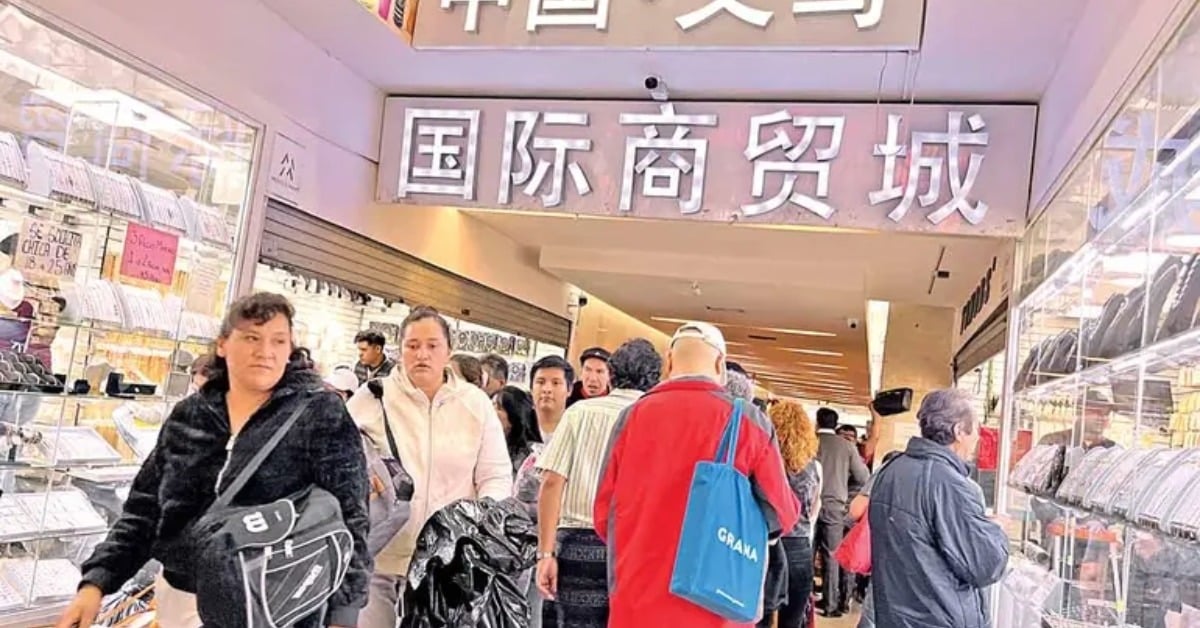
Mexico City’s historic core is in a tug-of-war between tradition and scale. Business leaders claim Chinese-run wholesale plazas in CDMX strain Centro Histórico merchants, overloading old buildings, and fueling a gray supply chain that dodges permits and taxes. City hall says enforcement is ramping up. Who’s right, and what’s actually legal inside a UNESCO-listed district? We walked through the claims, the rules, the enforcement record, and the broader China–Mexico trade story to separate risk from rhetoric—while flagging what to watch next.
Chinese-run wholesale plazas
Mexico City’s central business chamber says the Centro Histórico now hosts more than 600 warehouses and “plaza” markets operated by Chinese entrepreneurs, many of which have land uses that don’t match the permitted uses of the buildings. The group attributes a 60% drop in sales among established local merchants to this shift and wants city authorities to scrutinize permits, safety conditions, and customs compliance. The headline numbers are Canaco’s, not an official census—but they’ve been echoed across major outlets and put city regulators on the spot.
Canaco’s claim arrives in a context that’s bigger than one plaza. Over the past year, enforcement in the Centro has targeted large buildings used as distribution hubs—most notably Plaza Izazaga 89, where authorities seized tens of thousands of counterfeit or illicit goods and repeatedly sealed parts of the property due to urban-development and safety violations. The government has alternated between shutdowns and partial reopenings as owners attempt to regularize.
What the law actually says
Strict land-use rules govern the Centro Histórico. In Perímetro A, buildings aren’t supposed to operate as bulk storage or logistics depots; the point is to preserve habitability and heritage in a dense, aging district. Authorities and prior diagnostics have repeatedly warned that informal warehouses packed with heavy merchandise can imperil structural integrity and public safety—especially in historic or residential buildings that were never designed to support such a load.
Enforcement falls primarily to INVEA, the city’s verification agency, which can suspend businesses operating without required documents or with land-use violations. City hall and INVEA have publicized recent operations in the Centro against irregular construction and businesses—separate from the “Chinese plazas” debate—suggesting inspections are not purely rhetorical. Still, INVEA rarely publishes a comprehensive, up-to-date ledger of closures, which makes independent verification of totals difficult.
Safety, fires, and old buildings that carry new weight
The safety concern is not abstract. Firefighters have battled warehouse fires in Centro buildings this year, and civil-protection officials point to overloaded floors and improvised electrical setups as recurring risks. Canaco’s statement links recent fires to the warehouse boom, though it doesn’t present a formal causal dataset. What’s clear is that fighting multi-story fires in 19th-century structures packed with merchandise is a high-stakes operation that can shut down several blocks for hours.
Plaza Izazaga 89 became the symbol of that risk for CDMX Chinese-run wholesale plazas. Apart from counterfeit goods seizures led by federal and IP agencies, city development authorities cited structural and land-use problems in ordering closures. Coverage indicates that the property has been sealed more than once since mid-2024; at times, some floors reopened while others remained shut, illustrating the patch-by-patch nature of enforcement in a large building with hundreds of stalls.
The scale question, and what’s being counted
“Six hundred” is now the most quoted number in the public debate. It likely reflects an aggregation of warehouses, market-style plazas, and apartments repurposed for storage in northern Centro corridors, such as Peña y Peña, Manuel Doblado, and Bolivia. The media have repeated the figure, sometimes adding that roughly 3,500 “Asian” establishments make up one-fifth of the area’s businesses—again, a chamber estimate, not an audited count. Policymakers should treat it as a starting point for an official inventory, not a finish line.
The Autoridad del Centro Histórico and city diagnostics have separately documented the illegal use of warehouses across the perimeter, underscoring that the land-use problem predates the latest headlines and spans various nationalities and business models. The legal bottom line is the same: if your permitted land use is retail or housing, operating a bulk warehouse in that space can trigger sanctions.
Enforcement is ramping up, but the response is fragmented
City statements and news coverage this month indicate intensified checks on irregular works and establishments within protected zones, including suspensions of construction in heritage buildings and on businesses lacking documentation. INVEA’s public alerts emphasize that “low-impact” businesses still require proper paperwork; failure to produce it can draw fines and seals. Coordinated Centro operations bring in multiple agencies, but by design, they focus on specific violations rather than an ethnic or national profile.
At the same time, federal actions against counterfeit goods at sites like Izazaga 89, CDMX Chinese-run wholesale plazas, have intersected with local land-use enforcement. In late 2024, federal authorities staged a major raid, and officials later discussed the extinction of the domain (asset forfeiture) as a potential remedy. These steps, while dramatic, don’t substitute for the day-to-day zoning work that determines whether a given building can legally function as a warehouse.
Commerce, migration, and the China–Mexico backdrop
China is Mexico’s second-largest trading partner, and bilateral trade flows have expanded even as Mexico has tightened tariffs on certain imports—especially in textiles—under pressure to protect its domestic industry and amid U.S. political developments. That macro trend increases the incentives for large urban logistics nodes, legal or otherwise, to cluster where retail and informal distribution overlap. It’s not surprising that these nodes emerge in a central, long-established commercial district like the Centro.
The debate also carries an uncomfortable subtext. Past coverage has cautioned against conflating urban planning violations with ethnicity. Residents and legacy merchants report genuine displacement and nuisance; experts warn that a share of the anger risks sliding into xenophobia if the conversation reduces complex urban regulation to “Chinese versus Mexican.” Accurate counts, consistent enforcement, and transparent public data are the antidote to both impunity and scapegoating.
Two near-term indicators will show whether policy is catching up: first, a formal, public inventory of irregular warehouses and plazas—by address, permit status, and sanctions—so the debate rests on verifiable facts; second, steady follow-through by INVEA and the city on land-use and safety inspections, not just headline-grabbing raids. Today’s reports suggest a more active posture, but durability remains a key factor. For merchants on both sides of the argument, clear rules and predictable enforcement—not blanket suspicion—are what will decide the Centro’s next chapter.