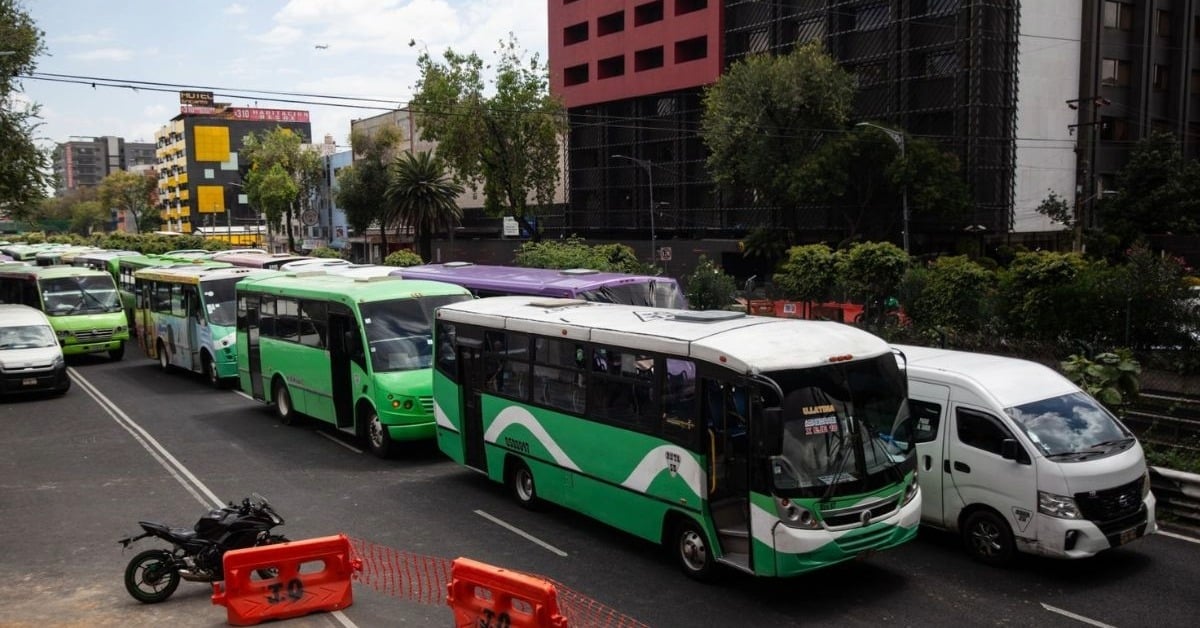
With millions of students heading back to class on Monday, transport unions pulled back from a promised city-wide shutdown in Mexico City and parts of the State of Mexico. After late-night talks with the capital’s government, leaders of the Fuerza Amplia de Transportistas agreed to hold off for at least a week while formal meetings on fares and fuel support get underway. Valle de Toluca operators also shelved a separate action. What’s on the table now, and what should commuters expect next?
CDMX megablockade postponed
Transport leaders called off a citywide blockade planned for Monday after sitting down with Mexico City’s Government Secretariat over the weekend. The Fuerza Amplia de Transportistas (FAT) stated that officials established a direct channel with Secretary of Government César Cravioto and set up work tables with Mobility and Finance, prompting the coalition to delay the action to avoid colliding with the first day of school.
City officials stated that the decision followed discussions with FAT representatives and that negotiations would continue to prevent disruptions. FAT’s statement framed the pause as a gesture toward families on the day of school return and stressed that the option to protest remains if talks stall later this month.
What changed in Edomex
In the State of Mexico, transport operators in the Valle de Toluca also canceled a planned stoppage. The local Chamber of Passenger and Tourism Transport (Canapat) said it accepted a 9:00 a.m. work-table meeting with state authorities in place of the Monday action. Operators cited fare and safety concerns, but agreed to continue service.
N+ reported that the Toluca megamarch was postponed after a late-night confirmation from Canapat, which rescheduled the first meeting for Monday morning. The Edomex adjustment mirrored the capital’s de-escalation and aimed to keep buses moving for the start of school.
What transport groups want
FAT has pushed for a fare hike and relief on operating costs, including fuel support. Press coverage of the planned action noted a proposed increase from 12 to 16 pesos and requests for fuel bonuses, arguing that current economic conditions have left many concessions underwater. Those items are now being formatted for the new worktable.
The coalition’s pause does not end the dispute. FAT leaders say they will keep negotiating but maintain the right to mobilize later in September if there’s no progress. City officials, for their part, signaled willingness to keep talks open to avoid impacts on commuters.
Why the timing mattered
Monday marked the first day of classes for the 2025–2026 school year in basic education, a return that adds pressure to roads and bus corridors. The national school calendar sets Sept. 1 as the start date, a context both sides cited in favor of postponement.
Newsrooms and the city’s own briefings framed the delay as an effort to keep traffic flowing for drop-offs and morning commutes. That practical concern—more than any grand bargain—appears to have tipped the calculus toward stepping back from a high-impact showdown on day one.
What to watch this week
FAT said authorities requested “at least a week” to work through fares, fuel support, and labor conditions. If talks yield concrete proposals, the megamobilization may be put on hold; if not, the group has left the door open to reschedule by the end of the month. Keep an eye on official channels from the Government Secretariat and FAT to see if those meetings produce timelines or commitments.
For riders, the immediate takeaway is simple: service remains in operation in Mexico City and the Valle de Toluca while negotiations proceed. The next signal will likely come after the first round of work-table sessions wraps, when both sides decide whether to extend the pause or set a new protest date.