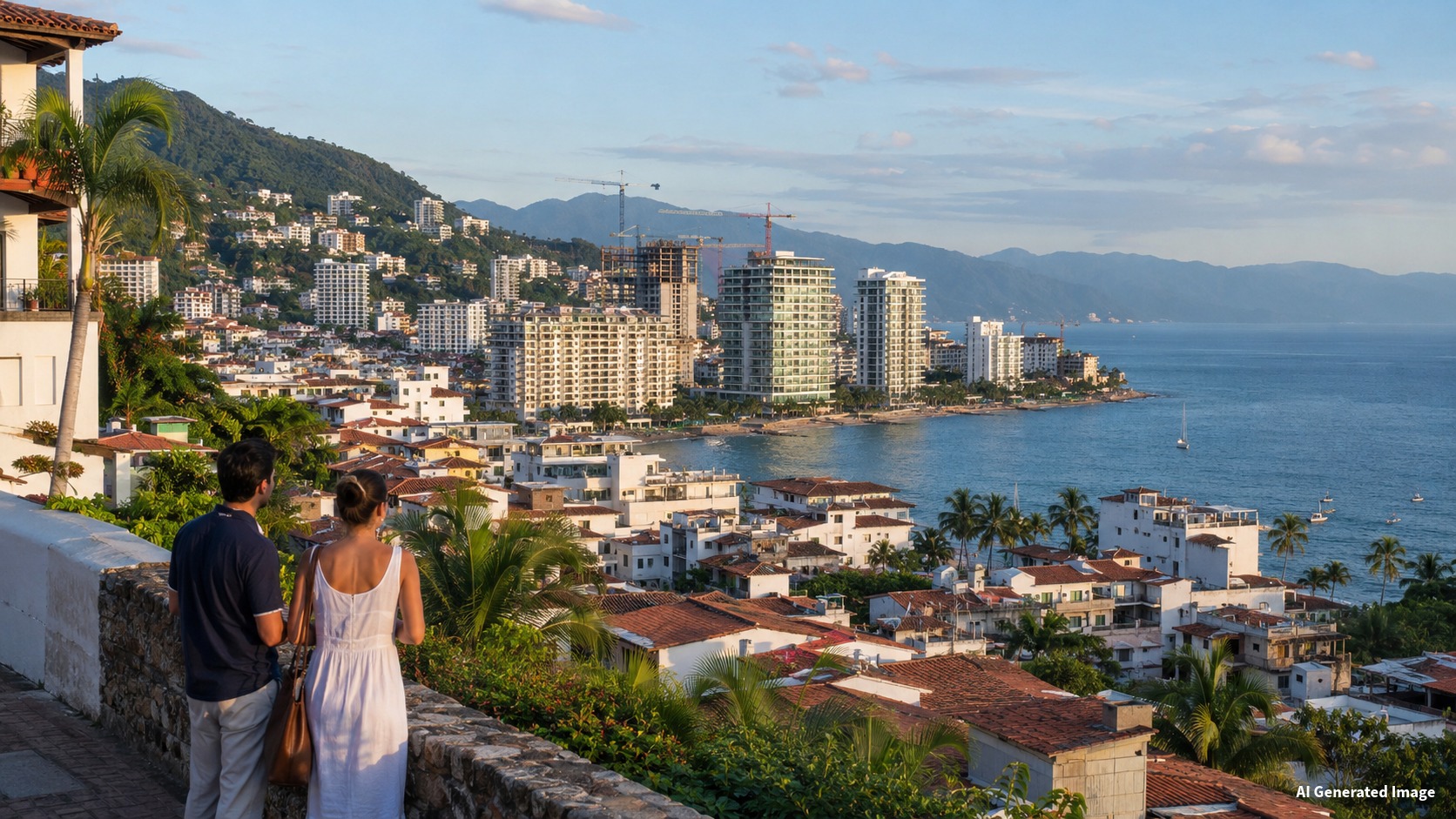
SEAPAL reported Oct. 5 that high tides affected Las Glorias while damaged wastewater pumps disrupted the sanitary network serving Versalles.
SEAPAL said added equipment restored 40% of lost pumping capacity at the Norte I wastewater plant. Crews also cleaned streets and cleared sewers in Versalles.
I reviewed SEAPAL’s notices, official map listings and flood guidance for this PVDN assessment. The checks below cover the dwelling, shared building equipment and access streets.
How the disruption affects a housing decision
In a separate notice dated Oct. 5, SEAPAL said its work aimed to limit effects toward Avenida Francisco Medina Ascencio. It also identified part of Versalles and located added pumping work at Norte I in Las Mojoneras.
Those notices describe coastal effects, wastewater problems, and work on public streets. They do not establish whether a particular apartment flooded or how often its entrance becomes inaccessible.
For a rental or purchase, I would investigate both questions. Ask whether water entered the home, then ask what happened to parking, building services, and the route outside.
An upper-floor viewing should include a visit to shared equipment and ground-level entrances. Our guide to why Puerto Vallarta streets flood during heavy rain provides the broader local context.
Start with the exact property and official maps
Get the street address, building number, unit number, and a location pin that matches the entrance. For a purchase, request the cadastral reference and a plan showing the parcel boundaries.
Puerto Vallarta’s municipal planning archive lists a downloadable risk atlas. Its entry carries an update date of Dec. 27, 2021. Check the date inside the document and the date of each map layer you use.
A University of Guadalajara account of the atlas handover in 2016 describes a study begun in 2014. The university said it contained 311 maps and could describe conditions down to the city-block level.
Geographer Carlos Suárez Plascencia urged officials to consult the study “to know which places can be subdivided and with what characteristics,” according to the university’s account. The quotation is translated from Spanish.
I would use those maps to identify questions for a site inspection. A city-block description does not tell a tenant the height of a garage entrance or an electrical panel.
The federal National Risk Atlas also provides a critical flood points resource. CENAPRED describes those points as locations identified and validated by CONAGUA and state civil protection authorities.
I would check for documented points near the property and along its access route. I would not treat an unmarked address as proof that a building cannot flood.
Save the map legend, layer name, scale, and date with any screenshot. Ask municipal Protección Civil which current flood information applies to the parcel and nearby streets. Ask whether it addresses river overflow, surface runoff, coastal flooding, or more than one mechanism.
Compare individual buildings and entrances rather than assigning one risk rating to all of Versalles, Las Glorias, or another neighborhood.
Establish where previous water came from
CENAPRED’s flood prevention guidance identifies several causes: heavy rain, overflowing rivers, seawater intrusion, and failures of hydraulic structures.
SEAPAL makes a separate distinction about drainage. In a June 30 notice about sewer obstructions, it said the sanitary network carries wastewater. Directing rainwater into that network, it warned, can cause blockages and wastewater spills.
That notice documented a June 25 obstruction at Avenida Francisco Medina Ascencio and Politécnico Nacional. SEAPAL said a construction cone trapped in a sewer access chamber caused wastewater to spill.
The record identifies the cause of that incident. It does not establish the probability of flooding inside nearby homes.
When asking about a property’s history, separate water arriving from the street from water rising through toilets or floor drains. Ask about roof leaks and internal plumbing failures separately. Record where the water appeared, its depth, its duration, and the work completed afterward.
For a reported drainage repair, ask a plumber or engineer to explain what problem it addresses. Request a drawing showing where roof and courtyard water goes, and where wastewater goes.
Measure entrances and follow the drainage
INEGI describes its CEM 3.0 terrain model as a grid of 15-by-15-meter cells. Its elevation portal also offers other terrain and surface datasets.
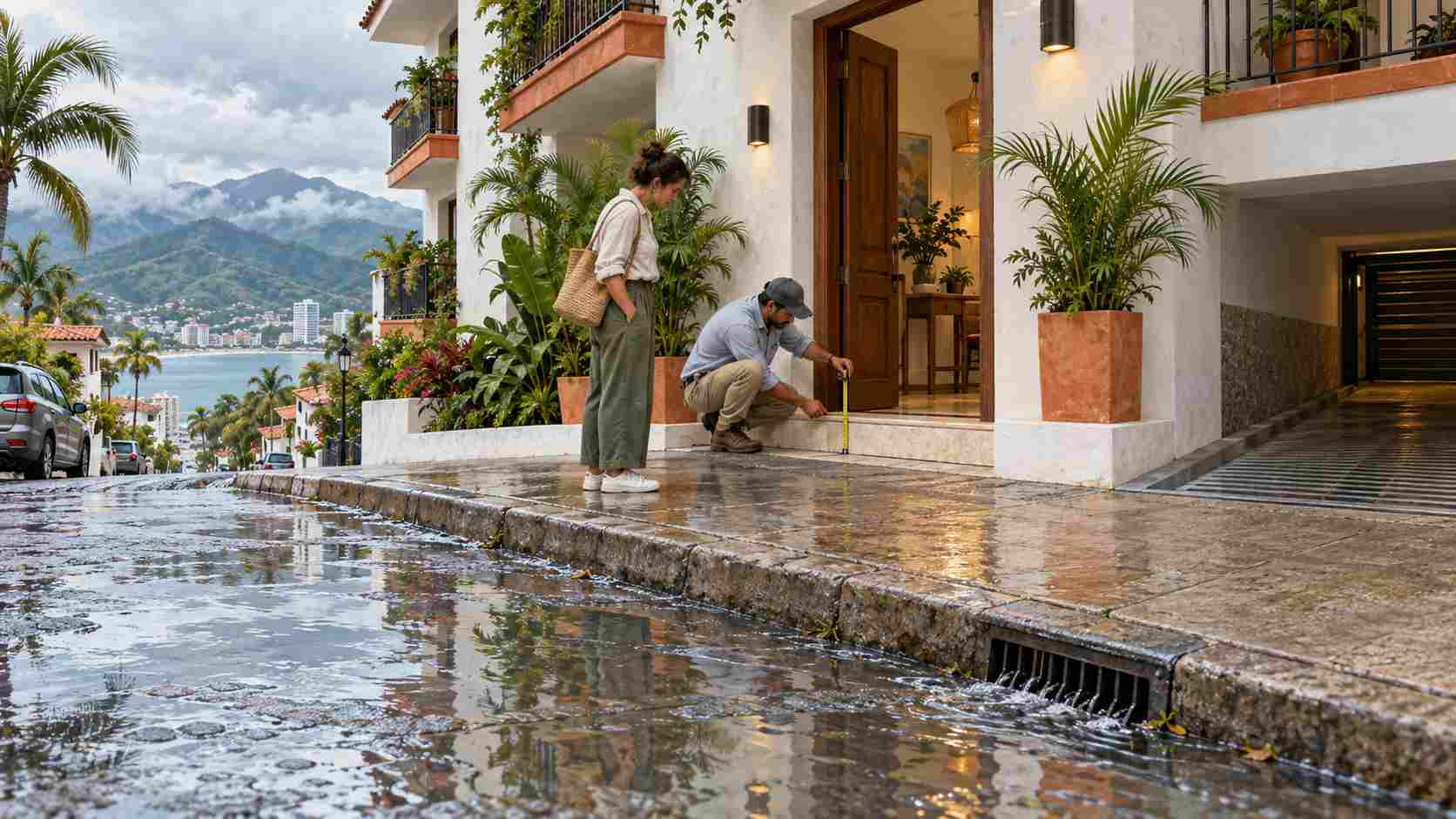
For an entrance or garage ramp, I would request on-site measurements. Ask a surveyor to measure the lowest occupied floor, doorway threshold, ramp entrance, and nearby street gutter against one reference.
Have an engineer compare those levels with documented flood heights and relevant flood mapping. Ask the engineer to identify the data used and the limits of the assessment.
A listing’s elevation above sea level would not answer those questions. I need the relationship between expected water levels and where water could enter.
FEMA’s property protection guidance recommends checking how water flows or accumulates around a building. It also calls for functioning drains, maintained gutters, and ground that directs runoff away from the structure.
Use a dry-weather visit to trace the routes that need inspection. Check the street gutter, doorway, courtyard, garage ramp, and roof downspouts. Ask where each drain discharges and who maintains it.
For a garage below street level, request an explanation of the entrance barrier, collection drain, and pumping arrangement. If the owner relies on removable flood barriers, ask who installs them and where they are stored.
Photograph stains, sediment marks, or repaired wall sections, then request an explanation and supporting repair records. I would not assign a cause from appearance alone.
Inspect the systems serving the apartment
FEMA’s utility protection handbook explains that floodwater can damage electrical components in water heaters and domestic water pumps. It also identifies flood exposure of pump controls as a concern.
Its flood preparation guidance says elevated utilities are less likely to sustain flood damage. It recommends backup power for basement drainage pumps and notes that damaged utilities can delay a return home.
In a condo building, ask the manager to identify electrical panels, water pumps, elevator equipment, and any backup generator. Request their locations and elevations, plus records of repairs after previous flooding.
For each drainage pump, ask how it operates during a power failure. Request maintenance and test records, and ask where it sends collected water.
FEMA’s home protection guidance also identifies sewer backflow valves as a defense against wastewater returning through building drains. It calls for installation by a qualified plumber.
Ask the property’s plumber whether backflow protection exists, which drains it serves, and when it was checked. Have that professional assess its suitability for the building.
Request evidence of the building’s flood history
Here is the evidence I would request from an owner or condo manager, tied to the specific address.
| Record to request | Details to check |
|---|---|
| Written incident history | Dates, water source, depth, affected rooms or common areas, and any loss of access. |
| Photos and videos of past events | Identifiable locations, dates and water heights relative to fixed features. |
| Repair and cleaning invoices | Work completed, equipment replaced, contractor names and completion dates. |
| Condominium minutes and maintenance logs | Drainage complaints, pump tests, approved repairs and work still pending. |
| Surveys, drainage plans and technical reports | The correct parcel, floor levels, document dates and the professional responsible. |
If an owner reports no flooding, ask which years that account covers. Ask whether it includes parking, storage rooms and access streets.
Speak with former tenants, neighboring residents or nearby businesses when possible. Ask the same questions about dates, depth, and access. Treat recollections as leads to check against dated images and documents.
For a new building, request the completed drainage plans and any available testing or inspection records. Ask an engineer to compare the documents with what was built.
Keep completed repairs separate from work proposed for a later date. Request written completion dates for any work offered as part of the rental or sale.
Check a safe route beyond the front door
CENAPRED’s Family Civil Protection Plan directs households to identify safer locations and evacuation routes. It tells residents to prioritize the least dangerous routes and remove obstacles.
For apartment buildings, the plan calls for residents and the administrator to identify routes and safer areas inside and outside.
Ask to see the building’s plan. Walk the stairs, exits, and route to the designated meeting point in safe conditions. Check how gates open during a power failure and whether the route requires using the garage.
Include the streets used for groceries, medical appointments, work, and public transportation. Ask Protección Civil about documented flood points on those routes and suitable evacuation options.
CENAPRED’s flood safety advice warns against walking or driving through flooded streets. Water can conceal uncovered drains, and currents can carry people away. Do not enter floodwater to test a property’s access.
If comparing a hillside property, include a separate slope assessment. University of Guadalajara researchers identified landslide hazards along the southern coast in 2021, including around Amapas and Conchas Chinas. That account supports asking about slope conditions; it does not rate every property in those neighborhoods.
Put the findings beside the contract
Mexico’s financial consumer protection agency, CONDUSEF, says hydrometeorological insurance coverage can require an additional policy provision. Its home insurance guidance also cautions that not every flood is covered.
Ask the insurer to confirm coverage for the exact address and water sources identified during the assessment. Request written answers about rainwater flooding, river overflow, coastal water, and sewer backup.
Check which policy covers the structure, common equipment and personal belongings. Ask about exclusions, deductibles, coverage limits, and temporary accommodation. Have the insurer explain the applicable clauses rather than relying on a policy description.
For a rental, record agreed repairs and completion dates. Ask how the parties will address cleanup, interrupted services, and a home that cannot be occupied. Use our Renting in Puerto Vallarta guides and lease assessment guide alongside the property inspection.
For a purchase, commission an independent engineering report covering the parcel, building systems, and unresolved drainage questions. Have any proposed work priced before agreeing to pay for it.
Keep dated copies of the owner’s answers, technical reports, and agreed repairs with the signed contract.