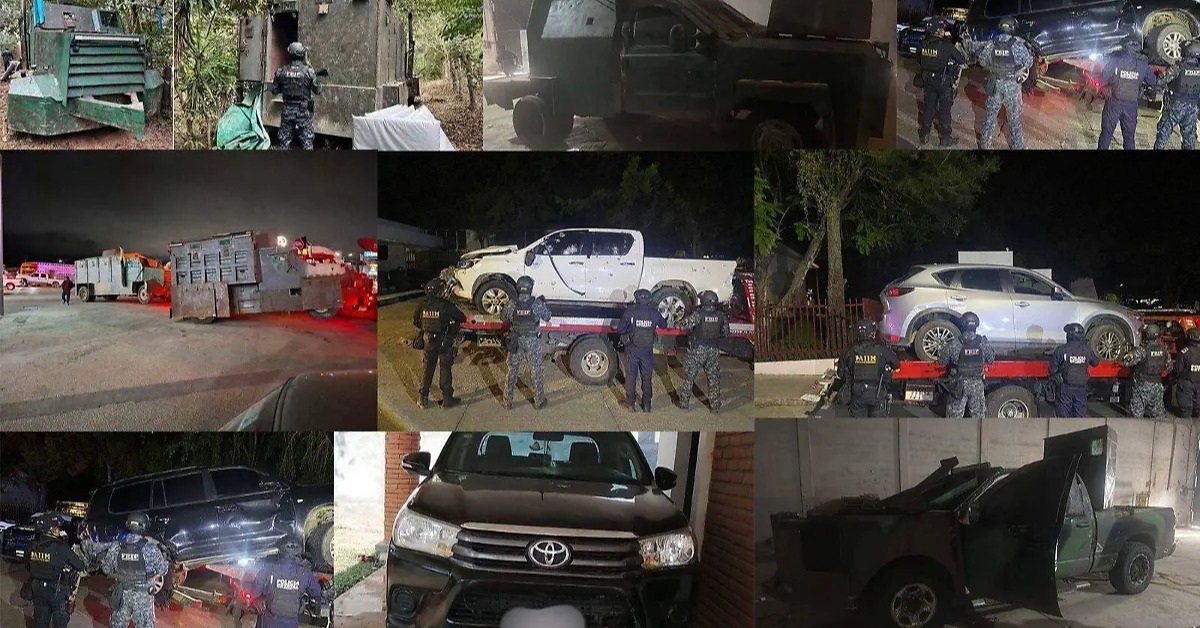
Security forces in the Sierra Mariscal say they seized more than 70 vehicles during recent sweeps, among them several “monstruo” trucks—civilian pickups and larger chassis refitted with crude armor. Prosecutors traced the cars to El Maíz, a group that, according to authorities, operated with a social base in Paso Hondo, Sabinalito, and Santa Teresa Llano Grande, using intimidation, road control, and informal taxation to entrench itself. The seizures were announced alongside arrests, search orders, and fresh requests for international cooperation.
The hardware is only part of the story. These armored trucks matter because they become moving checkpoints and symbols. Their presence signals who decides what moves in and out of a town—fuel, cattle, migrants, cell service, even police patrols. In a mountainous border where the line with Guatemala is porous, the trucks’ shock value can be as crucial as their steel.
The network under pressure
Chiapas prosecutors say four alleged leaders of El Maíz now face Interpol red notices after fleeing to Guatemala. The list includes figures identified locally only by first names or nicknames—a pattern in the Sierra, where rumor, social media, and official briefings collide. Guatemalan authorities, meanwhile, have had to respond to a different piece of the same crisis: hundreds of Mexicans crossing the line seeking temporary humanitarian status as violence ebbs and flows around Frontera Comalapa. Officials on the Mexican side have downplayed forced displacement, but those crossings are documented.
The crackdown also extends inward. Earlier this year, state authorities detained the interim mayor of Frontera Comalapa on charges ranging from corruption to aggravated extortion, a reminder that local governance and criminal power often interlock. When prosecutors say they have “identified all generators of violence,” they are also talking about people who wore a city hall badge.
Why the “monstruo” matters now
“Monster” trucks aren’t new. What’s changed in the last few years is how they’re used and built. Cartels began with crude plate armor bolted onto pickups. Some units now show anti-drone cages, interior armor that hides the profile, and firing ports adapted for long guns. In urban fights—Culiacán, Tamaulipas, Michoacán—they’ve been rolling symbols of control. In the Sierra of Chiapas, they give small cells a psychological edge on winding rural roads, where the mere rumor of a “monstruo” can keep buses, farmers, and even patrols off a route.
That is why seizing them matters. Take enough trucks off the road, and you chip away at intimidation and the ability to rapidly mass men and weapons. But seizures can’t, on their own, undo a social base. In Paso Hondo and Sabinalito, authorities themselves have described how El Maíz dressed as a farmers’ cause while collecting “fees,” arbitrating disputes, and leveraging fear. That’s the kind of embed that survives a raid if there is no daily alternative.
The seizures land in a region already frayed by a proxy war between national cartels. Throughout 2024 and into 2025, reporting documented fights over routes for drugs, weapons, and migrants across Motozintla, Chicomuselo, and Frontera Comalapa. Periods of calm gave way to sudden crackdowns and spectacular violence, including attacks that spilled across the border and ambushes of state police. The state’s new security posture in August includes more than 1,500 personnel, a Black Hawk helicopter, and armed drones patrolling the high country.
Officials insist the major roads are open and that towns are breathing easier. People living there talk about a different rhythm: days of normalcy, then rumors, then a message that certain roads should be avoided after dark. Uniforms matter, but so does who controls the informal life of a place—freight traffic, market days, credit, and the quiet threat of reprisal.
What changes with Interpol notices
Interpol red notices are requests to locate and provisionally detain a person pending extradition. They are not arrest warrants, and their bite depends on cooperation on both sides of the line. In the Sierra, where leaders can sleep in one jurisdiction and work in another, international coordination is essential. Guatemalan officials have already had to process Mexican families displaced by violence, and security deployments on their side have intercepted armed men after cross-border clashes. If arrests follow, they will test whether legal cases in Chiapas are ready to move beyond press conferences.
The other test is local. If the named leaders are picked up, do lieutenants step in? Do “community” structures that masked extortion rebrand? And does the state maintain presence in Paso Hondo and Sabinalito once the news cycle moves on? Those are the fail-or-succeed questions that determine whether the seizure of more than 70 vehicles translates into lasting safety.
Confiscating “monstruos” sends a message. It removes a fear machine from the road and prevents a future ambush. But people measure safety by whether they can ride a colectivo at dawn, open a shop without paying “fees,” and report a crime without retaliation. That means the following steps—holding detained officials to account, protecting witnesses, and staying present after the helicopters leave—are the ones that matter.
For now, the Sierra’s new reality is a mix of high-profile seizures, cross-border warrants, and cautious relief. The trucks may be off the road. The work of rebuilding trust is just starting.