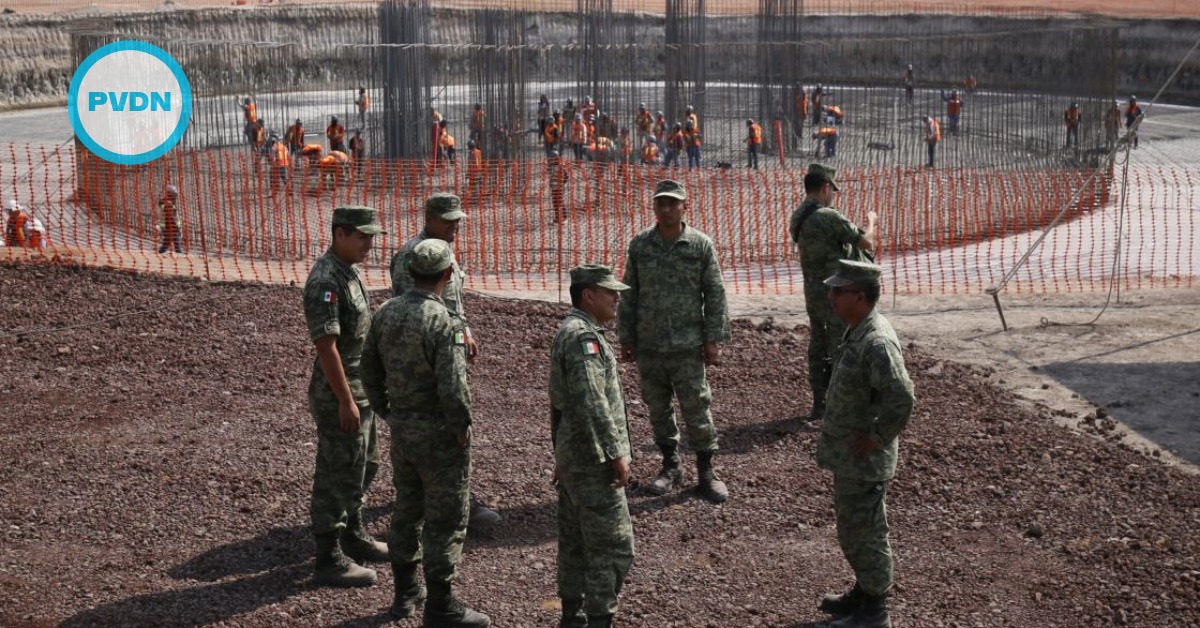
Mexico’s soldiers and sailors have become the government’s go-to workforce, running customs posts, guarding ports, and building headline projects. A new naval studies analysis says that convenience comes at a cost: the more the armed forces manage civilian jobs, the harder it is to stay sharp for the missions only they can do. What does “readiness” mean in Mexico’s case, and what gets missed when training time turns into timecards? The answers have stakes far beyond the barracks.
A warning from inside the naval schoolhouse
A new analysis published through Mexico’s top naval graduate school argues that the armed forces are being pulled off their core track. The phrase it uses is blunt: operational distraction. The point is not that soldiers and sailors cannot do civilian jobs. It is that every hour spent managing a construction schedule or inspecting cargo is an hour not spent preparing for the kinds of scenarios militaries exist for.
Mexico has long treated national defense as a low-probability problem. Geography helps. So does the habit of focusing on internal security threats instead of external ones. That logic has shaped budgets, procurement, and training priorities for years. The naval analysis is effectively asking whether that comfort has become a liability, especially as the world gets more unpredictable and sea lanes, energy infrastructure, cyber systems, and supply chains turn into strategic targets.
The warning also lands at a sensitive time politically. The armed forces have gained visibility and influence precisely because civilian institutions often struggle with corruption, capacity, or both. Sending the military in can feel like the fastest “adult in the room” solution. The analysis pushes back on the idea that this can expand forever without a cost.
When the uniform becomes a public works badge
In the last few years, Mexico’s armed forces have taken on a portfolio that looks less like a traditional defense ministry and more like a national logistics company. That includes customs control, a role expanded through presidential decrees that put the armed forces in charge of inspections across borders, ports, and airports, and in some cases in charge of the money flows tied to those operations.
The Navy’s institutional footprint has also widened inside the port system. Legal reforms and follow-on administrative changes moved key port responsibilities from a civilian transport ministry into naval hands. That shift reshaped who regulates ports, who grants certain permissions, and who carries the burden when port security becomes a political issue.
At the same time, the military has been tasked with building and administering major infrastructure projects, not only providing perimeter security. That turns officers into project managers and forces the institution to think in terms of contracts, payroll, procurement, and long-term operations.
None of this is abstract. It changes what “a military career” looks like and what incentives sit around it. A force that spends years embedded in customs, airports, and civil works can become very good at those tasks. The question raised by the naval analysis is what happens to the less visible work: doctrine, training cycles, maintenance discipline, procurement planning, and the quiet preparation that only shows its value when a crisis hits.
What readiness looks like for Mexico
“Military readiness” is sometimes imagined as tanks and fighter jets. Mexico’s reality is different. Its defense needs are heavily maritime and internal: protecting ports and energy infrastructure, securing coastlines and the exclusive economic zone, interdicting smuggling routes, responding to hurricanes, and maintaining enough operational depth to handle overlapping emergencies.
Readiness also means institutional focus. You can have capable people and still lose readiness if the organization cannot keep training standards consistent, rotate personnel through core billets, or allocate predictable time for exercises. Maintenance backlogs can creep in. Specialized skills can thin out. Promotions can reward the wrong kind of experience, because the missions that get political attention become the missions that shape careers.
There is also a strategic clarity issue. If leadership signals that Mexico faces no meaningful external threats, then defense modernization becomes easy to postpone. The armed forces can be pushed toward the “welfare state” role without a hard internal argument about tradeoffs. The naval analysis is pointing at that gap: a country can downplay external threats and still end up exposed when global conditions shift fast.
Why this matters for expats and daily life in Mexico
For many readers, “military readiness” can sound remote. But the consequences show up in very civilian places.
If port security and customs enforcement become the armed forces’ main stage, then the institution is also pulled into the country’s most tempting corruption ecosystems: high-value cargo, fuel, and high-pressure commercial timelines. When scandals erupt, they do not just affect reputations. They can trigger sudden operational changes at ports and border points, with ripple effects for supply chains and local economies.
The same applies to infrastructure. When the military builds and operates projects tied to tourism, transport, and regional development, the armed forces become a direct stakeholder in economic outcomes. That can blur accountability. It can also create political pressure to keep soldiers and sailors on those assignments, even when the security environment demands different priorities.
For expats living in Mexico, the practical question is stability. Stable customs and port operations affect everything from imported goods to construction materials. Stable security operations affect travel corridors and perceptions of safety. A military that is spread thin can still feel omnipresent, while quietly losing the depth needed for big shocks, whether those shocks come from storms, organized crime pressure in strategic zones, or international disruptions that suddenly make Mexico’s ports and coastlines more strategic than usual.
The choice Mexico is being pushed to make
The naval analysis is not a call to pull the military out of civilian life overnight. Mexico has real security and governance problems, and the armed forces have repeatedly been used as the state’s reliable instrument.
It is, instead, a call for boundaries and honest accounting. If the military is going to run customs, ports, and large infrastructure, then Mexico needs to name what it is giving up, and decide whether civilian institutions will ever be rebuilt to take those roles back. If the answer is no, then the country should admit it is redesigning the armed forces into something closer to a hybrid internal-security and state-administration engine, with all the long-term risks that implies.
If the answer is yes, then the next step is not a slogan. It is a transition plan with timelines, training protections, and clear measures of what “readiness” means for Mexico’s geography and threats. Otherwise, the default will continue: the military fills every gap, until the gaps start appearing inside the military itself.