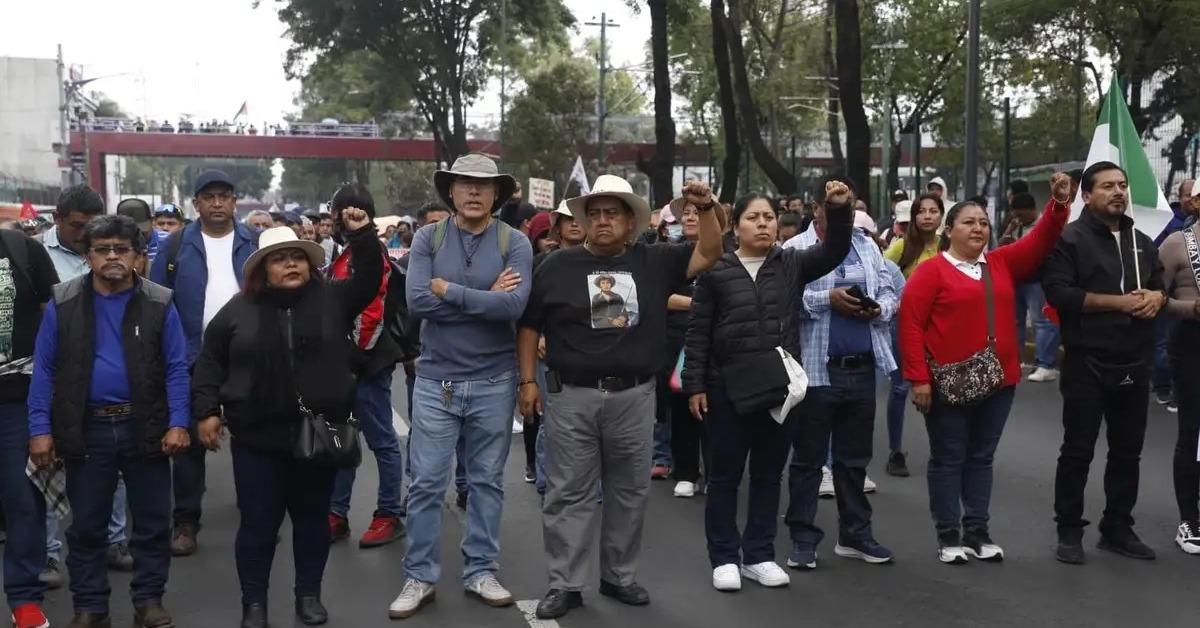
Mexico City police blocked a CNTE teachers’ march Thursday morning, June 11, near Calzada de Tlalpan and División del Norte, stopping the group from advancing toward Estadio Ciudad de México hours before the World Cup opener.
A 9:44 a.m. report from the scene said teachers had marched for about two hours along Calzada de Tlalpan before reaching a police line near División del Norte. The blockade included riot police, concrete barriers, a crane, and a mounted police truck, according to the report.
The march put the CNTE’s labor and pension demands in front of one of Mexico’s most visible public events of the year. FIFA lists Mexico City Stadium, widely known as Estadio Azteca, as the venue for the opening match of the 2026 World Cup on June 11.
The teachers’ union had agreed earlier Thursday to mobilize toward the stadium after talks with federal authorities failed to produce an agreement. CNTE leaders have been pressing for changes tied to pensions, teacher hiring and promotion rules, and broader education policy.
By midday, CNTE leaders said the federal government’s latest proposal “does not resolve our underlying demands” and called for President Claudia Sheinbaum to return directly to the negotiating table. They also said the national strike would continue, along with the teachers’ encampment in Mexico City’s historic center.
CNTE leaders also warned they could take mobilizations to other Mexican World Cup host states, including Jalisco and Nuevo León. That is the part to watch beyond Mexico City, especially for readers following tournament travel, public events, and security plans in host regions. Vallarta Daily has been following the broader tournament picture through its World Cup 2026 coverage and earlier reporting on how teacher protests could complicate World Cup travel.
Mexico City had already prepared for a restricted stadium zone before Thursday’s march. The capital’s security plan called for an “Última Milla” operation around the stadium, with temporary vehicle restrictions and controlled access for ticket holders, residents with proof of address or QR credentials, accredited vehicles, and emergency services.
The city government said the opening-day security and mobility operation would begin at 7 a.m. For the stadium and Zócalo fan festival areas, the plan called for 11,219 security personnel, including 9,194 city police officers. At the stadium alone, Mexico City planned 7,708 personnel and 682 vehicles, with attendance expected to exceed 82,000 people per match.
The World Cup security plan runs through July 19 and includes more than 56,000 police across Mexico City, according to the capital’s official security announcement. Mexico City authorities said the plan is meant to manage stadium access, protect visitors and residents, support public transportation, and maintain the right to public demonstration.
The federal government has offered to keep talks open with the CNTE. A proposal published earlier this month called for a June 15 working table on teacher career rules, followed by a diagnostic period, a draft legislative project, a teacher consultation, and a final initiative for Congress in September.
The CNTE has not accepted that route as a resolution. The next question is whether the union keeps its pressure centered on Mexico City or expands actions toward Guadalajara and Monterrey during the World Cup schedule.