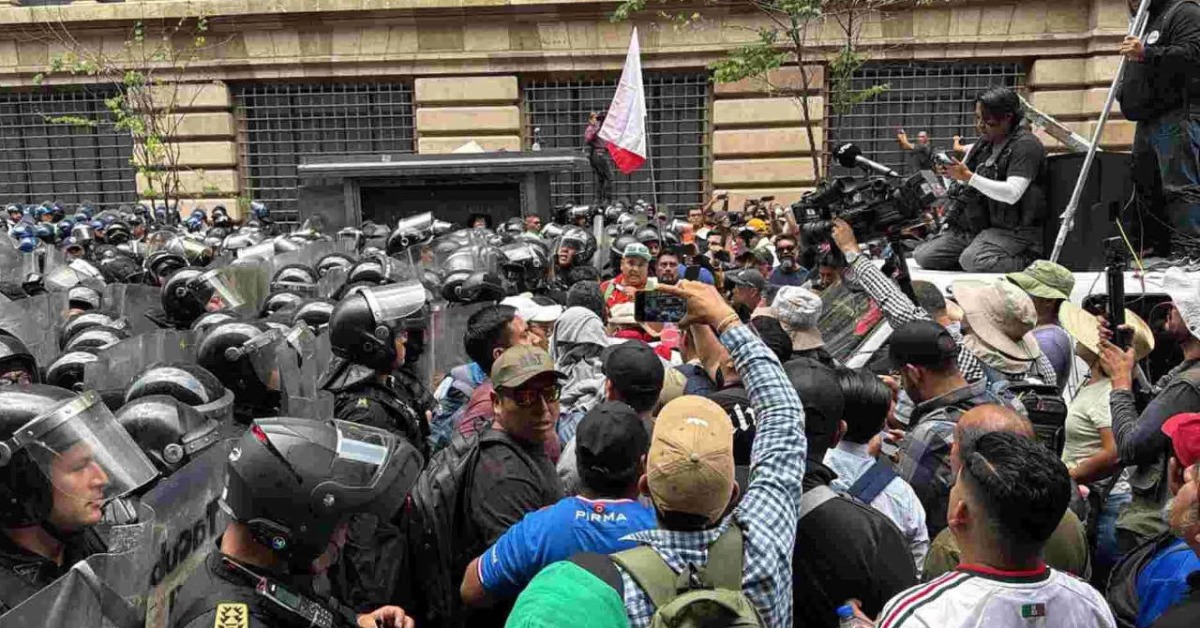
Mexico City’s World Cup countdown is now sharing space with a teacher strike, security barriers, and a pension fight that refuses to move offstage. The issue began far from travel planning, but it is now pressing against the capital’s busiest public square and the opening-match calendar. The full story explains where disruption is most likely, what teachers are demanding, and what travelers in Mexico City should watch out for before moving around the capital.
Strike reaches the World Cup clock
Mexico City’s teacher conflict has moved from a warning sign to a travel concern. The CNTE began an indefinite strike on Monday and tried again to reach the Zócalo days before the capital hosts the World Cup opening match.
The pressure point is clear. Teachers want to use the plaza as a protest stage. FIFA plans to use the same plaza as a fan stage. The FIFA Fan Festival is scheduled there from June 11 to July 19. Mexico City’s official host page presents the capital as the tournament’s opening stage, with the stadium and historic center both tied to the celebration.
The dispute is not about soccer. It is about pay, pensions, and federal negotiations. But the calendar has changed the weight of the protest. A labor fight that might normally snarl downtown traffic is now colliding with stadium logistics, fan-zone construction, school closures, and travel plans tied to the first match.
Police and teachers clashed Monday near the Zócalo after demonstrators pushed against security barriers. Teachers affiliated with the CNTE have been using the center of the capital as leverage since June 11. The union has warned that protests could continue if there is no agreement.
“If there’s no solution, the ball won’t roll,” the CNTE said in May, as teachers threatened protests and blockades before the tournament.
What the teachers want
The union wants a larger salary increase and changes to the pension system for teachers covered by ISSSTE rules. Federal officials have offered a 9 percent pay increase. They have also pointed to talks with union representatives. That has not stopped the walkout.
President Claudia Sheinbaum said in May that the government would address the dispute before the World Cup. “We must respect freedoms while also ensuring the World Cup proceeds,” she said.
By Monday, that balance was visibly strained. The federal government kept negotiations in the hands of Interior Secretary Rosa Icela Rodríguez and Education Secretary Mario Delgado. Sheinbaum said she trusted those talks to move forward. Teachers kept pressing for a direct meeting with her.
Federal officials have also said the Zócalo was unsafe for large protest gatherings because of construction work and World Cup infrastructure. A joint statement from the Interior and Education ministries said authorities had spoken with CNTE representatives about safety, emergency access, and alternative locations.
That explanation has not satisfied the union. Teachers say the government is protecting the World Cup footprint while blocking their right to protest in the country’s most visible civic square.
Where travel could feel it
The most likely disruption is still concentrated in central Mexico City. The immediate watch areas are the Zócalo, Avenida 5 de Mayo, Avenida 20 de Noviembre, Paseo de la Reforma, Eje Central, and streets around the Interior Ministry. Those routes sit near hotels, public squares, transit links, tourist corridors, and federal offices.
Anyone connecting through Mexico City from Puerto Vallarta should treat the capital as a moving target over the next several days. The bigger risk is not that every flight suddenly stops. The risk is slower surface movement, especially between the airport, Centro Histórico, Reforma, Roma, Condesa, and the southbound route toward the stadium.
The timing is awkward for the city. Officials are already trying to reduce movement on June 11. Public schools in Mexico City will suspend classes that day for basic, primary, secondary, and upper secondary levels. Clara Brugada has also urged employers to allow remote work where possible.
The World Cup opener is scheduled for June 11 at Estadio Azteca, now being used in official tournament language as Mexico City Stadium. The Zócalo Fan Festival opens the same day. Between those two poles, the capital has to match fans, television crews, workers, police, emergency services, and regular city traffic.
The teacher’s protests add one more unpredictable layer. Earlier coverage warned that teacher tensions could snarl World Cup travel, and a later update tracked how failed talks set up the June 1 mobilization. Airport-area work had already complicated Mexico City airport movement before the World Cup.
For travelers to Puerto Vallarta, this is a check-before-you-go story. Confirm flights, watch airline notices, and check road and transit conditions in Mexico City. A normal connection day may not feel normal on the ground. The airport may be only one piece of the trip. The street grid may become the hardest part.