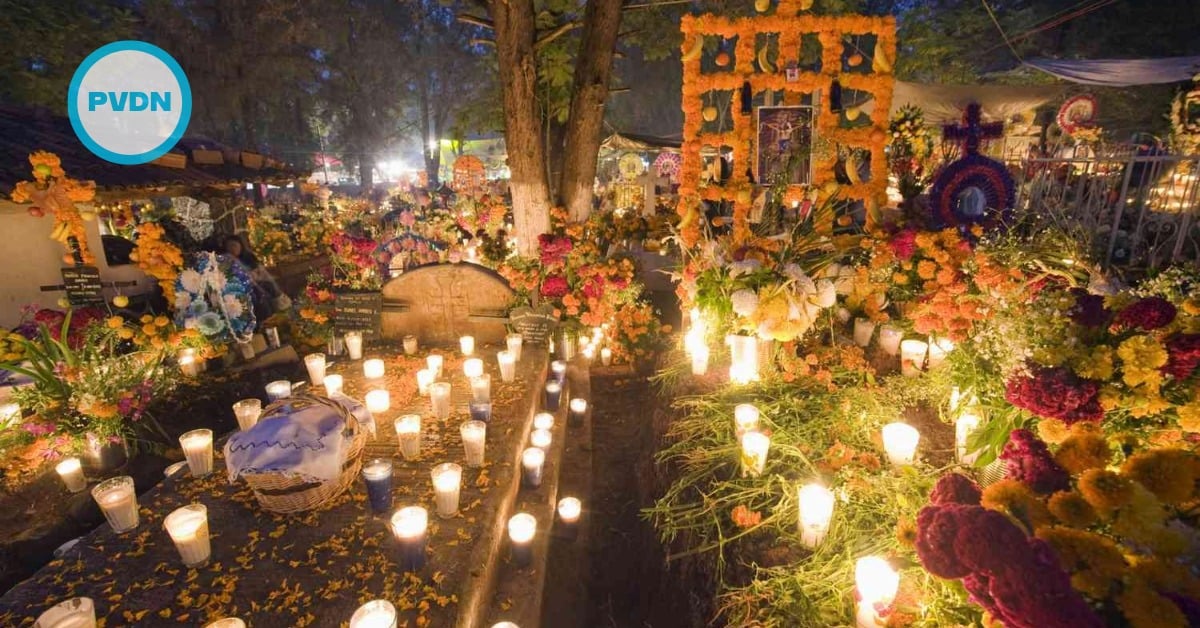
Across Mexico, families will light candles, welcome souls, and speak softly to the dead. That’s what Day of the Dead is: home altars, food for loved ones, visits to graves, a vigil more than a show. Yet the cameras are getting louder. Giant catrinas tower over plazas. Parades swell with floats that never belonged to this tradition. Oaxaca’s own debate is a warning for the country: if we turn remembrance into a backdrop, we lose the point. Visitors are welcome—if they come to listen, learn, and leave space.
Mexico doesn’t owe the world a selfie. It owes its dead remembrance. Day of the Dead began at home—at the kitchen table, on the patio, in the candlelit hush of a cemetery at night. Families build ofrendas, cook the dishes their loved ones craved, and wait for a brief reunion. That intimacy is the heart of the tradition. UNESCO recognized it as living heritage because communities keep it alive in homes and neighborhoods, not because it draws crowds or sells costumes.
Day of the Dead
In Oaxaca this week, local voices are saying the quiet part out loud: touristification is pushing aside the holiday’s soul. Public squares overflow with plastic decorations and early altars made to catch attention, not memory. The worry isn’t about visitors themselves. It’s about the shift in purpose. When displays are timed for peak foot traffic, when streets become photo sets, something private is asked to perform. Oaxaca’s critique is a mirror for much of Mexico this season. The trend is national, and the cost is cultural.
Mexico City’s mega parade captures the tension. It’s dazzling. It’s also new. The city’s first large Day of the Dead parade appeared in 2016, after a James Bond movie imagined one, and tourism officials made it a reality soon after. The parade draws crowds and pesos. It doesn’t grow from the old, household rhythm of November 1 and 2. That doesn’t make the parade “bad.” It makes it different—entertainment layered onto remembrance, a spectacle superimposed on a vigil.
Puerto Vallarta offers another symbol: the “world’s tallest Catrina.” She’s enormous, clever, and record-breaking. But a towering figure has little to do with a grandmother’s favorite bread, a cup of café de olla, or the way a family talks to their dead by candlelight. Records measure height, not meaning. When spectacle becomes the headline, the quiet center is easy to miss.
Keep the cameras, keep the silence
This is not an argument for closed doors. Mexico has always shared this season’s warmth. The invitation is to come on different terms. If you’re visiting, consider this simple posture: watch first, then lift a lens. Ask what an altar means before asking where the best angle is. Learn why November 1 is for the children and November 2 is for adults. Notice how every region does it a little differently. Accept that some moments aren’t for you, and that’s part of the honor.
Oaxaca’s headline this week—a warning that decorations and early altars are starting to serve tourism more than tradition—should be read countrywide. Local governments love an easy photo op. Hotels love a themed lobby. But communities keep the custom alive, not marketing plans. When street programming compresses everything into a single weekend, families lose time and space to grieve and remember. When “ofrendas” are built as props, the domestic altar loses its primacy. That trade isn’t worth the social likes.
So what does holding the line look like? It looks like supporting neighborhood ofrenda contests run by residents, not agencies. It looks like cemeteries setting quiet hours and enforcing them. It looks like signage that explains before it entertains. It looks like municipalities funding marigold growers and pan de muerto bakers, not just floats and fireworks. It looks, above all, like listening to the people who mark these days every year, whether any tourist comes or not.
Visitors can help. Buy from local families who sell flowers and food near cemeteries. Keep makeup off if you’re entering a vigil space unless locals invite it. Don’t climb altars for photos. Don’t push into homes. If someone says no pictures, put the phone away. The reward for that restraint is real connection. You’ll hear the stories—about the aunt who loved mezcal, the brother who never missed a Cruz Azul match, the child who adored sugar skulls and left too soon. That is the meaning. And it’s easily drowned out by people turning Dia de Muertos into another tourist attraction.
As for the record books, Puerto Vallarta’s giant Catrina will keep turning heads. Let it stay a city mascot, not a stand-in for the holiday’s soul. The same goes for Mexico City’s parade. Enjoy it. Applaud the artistry. Then remember that the tradition’s core waits elsewhere: in homes that glow after midnight, in quiet streets that smell of copal, in memories that do not need an audience. Spectacle can live beside reverence. But if we force reverence to live beneath spectacle, we’ll look up at towering figures and forget why we gathered. The dead won’t be honored by our applause. They’ll be honored by our attention—to them, and to the people who still love them.
10 Things to know about Dia de Muertos traditions before you make it a tourist attraction.
Pan de Muerto isn’t dessert, it’s memory
Those “bones” on top aren’t decoration; they evoke the body and the cycle of life and death. The round loaf often carries orange zest and orange-blossom (azahar)—a fragrant cue tied to remembrance that many bakers use specifically for ofrendas. It’s food for the living to share with the dead, not a seasonal gimmick.
Why marigolds matter
Cempasúchil (Tagetes erecta) guide the dead with color and scent. The Nahuatl name means “twenty-flower,” and the pathways of petals aren’t “just pretty”—they mark the route home for visiting souls. Please don’t rip them up for confetti.
The altar is a home ritual first
UNESCO recognizes Día de Muertos as living heritage because families keep it at home: photos, favorite foods, stories, silence. Public shows came later; the ofrenda’s core lives in kitchens and patios.
The dates have meaning
November 1 welcomes children and youth; November 2 honors adults. Treat both nights with the respect of a vigil—not a festival crawl.
Water and salt aren’t props
A glass of water is there to quench the soul’s thirst after a long journey. Salt purifies and protects on the way back. If you see them on an altar, they’re there with purpose.
Copal is communication
That fragrant smoke isn’t “vibe”—it’s an ancient resin burned to sanctify space and feed the gods. Many communities still use it to invite and accompany the dead. Step back and let it work.
Papel picado = the wind
Those cut-paper banners stand for air—the flutter says the spirits are present, and their fragility mirrors life. Don’t yank them down for selfies.
Candles are a map, not mood lighting
Flames light the path home; many arrange them with intention (some traditions align to cardinal points). If someone asks you not to use a flash, that’s why.
La Catrina was satire before makeup
Posada’s “Calavera Garbancera” mocked class pretensions; later she became La Catrina. Dressing up can be fun, but the character wasn’t created to sell face paint—remember the critique inside the costume.
Butterflies carry stories
In Michoacán and Estado de México, monarchs arriving around Nov. 1 are seen as returning souls. Watching them is a lesson in listening—nature already knows the way.