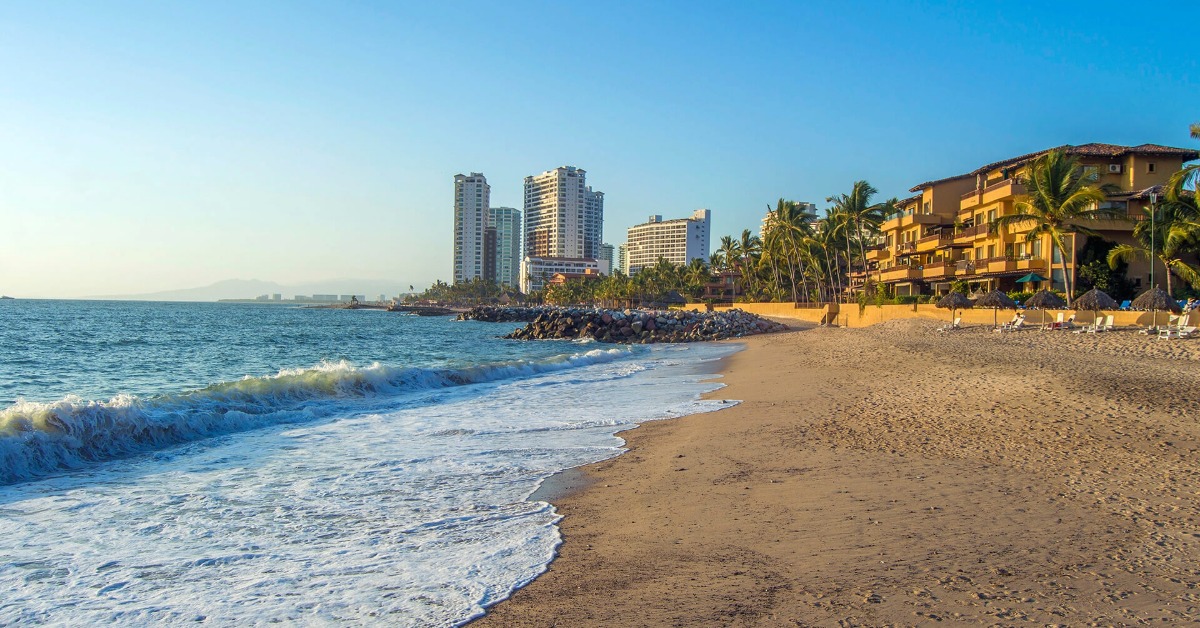
Puerto Vallarta, Jalisco, June 19, 2026 — A large crocodile was found dead on Playa Los Tules after apparently being carried onto the beach by the ocean, prompting a response from municipal environmental staff, Protección Civil, and firefighters.
The animal measured about 3.43 meters, according to the reported case of the Los Tules crocodile. Officials said a preliminary visual inspection found no obvious signs of a violent death.
The cause has not been confirmed. No necropsy was performed, and officials said that would require specialized veterinary personnel.
What officials found at Los Tules
Roberto Ornelas Carrillo, Puerto Vallarta’s director of Environmental Sustainability, said the crocodile was already dead when hotel security personnel reported it near the shoreline.
“The ocean brought it onto the beach,” Ornelas said.
The animal was described as an adult male in an advanced state of decomposition. Its body was inflated from the natural process, but the head, tail, and extremities were complete. Officials said they did not see punctures, mutilation, or external injuries during the inspection.
The crocodile carried identification marker 569, which had been placed previously by personnel from Estero El Salado. Based on its size, officials estimated the animal was 45 to 50 years old, although size alone does not provide a precise age.
Why a dead crocodile gets attention
Crocodiles are part of the bay’s coastal ecosystem, especially around estuaries, river mouths, canals, and mangroves. In Puerto Vallarta, that includes areas connected to El Salado, Boca Negra, Boca de Tomates, and other wetland edges.
The University of Guadalajara’s CUCosta has warned that crocodiles can move through the sea and urban edges as older habitat routes have been reduced by development. Its guidance is simple: do not swim near crocodiles, keep children and pets away, do not touch or provoke them, and call Protección Civil or 911.
PVDN recently published a practical Puerto Vallarta wildlife guide for residents and visitors who encounter crocodiles, iguanas, monkeys, sea turtles, or other animals in tourist areas.
Protected wildlife, even after death
Puerto Vallarta crocodile cases are also environmental cases. PROFEPA has previously identified the local crocodile de río, or American crocodile, as a species under special protection in Mexico’s NOM-059 wildlife-risk classification.
That is why officials reported the Los Tules case to PROFEPA and handled the body through official channels instead of allowing the public to move or disturb it.
The body was measured, photographed, and documented for the federal report, then buried on the same beach where it was found.
The safe response for beachgoers
Anyone who sees a crocodile, dead or alive, should keep a distance and report it. Do not approach for photos; try to move the animal, throw objects, feed it, touch it, or let pets get near it.
That advice applies even when the animal appears dead. Large reptiles can draw crowds quickly, and the safest response is to let trained personnel handle the scene.
Puerto Vallarta has already moved toward a more organized crocodile response, including lifeguard training and a proposed Crocodile Patrol aimed at reducing dangerous encounters while protecting wildlife.
PVDN chose not to publish photos of the dead crocodile’s body.