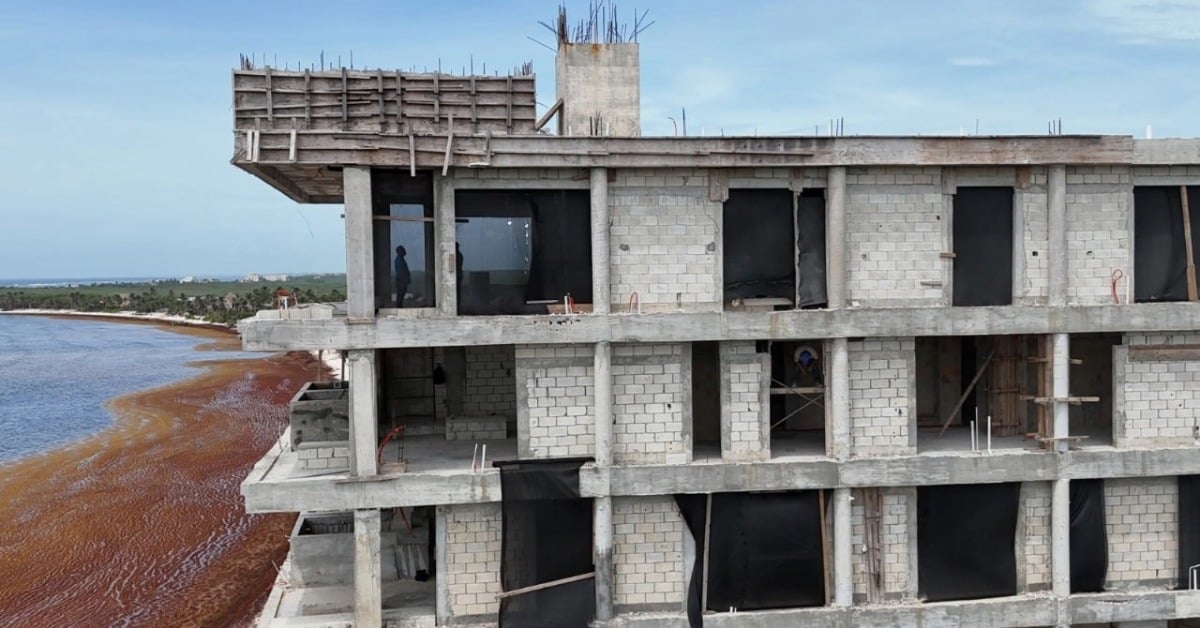
A federal judge has ordered the Federal Attorney for Environmental Protection (Profepa) to guarantee environmental restoration in Tulum in the case of Adamar, a residential complex built in Solimán Bay. The decision, explained publicly by environmental advocate Mónica Huerta of the civil association DMAS, requires demolishing the structure and restoring the affected ecosystem.
Profepa ordered to guarantee environmental restoration in Tulum
The court’s reasoning centers on the constitutional right to a healthy environment and applies precautionary logic to avoid irreversible harm. Huerta told reporters the ruling “reaffirms that the right to a healthy environment must be protected with immediate action,” invoking international environmental protection principles when the risk is uncertain but potentially irreversible.
Beyond the immediate mandate, the order is significant for what it signals: the judiciary recognizing broad standing for communities to push authorities to act. According to DMAS, the case underscores that environmental protection is both a universal right and a state obligation—one that includes active oversight so demolition is not just ordered but carried out properly and followed by verifiable restoration.
A test case for citizen action
Huerta argued the decision could open the door for more citizens to seek injunctions in similar conflicts along Mexico’s coasts. She pointed to criteria from the Supreme Court that strengthen the collective interest of residents and civil organizations in defending a healthy environment, essentially lowering barriers to access the courts when public resources are at stake.
The Adamar dispute has simmered for years amid escalating pressure on Tulum’s shoreline. Adamar itself is a 24-unit complex of apartments and penthouses sited in Solimán Bay, within the Tankah area of the Tulum municipality—an area where resort construction has increasingly collided with fragile coastal ecosystems. The court’s order places the burden on Profepa not just to penalize, but to deliver on the physical work of remediation.
What happens next
The ruling was made known to advocates on Friday, August 15. From the date of notification, the authorities have ten days to decide whether to seek review. If they do not, the judgment becomes final and enforceable. Once it takes effect, the responsible authority has a maximum of 35 business days to comply—time that must be used to dismantle the structure and begin documented restoration under official supervision.
These deadlines matter in practice. Along Mexico’s Caribbean coast, enforcement can stall between closure orders and on-the-ground change. By tying the obligation to a clock and assigning clear duties to Profepa, the court is attempting to close that gap. It also sets up a straightforward accountability test: either the building comes down and restoration begins within the legal window, or authorities must explain the failure publicly and in court.
The role of Profepa and DMAS
The ruling also sketches a roadmap for Profepa. First, if any fines are already final, the agency must take steps to collect them. Second, it must coordinate with federal prosecutors to clarify the status of the related complaint and ensure the technical investigation is complete. Third, Profepa must monitor compliance with restoration measures and verify the work on site. These are not optional steps; the order lays out a sequence to move from sanction to rehabilitation.
DMAS—Defendiendo el Derecho a un Medio Ambiente Sano—has been the citizen engine in this case. Huerta’s statements emphasize that organizations can support communities in bringing technically complex environmental claims to court, turning expert findings into enforceable orders. The message to residents is direct: environmental law is not abstract; it is a tool they can use when authorities fall short.
On the ground, accountability is the metric
Adamar’s footprint and location have made it a litmus test for how Mexico enforces environmental law on its most contested beaches. The court has now handed Profepa a concrete, time-bound mandate. Whether Tulum residents see a cleared site and genuine restoration will signal if this ruling becomes a model—or another cautionary tale about enforcement lost in bureaucracy.