If you’re planning Día de los Muertos in Mexico, choose places that put local ritual before spectacle. Puerto Vallarta’s Malecón builds community altars and unveils a record-setting Catrina. Playa del Carmen’s Sandos Caracol turns its grounds into a walking lesson on ofrendas and remembrance. In Guatemala, families send messages to the beyond with giant hand-painted kites. And in Nayarit, a design-forward resort pairs Huichol-inspired programming with serious cooking. Here’s what’s real, what’s marketing, and how to join respectfully—without losing the meaning.
Editor’s note: Día de los Muertos is not Halloween, and while Mexico celebrates death with as much vigor as it celebrates life, it is essential to remember that families are also mourning the passing of loved ones, a point that should be respected and acknowledged. Selfies in a tourist area are okay. Selfies at the cemetery, not ok.
Día de los Muertos in Mexico
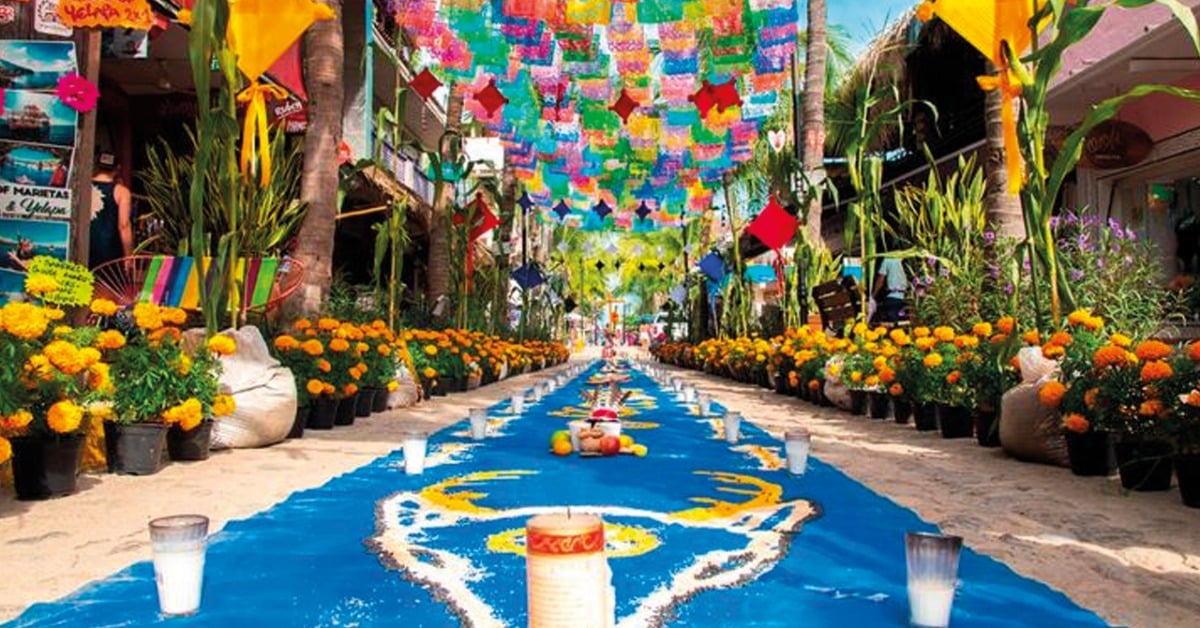
The holiday is observed on November 1 and 2. In many cities, it blends public art with private remembrance in cemeteries and homes. Puerto Vallarta programs two days of activities anchored by the Malecón and historic downtown.
Puerto Vallarta’s living altar on the Malecón
Vallarta doesn’t just decorate; it builds a narrative along the seafront. The city earned a Guinness World Record for its towering Catrina on the Malecón, a now-annual focal point that draws visitors into the story of the holiday. That status was confirmed in 2022 and extended with taller versions in the following years.
Tradition remains the point. Families visit the 5 de Diciembre cemetery, the city’s oldest graveyard, to leave candles, marigolds, bread, and photos at graves and altars. When the parade steps off, it threads from that neighborhood toward the waterfront. Locals call it La Muerte está Viva—Death is Alive—which captures the tone better than any brochure.
Staying nearby can help you move between public events and quieter moments. Marriott Puerto Vallarta has hosted on-site programming tied to the holiday, including a “Celebration Beyond Life” dinner and face-painting, while encouraging guests to learn from staff-built altars. Expect annual tweaks, but the format—eat, learn, remember—has been consistent.
Playa del Carmen, explained at ground level
At Sandos Caracol Eco Resort, the celebration unfolds on the property. Guests walk past ofrendas and Catrina processions, watch performances, and can sit for traditional face painting before evening ceremonies. It’s a tourist setting, but the core symbols are handled with care and explained on-site, which is particularly important for first-timers.
For travelers who plan to pair resort time with city visits, remember that Playa del Carmen and nearby parks often host parallel programming. Pick the learning moments over the selfie lines.
Beyond Mexico: Antigua’s sky of kites
Cross the border for a different but related observance. In Guatemala, All Saints’ Day on November 1 turns cemeteries in Sumpango and Santiago Sacatepéquez into open-air galleries of giant hand-made kites. In 2024, UNESCO inscribed the kite-making technique on its List of Intangible Cultural Heritage, recognizing the communities that keep it alive.
The atmosphere is one of devotion, not performance. Families clean and paint tombs, share food, and fly kites that carry messages to the spirits. From Antigua, it’s an easy day trip; plan to go early and expect crowds.
If you want a base that can coordinate drivers and local guides, Villa Bokéh is situated just minutes from Antigua, offering concierge support and private transfers on request. It’s a calm place to return after a long day among the kites.
Nayarit’s design-forward homage
North of Puerto Vallarta, W Punta de Mita brings the region’s Huichol aesthetic into its spaces and programming. Recent seasons have featured a shaman-led cacao ceremony on the beach and a four-course “Echoes of the Unknown” dinner at Venazú on November 1. The property also added culinary heft with Rubra, the new restaurant from chef Daniela Soto-Innes.
If you’re balancing depth with comfort, this is a clever compromise: meaningful on-site rituals and easy access to towns and beaches, where everyday life keeps the holiday grounded.
How to celebrate without missing the point
The through-line in all of these places is respect. Ask before photographing families at graves. Buy marigolds from local vendors. Learn what each element on an ofrenda means. Choose hotels that teach, not just theme their lobbies. The result is a trip that feels less like a show and more like an invitation.