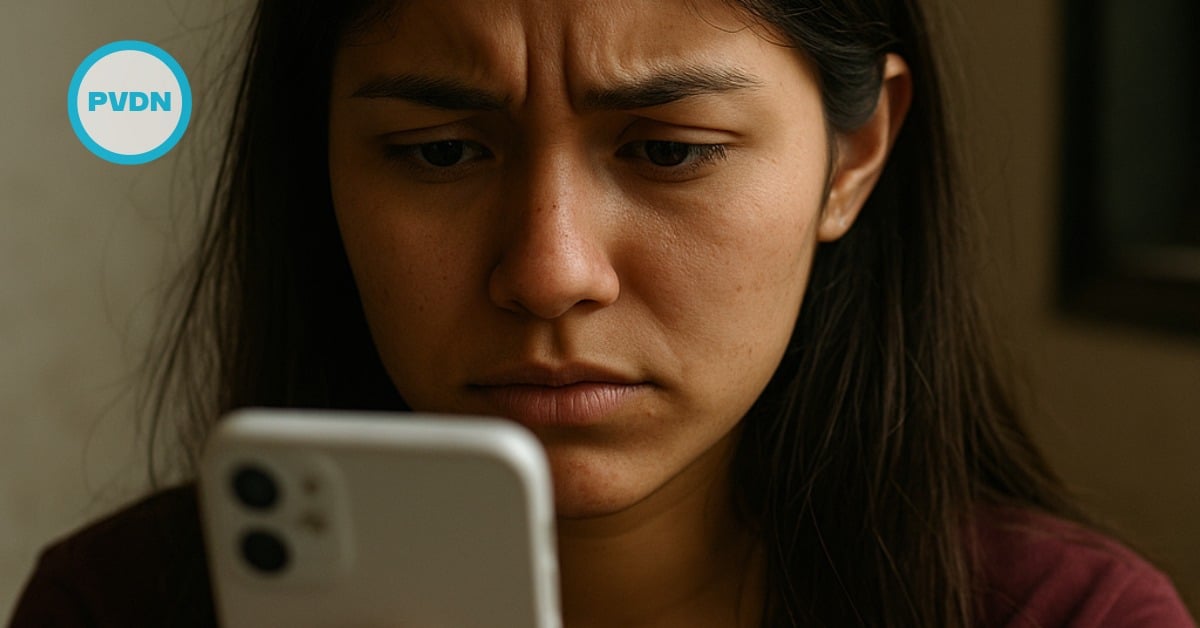
AI deepfakes and online harassment are pushing digital violence in Mexico to record levels, while survivors say the law still lags far behind.
Online harassment has become part of daily life for millions of women in Mexico. Still, the growth of artificial intelligence has changed both the scale and the cruelty of that violence. Image-editing tools once required time, skill and powerful computers. Now, free apps can strip or sexualize a woman’s image in seconds, producing deepfakes that look real enough to fool classmates, co-workers and sometimes even family.
According to UN Women and official Mexican data, more than ten million women in the country have experienced some form of digital violence, from cyberharassment to the non-consensual sharing of intimate content. Surveys based on the national cyberbullying module of the statistics agency show that just over one in five internet users aged 12 or older report having suffered online harassment, and women make up the majority of those affected. Behind the percentages are very concrete experiences: sexual messages they never asked for, anonymous threats that arrive at night, and doctored images that can be shared thousands of times before the victim even finds out.
Globally, UN Women estimates that around four in ten women have faced digital violence in their lifetimes, and nearly half of women and girls live in countries without specific legal protection for this kind of abuse. In Mexico, the picture is slightly different: legal reform has moved faster than in many places, but practice has not caught up. Laws on the books say digital violence is a crime. Survivors still struggle to prove it, to have their cases accepted, and to stop the spread of the material once it escapes their control.
Digital violence Mexico
Mexico’s legal definition of digital violence was shaped by a wave of feminist organizing known informally as Ley Olimpia, named after survivor and activist Olimpia Coral Melo. Through reforms to the federal penal code and to state laws on women’s right to a life free of violence, the country now recognizes digital violence as any intentional act that uses information technologies to distribute, share, publish or commercialize real or simulated intimate content without consent, as well as other online behaviors that harm a woman’s dignity, privacy or safety.
On paper, that definition covers a wide range of abuse. In practice, most complaints still begin with what many women describe as “ordinary” cyberharassment. National surveys show that women receive far more unwanted sexual propositions, humiliating comments and threats than men. Young women, especially those between 18 and 30, are the most likely to be attacked in digital spaces, where messaging apps and social media are tightly woven into their education, work and social life.
AI-driven deepfakes now sit on the most extreme end of that spectrum. Research on online deepfake repositories has found that the overwhelming majority of AI-manipulated sexual images circulating on the internet are non-consensual, and that almost all of the victims are women. For Mexican girls and young women, this is not an abstract statistic. Recent cases in secondary schools and universities, where hundreds of students discovered their faces had been pasted onto explicit bodies, show how quickly image-based violence can spread and how hard it is to erase.
Survivors describe a very specific kind of fear. Unlike a single threatening message, which can be deleted, a deepfake or leaked intimate photo can be saved, reposted, edited and traded in private groups. Even when a platform takes it down, there is no easy way to know who kept a copy, or when it will surface again. Many women say they start to dread every notification, every vibration of the phone they still need for work and school. The digital attack spills into their offline life: they stop attending classes, change routes to work, or withdraw from public debate to avoid more exposure.
Families and communities often struggle to understand that the violence is real even when the images are fake. When the manipulated content shows a woman’s face on a body that is not hers, victims say they feel trapped between shame and disbelief. Some relatives and local authorities urge them to “ignore the gossip” or treat it as a joke, reinforcing the idea that what happens on a screen does not deserve the same response as physical assault, even when it leads to harassment in the street or at school.
Justice and tech on a collision course
Mexico’s reforms against digital violence were a breakthrough in a region where many countries still lack specific laws. Yet the women who try to use those laws often face institutions that have not changed at the same speed as the technology. Prosecutors in specialized units may understand the language of screenshots, metadata and cloud backups. Many local offices do not. Survivors report that some agents still suggest they hand over their phone as if it were a single piece of physical evidence, without making a proper forensic copy, or dismiss the complaint because the account used to attack them has already been deleted.
Digital evidence is fragile. Links break, posts are taken down and platforms change their policies. Without clear internal protocols and trained staff, crucial proof can be lost in the first hours after a complaint, long before a case reaches a judge. Efforts in Mexico City and other states to create specialized protocols for digital gender violence are a step forward, but they remain uneven across the country.
At the same time, the law is racing to keep up with new tools. The original Ley Olimpia reforms were designed around the non-consensual distribution of real intimate images. Legislators and feminist groups now push for updates that explicitly address AI-generated content, the sale of deepfake software and the platforms that host this material. The goal is to close loopholes that allow perpetrators to claim that an image is “just fiction” or that no crime exists because the body in the video does not belong to the victim, even though her face and name are used to attack her reputation.
Regulation cannot focus only on individuals. Activists argue that large platforms, hosting services and companies that develop generative AI tools must also take responsibility, from stricter moderation of non-consensual sexual imagery to safer defaults in the software itself. UN agencies have called for clear global standards on consent, watermarking and detection of manipulated images. Without those, each survivor is left to fight the same battle on her own, sending takedown requests one by one while new copies spread out of reach.
Despite the gaps, the way digital violence is understood in Mexico is shifting. Campaigns led by UN Women and feminist organizations, especially around the International Day for the Elimination of Violence against Women, repeat a simple message: what happens online is not separate from real life. Naming digital violence as real violence helps survivors recognize that what they live is not “drama” or “conflict,” but a violation of their rights. It also sends a signal to schools, workplaces and justice institutions that ignoring online abuse is no longer an option.
For now, many women in Mexico still open their phones with a knot in their stomach, hoping that the next message is from a friend and not another threat or humiliating image. Whether the country can match its legal promises with real protection will depend on how quickly its institutions, companies and communities are willing to treat digital spaces as part of the same world where every woman has the right to live free from violence.