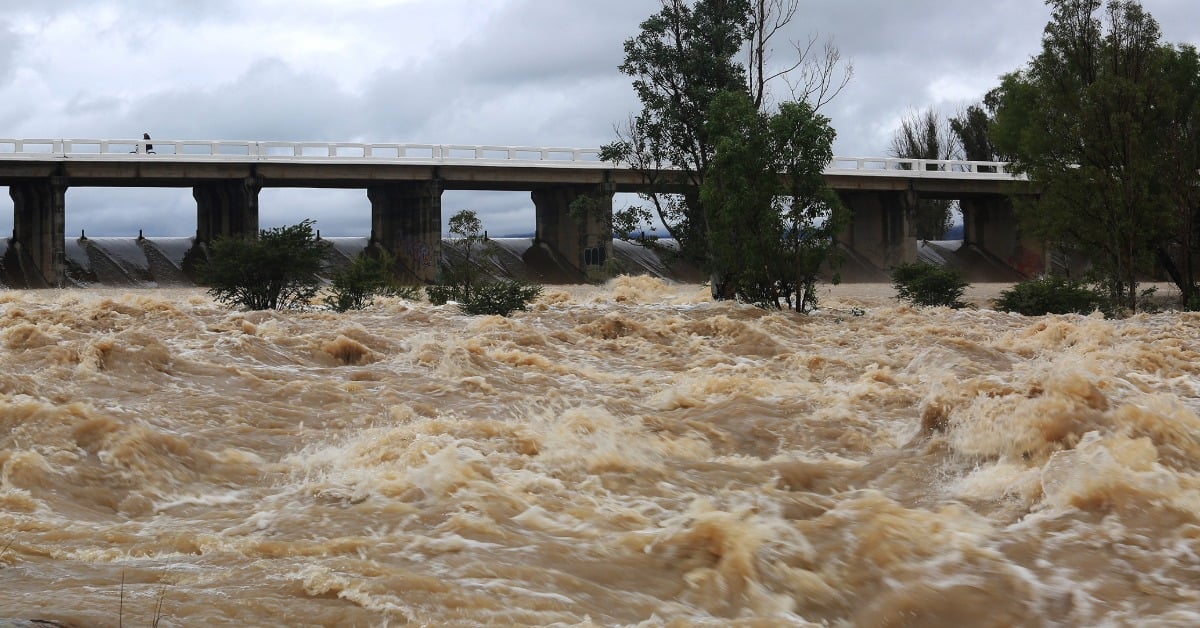
Two Durango reservoirs reached the brim after days of near-continuous rain. Late Wednesday, Peña del Águila overtopped into the La Sauceda river; hours later, Santa Elena in Súchil followed suit. Officials insist the releases are controlled and say no neighborhoods face an imminent evacuation. But they’re warning ranchers and drivers to stay off riverbeds, and they’re watching gauges by the hour as more storms line up for next week. Here’s what spilled, where the water is going, and what numbers matter now.
Durango dams begin spillover
Peña del Águila reached full capacity Wednesday evening and began spilling into the La Sauceda river. State civil protection said the reservoir jumped from 75% to 100% in under 24 hours after a single storm added more than 9 million m³—pushing storage to about 106% and prompting crews to patrol downstream communities.
Conagua’s on-the-ground meteorologist Víctor Hugo Randeles reported the first spill shortly after 19:30 on August 27, with an initial outflow near 0.73 m³/s, later rising to roughly 24 m³/s Thursday morning as inflows persisted.
Monitoring and alerts along river corridors
Authorities say the spill is controlled and, by itself, is not a reason to evacuate. Even so, state civil protection urged residents to pull vehicles, cattle, and poultry away from river margins and to avoid crossing swollen arroyos. Patrols focused on communities closest to the embankment—Juan B. Ceballos, San José del Molino, Calera, Labor de Guadalupe, Santa Cruz del Río, 5 de Mayo, and 5 de Febrero—as crews watched for any surge.
The caution reflects how quickly the situation evolved: Conagua logged a pause in overtopping early Thursday, then a fresh pulse lifted Peña del Águila back over the crest by mid-morning.
A second reservoir joins: Santa Elena in Súchil
Late Wednesday night, Conagua signaled that Santa Elena—also known formally as Presa J. Jerónimo Hernández—would begin to spill. By 09:00 on August 28, officials confirmed overtopping, with an initial release of ~2.3 m³/s through the Arroyo Graseros into the Río Súchil. Conagua’s district feed and local outlets placed the reservoir at or very near 100%.
Conagua and the local press estimate Santa Elena’s storage capacity at around 15 million m³, a small but locally significant basin that fills rapidly during Sierra storms. Conagua’s Durango meteorology brief also noted a ~2.1 m³/s spill rate at a small Súchil-area dam on Wednesday night, consistent with the early Santa Elena overtopping.
Where the water is going—and who should care
Peña del Águila’s spill heads down La Sauceda, a corridor that crosses ranch land and low-water crossings near the capital. The most immediate risks are to people who try to ford the river or leave equipment and livestock on the banks. Civil protection’s guidance is simple: keep clear until flows settle.
Santa Elena’s overflow feeds Arroyo Graseros and then the Río Súchil, affecting rural stretches first. Municipal brigades in Súchil have been making door-to-door rounds to keep residents informed as the channel carries off the excess.
The bigger water picture after a punishing dry spell
Even with the dramatic images around Durango city, not every reservoir is brimming. Conagua data and local coverage this week indicate that Francisco Zarco on the Nazas system reached approximately 50% mid-week, while Guadalupe Victoria still had room to receive more water. On average, Durango’s reservoirs only recently crept into the low-to-mid 30% range after years of below-normal rain. The contrasting levels explain why some basins spill quickly while larger northern storage remains well below the rim.
That said, Wednesday’s event at Peña del Águila was notable: La Jornada tallied an intake of ~9 million m³ in roughly 12 hours, enough, Conagua quipped, to fill the Estadio Azteca several times over.
What to watch in the coming days
Forecasters expect another round of heavy rain in early September, which could sustain releases if catchments stay saturated. State and municipal teams say they will maintain 24/7 monitoring of both dams and issue community alerts if the thresholds change. For residents, the practical advice remains to avoid riverbeds, heed closures, and respect signage until flows recede.
As of Thursday morning, officials described both spills as managed overtopping, not a dam-safety emergency. The story, however, remains the weather: if the next system stalls over the Sierra, downstream channels will run high again, even if the skies look clear in town.