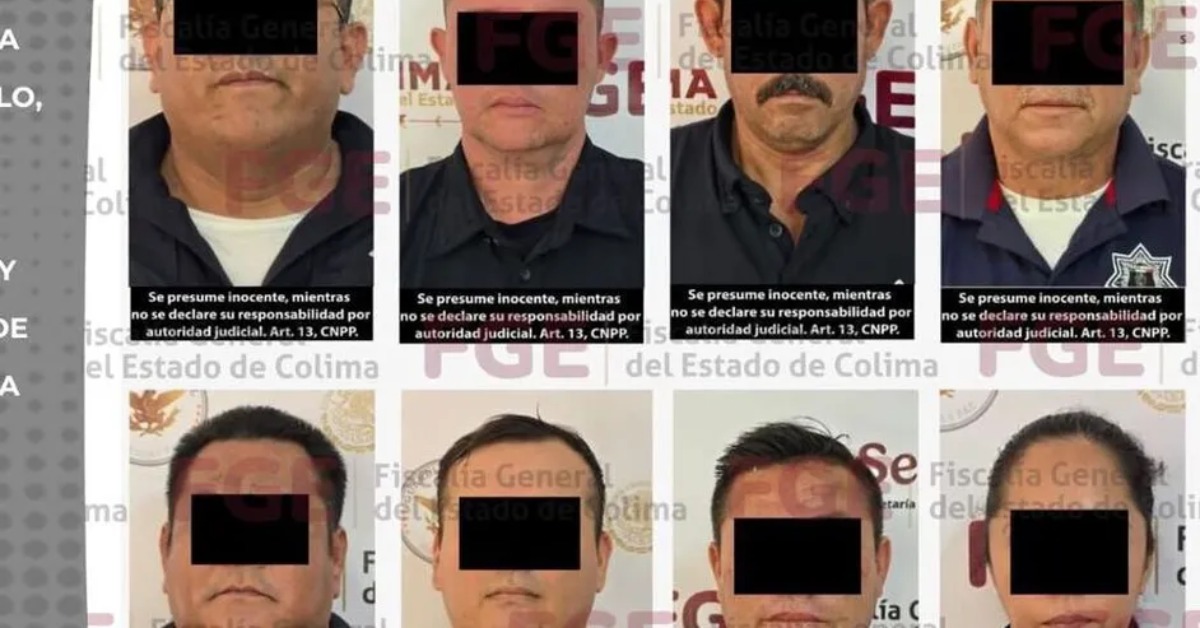
Eight active members of the Manzanillo Municipal Police have been ordered to remain in criminal proceedings after prosecutors accused them of sharing sensitive security information with contacts linked to the Cártel Jalisco Nueva Generación (CJNG).
Authorities in Colima say the officers are being investigated for alleged criminal association and misuse of information related to public security, justice institutions, and the state prison system. A judge also ordered justified pretrial detention while prosecutors continue building the case.
The ruling does not mean the officers have been convicted. It means a judge found enough initial evidence for the case to move forward.
What prosecutors say the officers shared
The accusations focus on events that allegedly took place between December 2 and December 19, 2023. Prosecutors say the officers sent information about the presence or absence of police and armed forces, as well as other public security operations, in Manzanillo.
That type of information can have practical value for criminal groups. It can help them avoid checkpoints, monitor patrol movements, or plan activity around security deployments.
Authorities say the information was allegedly sent through Threema, an encrypted messaging app. The case is not about the use of encryption by itself. Encrypted messaging is used legally by journalists, businesses, governments, and private citizens. The allegation concerns what was shared, who received it, and whether public security information was used to aid a criminal group.
Why Manzanillo matters
Manzanillo is not just a beach city. It is one of Mexico’s most important ports and logistics centers, with a major role in Pacific trade and cargo movement.
That makes the area economically important. It also helps explain why criminal groups care about routes, checkpoints, patrol schedules, and security operations around the municipality.
For residents and foreign readers trying to understand the case, the larger issue is institutional trust. Criminal groups do not need full control of a police department to gain an advantage. Even a small stream of inside information can weaken public safety operations.
What happens next
The judge gave prosecutors two months for the complementary investigation. During that period, the Public Ministry can gather more evidence, request expert analysis, and prepare the case for the next stage.
In Mexico’s criminal justice system, being linked to proceedings is an early procedural step. It allows the case to continue, but it does not decide guilt. The accused officers still have the right to a defense.
The case also follows the earlier detention of the eight officers in April. State authorities said at the time that the officers had between eight and 25 years of service in the Manzanillo police force.
Why this case matters beyond Colima
The Manzanillo case fits a wider concern in Mexico: how organized crime seeks access to public security information. That can happen through threats, payments, relationships, or pressure on local officials.
For foreign residents and visitors, the takeaway is not that all of Mexico faces the same risk. Security conditions vary sharply by state, city, and even neighborhood. The lesson is that local context matters, especially in areas where ports, highways, and criminal routes overlap.
The case now moves through the courts. For Colima authorities, the next test will be proving the allegations in a process that can withstand legal scrutiny.