Puerto Vallarta, Jalisco, July 29, 2026 – Estero El Salado has completed 26 years under environmental protection as Jalisco renews aging visitor docks inside a mangrove wetland now almost entirely enclosed by Puerto Vallarta’s urban development.
The anniversary dates to July 27, 2000, when the Jalisco Congress declared El Salado a protected natural area under the category Zona de Conservación Ecológica. Another layer of protection arrived on March 12, 2020, when the wetland became Parque Estatal Estero El Salado.
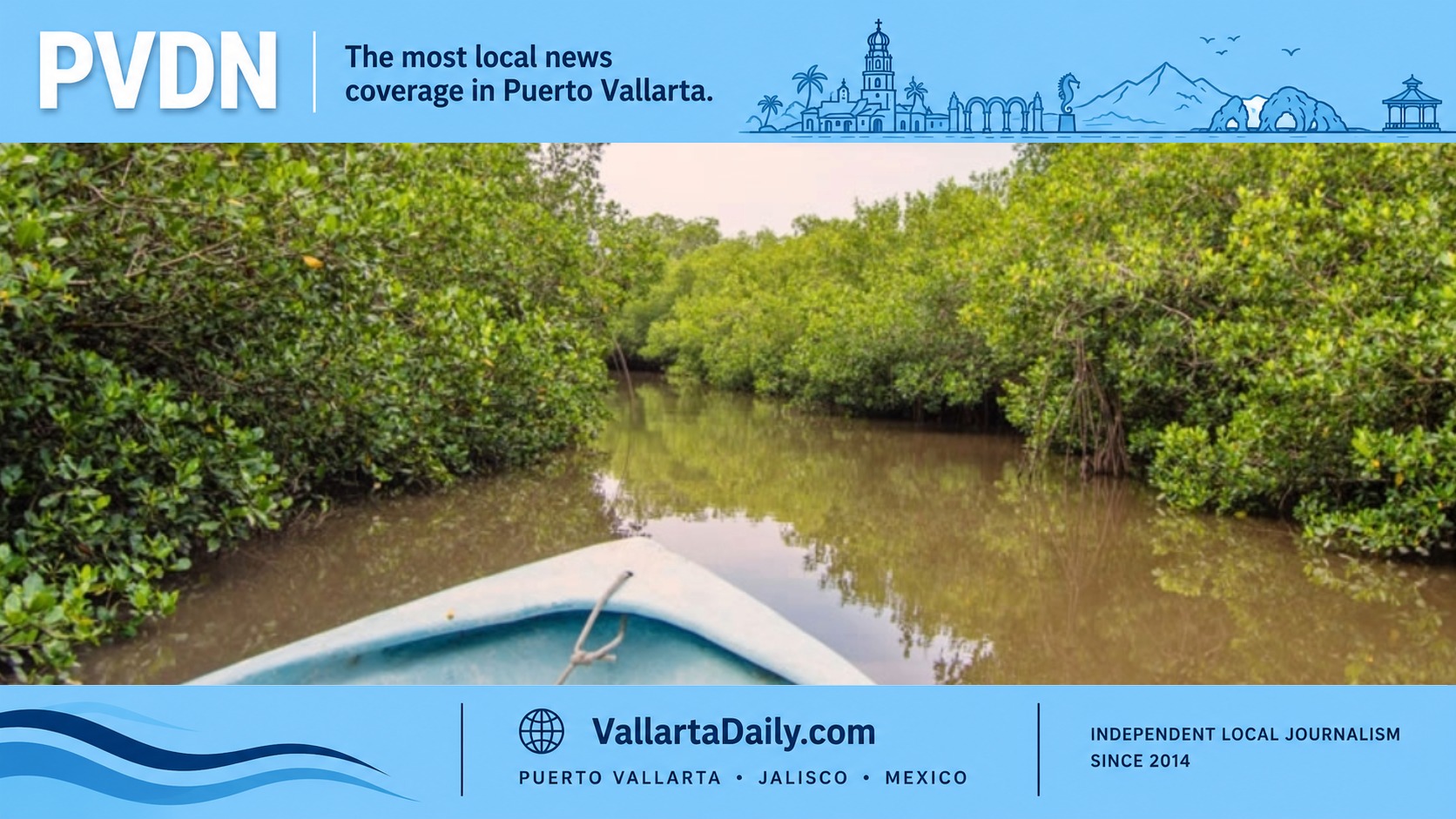
The current state park covers 208.8 hectares along Avenida Francisco Medina Ascencio near Villa Las Flores. Its location separates it from most protected coastal wetlands. Hotels, roads, commercial properties, residential areas and airport infrastructure have grown around its boundaries, leaving the estuary as a protected pocket within the city rather than a remote reserve.
José Daniel Graf Pérez, director of natural resources at the Jalisco Secretariat of Environment and Territorial Development, said the park remains ecologically active despite the difficulty of managing a wetland surrounded by development.
Graf said that El Salado continues to regulate water and tidal flows, capture carbon, and maintain habitat used by numerous plant and animal species.
State records identify four principal ecosystems within the park, including mangrove, seasonal tropical forest, thorn forest and marsh or grassland. Surveys have recorded about 134 bird species, 28 amphibian and reptile species, and 29 mammal species.
The mangrove also maintains a permanent connection with Banderas Bay through a tidal channel. That exchange of saltwater and freshwater supports fish, crabs, birds, reptiles, and vegetation while moving nutrients between the wetland and the bay.
Urban pressure has been part of El Salado’s management history since before its protected designation. A proposed development known as Marina II during the late 1980s helped mobilize residents and environmental groups seeking legal protection of the remaining wetland.
The park’s own 2018 operating program identified strong urban pressure as a continuing weakness. It also called on management to work with planning authorities on development affecting the estuary’s micro-watershed and adjoining land.
Current work is concentrated on infrastructure used during controlled public access. Jalisco officials recently inspected the visitor dock and the dock serving the observation tower, both of which are slated for expansion and repairs after years of exposure to moisture.
Vallarta Daily reported this week that the project includes improvements intended to make access safer while maintaining the park’s research and environmental-education functions.
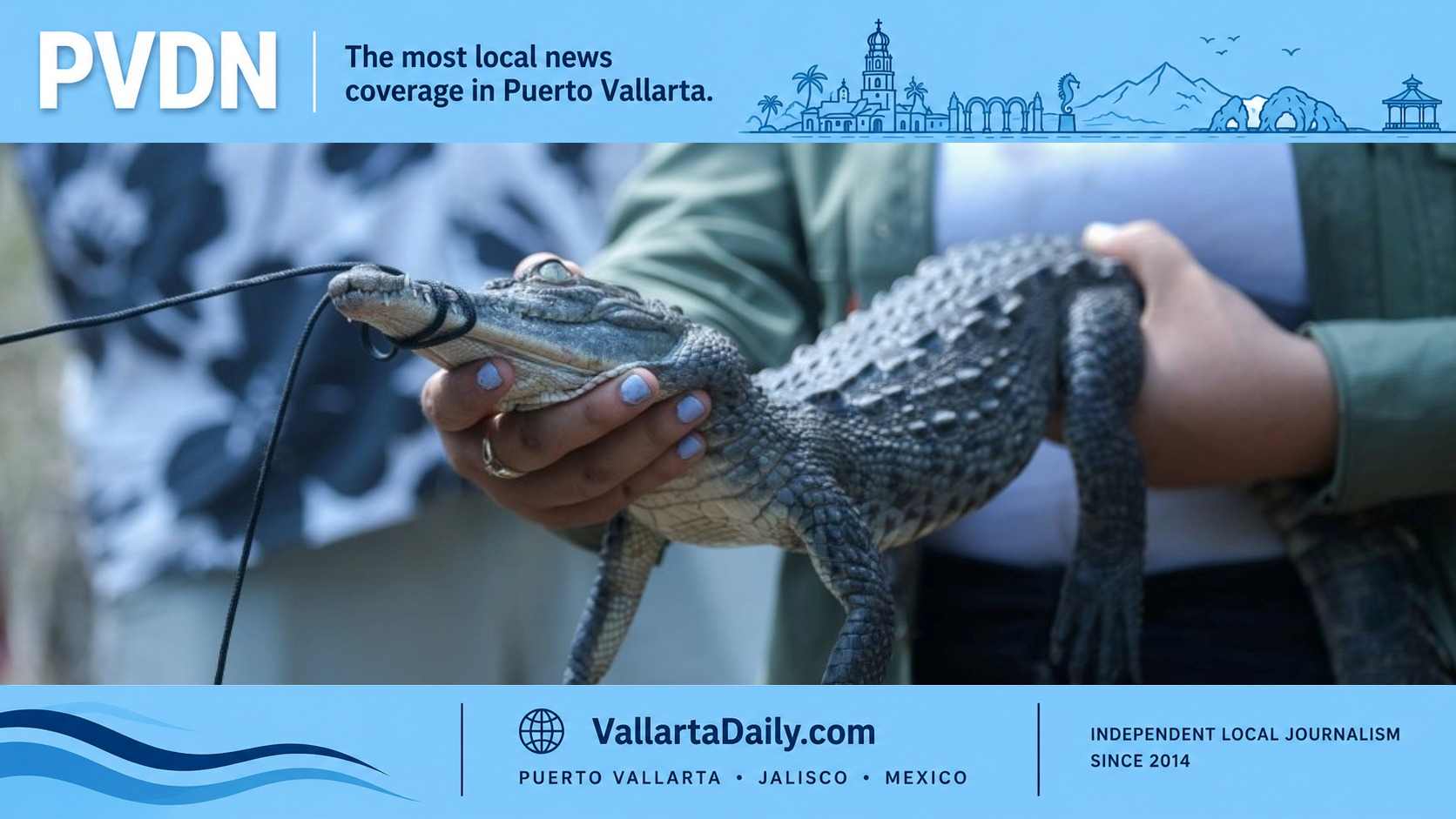
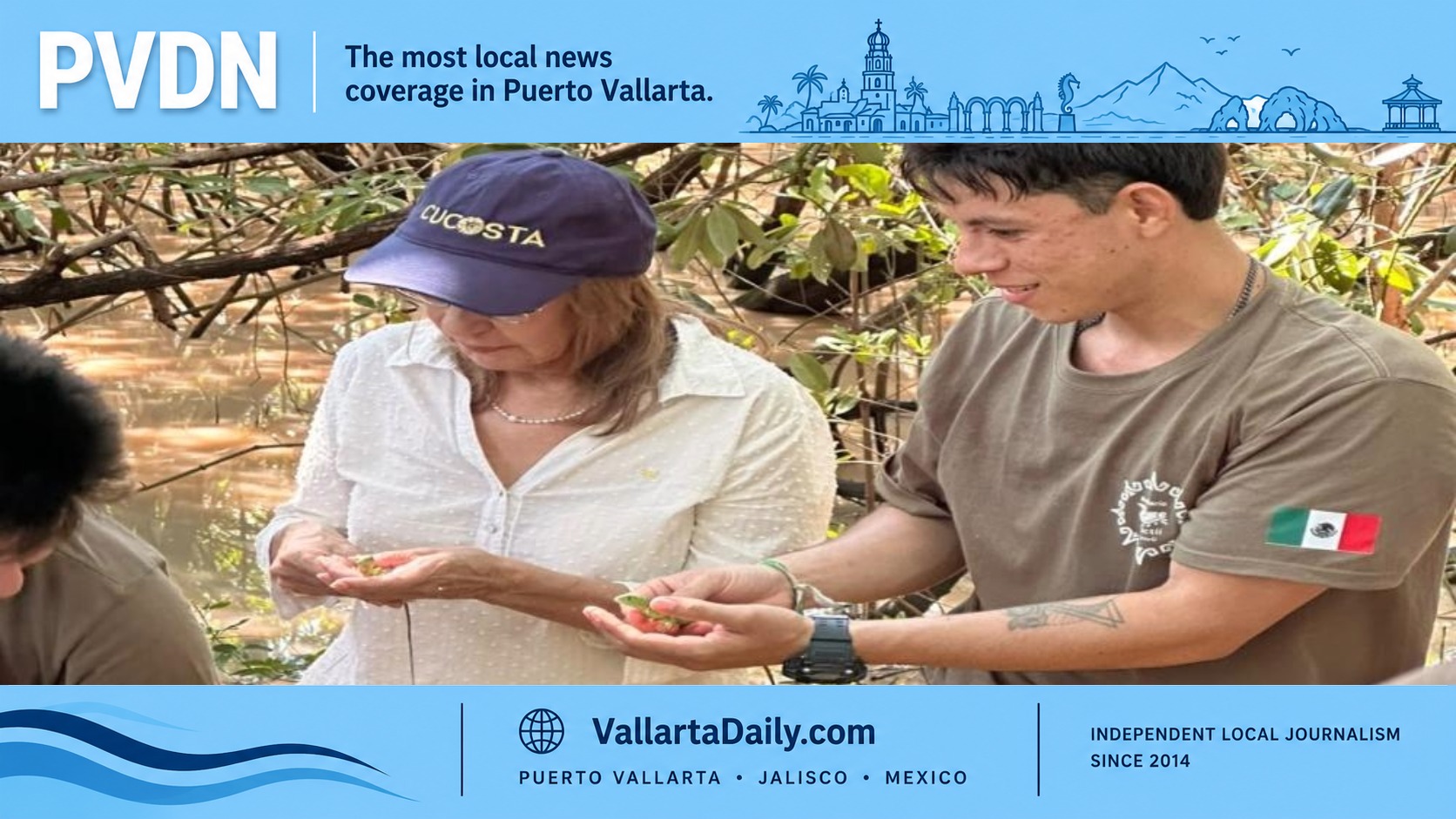
Graf said three trained technicians currently work at El Salado. The public-use area remains open, and staff continues to receive school groups, conduct educational activities, and care for a rescued crocodile that can be observed at the park.
Boat tours into the mangrove remain suspended while dock rehabilitation is completed and safe operating conditions are restored. No reopening date has been announced.
The anniversary frames El Salado’s legal protection and its physical condition together. The wetland survived the development pressure that prompted its designation in 2000, but its continued operation now depends on maintaining aging infrastructure, controlling public access and protecting ecological processes beyond the park’s formal boundaries.