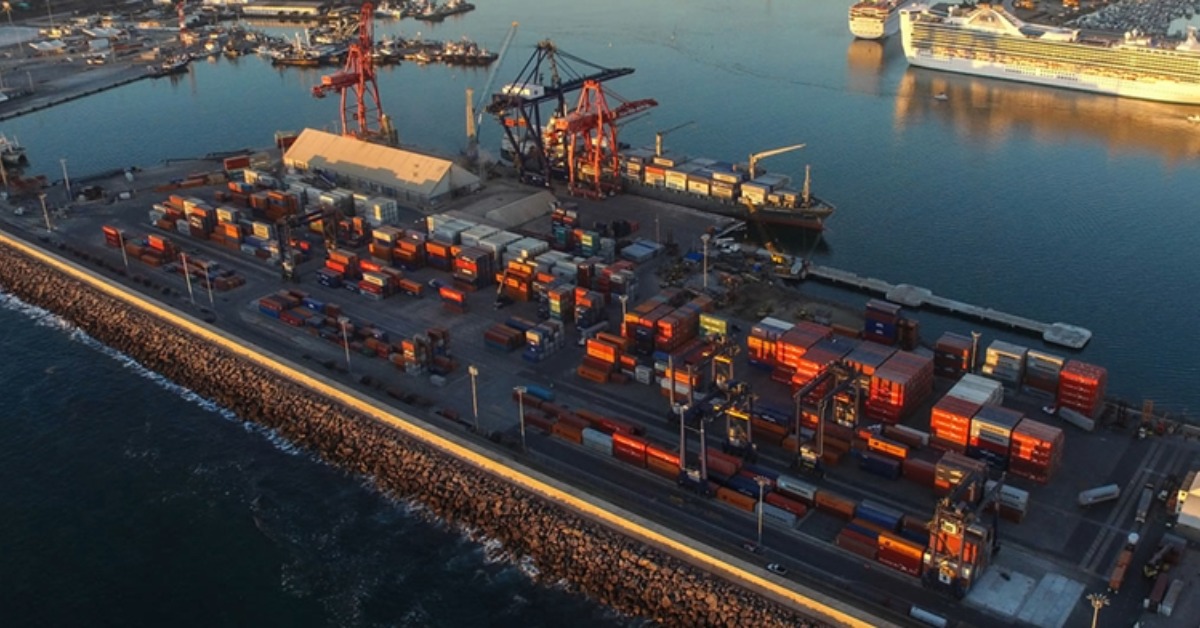
At a meeting of Grupo Madrugadores, local business leaders urged the federal port authority ASIPONA Ensenada to put the brakes on and review the expansion plan—a signal that resistance to the project now extends beyond environmental groups and surfers. The request, delivered directly to ASIPONA’s leadership, cited unanswered questions about the project’s price tag, scope, and community impact.
The timing is notable. On August 20, 2025, Mexico’s Diario Oficial de la Federación published a modification to ASIPONA Ensenada’s concession title. This administrative step often accompanies planning updates and can shape what a port operator may legally build or manage. While the document doesn’t approve specific construction on its own, it underscores that federal pieces are moving even as locals ask for clarity.
What’s actually planned—and what isn’t
The “expansion” people talk about several projects at once. The least controversial piece is an enlargement of the dársena de ciaboga (turning basin) inside the existing Ensenada port to accommodate larger cruise ships and improve maneuvering. Federal officials said this work would start in August with a 600-million-peso budget. Separately—and far more contentious—the government floated a plan to enable cargo operations at El Sauzal, north of the city, with about 400 million pesos in public investment if the project clears technical and social hurdles.
Authorities also promised a public consultation in Ensenada specifically on the El Sauzal portion after protests in July. This commitment matters because it places social license at the center of any go-ahead.
The permitting reality check
Despite high-level talk, key permits remain in question. As recently as mid-June, Baja California’s environment secretary said no environmental impact statement (MIA) had been submitted for the El Sauzal works—an essential prerequisite for any federal port construction. That status places the heaviest lift ahead: baseline studies, modeling of coastal dynamics, and mitigation plans that SEMARNAT will scrutinize before issuing an opinion.
The consultation promise adds a parallel track. Officials tied the El Sauzal decision to community input, with the Navy saying the vote—and technical studies by Ensenada’s own CICESE—must shape the outcome. For residents who worry about waves, fisheries, and access, that is not symbolic; it’s a procedural gate.
Grupo Madrugadores isn’t a protest outfit; it’s a civic-business forum. Their request to reassess signals practical concerns: truck congestion on the city’s main approaches, beach access and land-use pressure, and the risk that a container-heavy strategy could clash with Ensenada’s tourism, scientific, and wine economies if planning is sloppy. Their public position—echoing letters from historians and community groups—pushes for proof that benefits outweigh these costs, or for alternatives south of the city that limit urban impacts.
There’s also a market context. Ensenada’s Hutchison-operated terminal completed a 2.3-billion-peso expansion in 2024, lengthening the berth and boosting yard capacity. The port handled 462,176 TEU in 2023 and remains the first Pacific call for some Asia services. In other words, some capacity has already come online without touching El Sauzal—one reason local leaders want side-by-side analysis before the city signs on to new works.
The environmental and coastal stakes
Beyond the city’s road network, coastal dynamics loom large. The El Sauzal shoreline includes surf breaks and fishing activity that depend on currents and sediment flow. National outlets have documented surfers’ fears that breakwaters or new structures would alter waves and harm a niche tourism economy tied to the water. Those are not abstract concerns; MIAs must model those changes and propose mitigation or alternatives.
Local watchdogs have gone further, accusing municipal leaders of overselling progress and “announced investments” before pre-investment studies and cost-benefit work exist. ASIPONA itself, according to correspondence cited by activists, has indicated that pre-investment studies are not complete—a reminder that the formal pipeline for federal projects is rigid for a reason.
In the coming weeks, the clearest signals will be procedural: publication of an MIA filing for El Sauzal (or a decision to drop or re-scope it), the terms and calendar of the consultation, and any tender or budget moves tied to the turning-basin upgrade. The business community’s intervention ensures those steps will face sharper scrutiny, not only on economics but on how port growth aligns with a city whose brand—and payrolls—lean on the bay’s environmental health.