Guadalajara put 170 of its police officers through a fresh round of federal instruction focused on what happens in the first minutes after an arrest. The course, led by federal prosecutors, drilled officers on the national first-responder protocol, legal thresholds for detention, and the paper trail that keeps evidence usable in court. City officials say the goal is simple: fewer cases thrown out over preventable errors. We reviewed the source material and federal records, and spoke with prior trainings to explain what changed—and why it matters for victims.
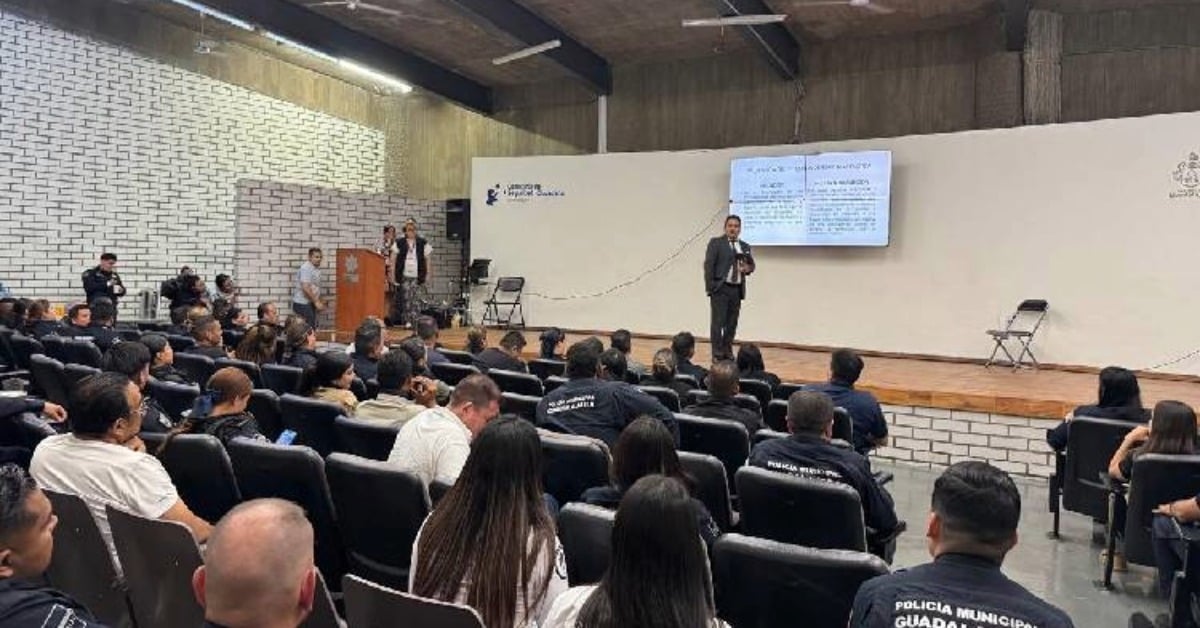
Guadalajara has put 170 uniformed officers through a federal course on first-responder work and courtroom-ready procedures. The training was delivered by agents of the Federal Public Prosecutor’s Office at the city police auditorium. It covered the unified police report, flagrancy standards, preventive checks, levels of contact, detention of adolescents, interrogation and cross-examination, and the chain of custody. The city said the aim is to tighten early-stage work so cases survive in court.
FGR police training
Federal records confirm the session as part of the Fiscalía General de la República’s regional program in Jalisco. The agency listed the Guadalajara course this week, noting 170 city officers received instruction on first-responder duties and evidence handling.
The focus tracks national standards. Mexico’s Protocolo Nacional de Actuación del Primer Respondiente sets what an officer must do from the first contact with a scene: secure the area, record observations, protect victims, and document every action to preserve evidence. Each step links to admissibility in court.
Why the first minutes decide the case
Small mistakes early on can sink a file months later. If an officer fails to log who touched a firearm or photographs a scene without scale, defense lawyers can challenge reliability, and judges may exclude key exhibits. The FGR’s own technical guidance stresses that the chain of custody is the backbone that connects evidence to events and people without gaps.
Guadalajara’s course emphasized exactly that link between street work and courtroom outcomes. By drilling the unified police report and thresholds for flagrancy and contact levels, instructors aim to reduce unlawful stops, avoid overreach, and keep confessions and seizures from being tossed.
Part of a broader push in Jalisco
This is not a one-off. In recent weeks, FGR teams trained hundreds of municipal officers across Jalisco’s Valles region on first-responder duties, chain of custody, and flagrancy. Last year, the federal agency also ran modules for the National Guard in the state. Together, the sessions suggest a steady effort to standardize early-stage policing in Jalisco’s municipalities.
What residents should expect
For residents, better first-responder work looks like tighter scene control, more precise explanations at stops, and faster, cleaner paperwork after arrests. It also means stronger cases without relying on spectacle. Training cannot replace resources or deep reforms, but it reduces unforced errors that have long cost victims their day in court.
What comes next
The city and FGR did not publish a schedule for follow-up modules or evaluations tied to the new course. But the federal listing for Guadalajara mirrors recent trainings that typically cascade to neighboring forces. If that pattern holds, more Jalisco officers could be cycled through the same curriculum this fall.