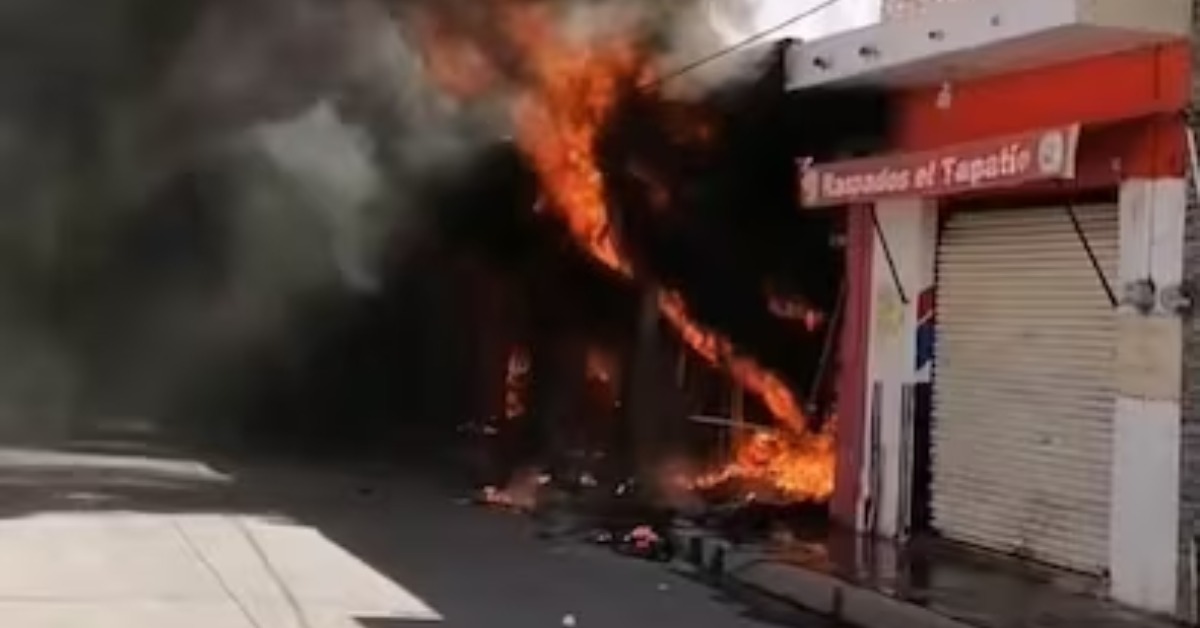
The arrest of Audias Flores Silva, known as “El Jardinero,” triggered a wave of fires, roadblocks, and travel disruptions in parts of Nayarit on Monday, April 27, 2026.
Federal authorities identified Flores Silva as an alleged high-level figure in the Jalisco New Generation Cartel, or CJNG. He has also been described as one of the possible successors to Nemesio Oseguera Cervantes, known as “El Mencho,” after the cartel leader’s reported death earlier this year.
The violence reported after the arrest centered on several Nayarit municipalities, including Tecuala, Ahuacatlán, Acaponeta, and Ixtlán del Río. Reports described vehicles and businesses set on fire, along with roadblocks that affected movement across parts of the state.
The disruption also reached travelers in Puerto Vallarta, where bus departures toward several Nayarit destinations were suspended until further notice. Routes affected included service toward La Peñita de Jaltemba, Las Varas, Compostela, and Tepic.
What happened after the arrest
The first reports after the arrest described fires in Tecuala, where armed people allegedly set businesses on fire. One of the largest fires was reported at a supermarket, with concern that flames could spread toward nearby homes.
Authorities and emergency crews responded to the affected areas. State police, municipal police, the Army, and the Navy were reported in parts of Nayarit to support emergency work and reinforce security.
In Ahuacatlán, reports pointed to vehicle fires and roadblocks. Acaponeta authorities advised residents to remain indoors as a precaution because of incidents in nearby municipalities. In Tecuala, local authorities also asked residents to avoid going out until the situation was declared under control.
The Nayarit state government urged residents to stay informed through official channels and avoid spreading unverified information. That guidance matters during fast-moving security incidents, when rumors can spread faster than confirmed updates.
Why this arrest matters
Flores Silva is not being treated as a routine arrest. Mexican and U.S. authorities have linked him to the CJNG, one of Mexico’s most powerful criminal organizations.
Federal officials said the arrest was carried out by Mexican Navy special forces in Nayarit. The operation was described as planned and executed without shots being fired, despite reports that Flores Silva had a large security circle around him.
U.S. authorities had offered a reward of up to $5 million for information leading to his arrest or conviction. The U.S. Treasury Department identified him in 2021 as a significant foreign narcotics trafficker and said he controlled CJNG territory along Mexico’s Pacific coast, including Nayarit.
That Pacific corridor is important because it connects ports, highways, resort areas, and smaller towns. For foreign residents and visitors, the story is not only about cartel leadership. It is also about how organized crime pressure can affect daily movement, public safety, and transportation.
Why Puerto Vallarta was affected
Puerto Vallarta was not reported as the center of the fires. The more serious incidents were reported in Nayarit. But Puerto Vallarta is closely connected to Nayarit by road, tourism, labor, and regional travel.
Many people move between Puerto Vallarta, Riviera Nayarit, Compostela, Las Varas, and Tepic for work, errands, family visits, and tourism. When roadblocks or security incidents affect Nayarit highways, Puerto Vallarta can feel the impact quickly.
That appears to be what happened Monday. Bus departures from Puerto Vallarta to several Nayarit destinations were suspended due to the security situation and blocked routes.
For residents and travelers, the safest approach during these events is practical. Confirm bus service before going to the terminal. Avoid unnecessary road travel through affected zones. Follow updates from state and municipal authorities instead of relying on social media posts alone.
The wider CJNG context
The CJNG has long been one of Mexico’s most closely watched criminal groups. U.S. agencies have accused the cartel of trafficking fentanyl, methamphetamine, cocaine, and other drugs into the United States.
In 2025, the United States designated CJNG as a foreign terrorist organization, along with several other criminal groups. That designation increased legal and diplomatic pressure around cartel-linked activity, including financing, drug trafficking, and support networks.
Flores Silva’s arrest comes during a period of heightened attention on cartel leadership. His capture may create pressure inside the organization, especially if authorities pursue extradition to the United States.
These arrests can also lead to short-term violence. Criminal groups sometimes respond to major arrests by burning vehicles, blocking roads, or attacking businesses. The goal is often to create public fear, distract authorities, and show they still have street-level capacity.
What readers should watch next
The immediate concern is whether Nayarit authorities can restore normal movement on affected roads and bus routes. Residents and travelers should watch for updates on highway conditions, transport departures, and public safety advisories.
The second issue is whether Flores Silva will face extradition proceedings. U.S. authorities have sought him in connection with drug trafficking and weapons charges. Any extradition process could become a major part of the case.
The third issue is whether the fires and roadblocks remain limited or spread into other areas. According to the initial reports, the main incidents were concentrated in parts of Nayarit. Puerto Vallarta saw increased security vigilance and travel disruption, but not the same level of reported violence.
For now, the arrest of El Jardinero is both a security story and a mobility story. It shows how a federal operation in Nayarit can quickly affect businesses, bus routes, and public confidence across a wider region, including Puerto Vallarta.