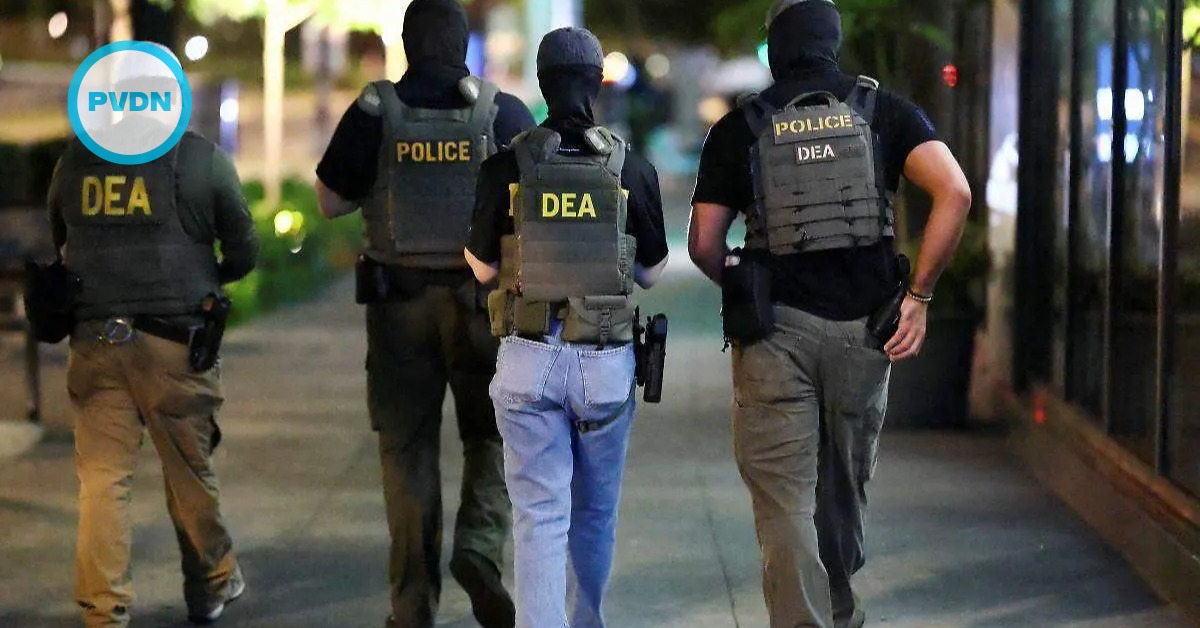
Mexico confirms foreign security agents from 14 countries are accredited, but names and numbers stay classified for security and diplomacy.
Mexico has confirmed that foreign security agents from 14 countries are accredited to work on Mexican soil. That sounds dramatic, until you read what the government did and did not say. A transparency request produced a rare glimpse into how these officials are authorized, and why key details—names, numbers, locations, and missions—were kept under lock and key. The answer raises a bigger question: when cooperation is legal and supervised, where does it end and covert work begin?
Mexico’s Foreign Ministry has confirmed something that usually stays vague in official language: foreign security agents from 14 countries are accredited to operate in Mexico. The admission came through a transparency response that opened a small window into an area the government rarely describes in public. That window closes fast.
The same response that confirmed the existence of accredited foreign personnel also kept the most sensitive details sealed. The government said it would not disclose the number of agents, where they work, or other operational specifics. Officials argued that releasing the information could endanger personnel and strain diplomatic relationships, while also weakening security cooperation aimed at organized crime and drug trafficking.
The disclosure matters because it draws a line between what Mexico considers legitimate, supervised security cooperation and what it considers off-limits. It also shows how much of that cooperation remains hidden, even when the public asks directly.
What Mexico confirmed about foreign security agents
According to the Foreign Ministry’s response, the accredited foreign security presence in Mexico includes personnel tied to Germany, Australia, Chile, Colombia, South Korea, Ecuador, El Salvador, France, Israel, Italy, Peru, the Dominican Republic, China, and the United States.
The response also sketched out how this works in practice, at least on the U.S. side. It indicated that Mexico has accredited personnel from multiple U.S. government entities, including units tied to financial sanctions enforcement, drug investigations, federal law enforcement liaison work, and border and immigration enforcement. In other words, this is not framed as a single-agency relationship. It is a multi-agency channel for information sharing and coordination, carried out under Mexico’s formal rules.
For readers living in Mexico, this point often gets lost in the noise. When people hear “foreign agents,” they imagine covert operatives running around unchecked. Accreditation points to a different reality. It describes an official relationship where Mexico says it knows who is here and, at least on paper, controls how those officials interact with Mexican institutions.
That does not mean everything is transparent. It means the government is drawing a legal boundary around a slice of foreign security activity and calling it supervised cooperation.
What the government refused to disclose and why
The transparency response did not provide a headcount, a roster, duty locations, or mission details. The Foreign Ministry said the information would remain classified for five years, arguing that disclosure could put agents at risk and harm “good diplomatic relations.” It also said releasing that kind of detail could expose sensitive information about the human resources allowed to interact inside Mexico, and could undermine the effectiveness of legal cooperation tools used in security and intelligence work.
There is also a structural reason the government can do this. Mexico’s transparency law allows agencies to classify certain information as reserved for a set period when officials argue disclosure would create a real risk to public interest or national security, or could damage international relations. The default period is up to five years, with a mechanism to extend in specific cases.
That legal framework does not settle the debate over whether the public should know more. It does explain why these requests often end with a firm “no,” even when an agency acknowledges the broad outline of what exists.
This is also where the politics of transparency comes into the story. The response referenced “Transparencia para el Pueblo,” Mexico’s federal transparency authority created in 2025, as the channel through which the request was handled. The name is new. The tension is old. Security agencies and foreign affairs officials treat many operational details as a state secret. Transparency advocates argue that secrecy can become a habit, and that oversight weakens when the public cannot even see basic totals and categories.
Accreditation is not a blank check
Mexico’s National Security Law lays out the concept behind this arrangement. Foreign agents can be authorized to enter Mexico temporarily for information exchange, within the context of security cooperation agreements. The Foreign Ministry is the gatekeeper, and the law says accreditation decisions are made with other security institutions and with reciprocity in mind.
The law also describes limits. Accredited foreign personnel are framed as liaison actors. They are not supposed to exercise powers reserved for Mexican authorities or enforce foreign laws inside Mexico. They are expected to work through the proper channels, share relevant information with Mexican counterparts, and comply with reporting and restrictions tied to their accreditation.
For expats, the practical takeaway is simple. The presence of accredited foreign security personnel does not mean foreign governments “run” security policy in Mexico. It does mean Mexico has created a formal lane for cooperation, and it has tried to define what that lane allows and what it forbids.
At the same time, accreditation does not answer the question people most often argue about. Are there foreign operatives acting outside that lane. A transparency response about accredited personnel cannot prove a negative. It only describes what the government recognizes and authorizes.
Why this matters if you live in Mexico
This story lands differently for people who call Mexico home, especially those who moved here from countries whose governments are part of global security cooperation. The headline can read like a thriller. The details read more like bureaucracy mixed with state secrecy.
Still, it matters for three reasons.
First, it confirms that security cooperation is not limited to one bilateral relationship. The list includes countries with different interests and different types of collaboration, from law enforcement to financial controls. That matters in how you understand big enforcement stories, sanctions cases, and cross-border investigations.
Second, it highlights the limits of public oversight. Mexico is willing to confirm that accredited foreign security work exists, but it is not willing to show the public its scale. Without numbers, it is hard to judge how much has changed over time, how concentrated the activity is, or whether the rules are being applied evenly.
Third, it touches a sensitive national question that surfaces often in Mexico’s political life: sovereignty. The government appears to be saying, “Yes, this happens, and it happens under our rules.” The government is also saying, “No, you cannot see the operational map.”
That combination will satisfy some people and frustrate others. For most residents, it will simply reinforce a familiar reality. Mexico is deeply tied to international security cooperation, and the public gets only fragments of how it works.