Puerto Vallarta has a reputation for being somewhat sheltered from hurricanes, and there is truth behind that. Banderas Bay, Cabo Corrientes, and the Sierra Madre can all influence how storms behave near the coast. Still, “sheltered” is not the same as safe from every storm.
A hurricane does not need to make a perfect direct hit to cause problems here. Heavy rain can swell rivers. Hillsides can loosen. Streets can flood fast. Waves can close beaches and ports. Power can go out. Flights can be delayed. A short storm can leave behind a long cleanup.
For people living in Puerto Vallarta, hurricane season is less about panic and more about preparation. You do a few practical things before the season gets busy, keep an eye on official forecasts, and take local warnings seriously when they come.
When is hurricane season in Puerto Vallarta?
Hurricane season in the Eastern Pacific runs from May 15 through November 30. Puerto Vallarta sits on Mexico’s Pacific coast, so this is the season residents should pay attention to.
That does not mean six straight months of dangerous weather. Most days during the rainy season are ordinary Puerto Vallarta summer days: humid mornings, heat building through the afternoon, and rain that often arrives later in the day or at night. Some storms are little more than a heavy downpour. Others bring lightning, strong winds, flooded intersections, and swollen rivers.
The most active stretch for the region is usually late summer into early fall, especially August, September, and October. Those are the months when residents should be more disciplined about checking forecasts before making plans, especially anything involving the beach, boats, mountain roads, or travel.
For 2026, forecasters are expecting an active Pacific season. NOAA’s outlook calls for an above-normal Eastern Pacific season, with 15 to 22 named storms, 9 to 14 hurricanes, and 5 to 9 major hurricanes possible across the basin. Mexico’s meteorological service has also forecast an active Pacific season, with 18 to 21 tropical cyclones expected.
Those numbers do not tell Puerto Vallarta whether it will be hit. Seasonal forecasts describe the basin, not the city. A season with many storms can pass without a serious local impact. A quieter season can still produce one storm that disrupts daily life.
Is Puerto Vallarta safe during hurricane season?
Puerto Vallarta is not a place where residents spend half the year hiding from hurricanes. People live, work, travel, open restaurants, run tours, and go about their normal lives through the rainy months.
The mistake is treating the city’s geography as a guarantee.
Puerto Vallarta’s biggest storm problems often come from water, not only wind. The city has rivers, hills, low-lying streets, drainage chokepoints, and older buildings not designed for extreme rainfall. A storm passing offshore can still dump enough water to flood streets or push rivers beyond their banks. A tropical system moving inland south or north of the bay can still send waves, wind, and rain into town.
The practical answer is this: Puerto Vallarta can be lived in safely during hurricane season, but it is a season when residents need to behave like coastal residents. Check the forecast. Know where you live in relation to rivers and hillsides. Do not drive through flooded streets. Do not enter the ocean when authorities warn about waves or currents. Do not wait until the night before a storm to buy water, batteries, pet food, or medicine.
What hurricane weather can look like here
Most rainy-season storms are routine. A hot day turns gray. Thunder rolls over the mountains. Streets fill with water for a while. Traffic slows down. Then the storm moves out, and the city steams in the morning sun.
A tropical storm or hurricane threat feels different.
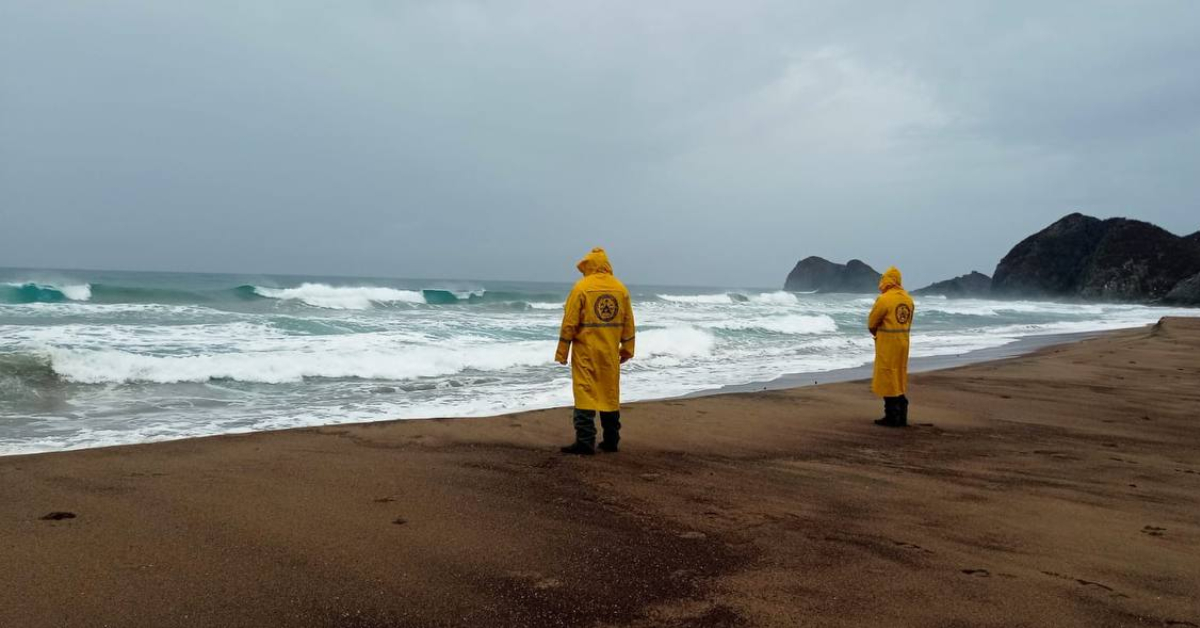
The ocean changes first. Waves get heavier. Authorities may restrict small boats or close the port. Beach flags change. Tour operators begin adjusting plans. The air turns unsettled. Rain bands may arrive long before the storm center gets close.
In town, the early signs are familiar: people clearing patios, securing rooftop items, buying water, moving cars away from flood-prone spots, checking windows, charging phones, and asking building managers what the plan is.
The most dangerous period is not always the moment people imagine. Sometimes it is after hours of rain, when rivers rise, retaining walls weaken, and roads that looked passable an hour earlier are no longer safe. During major weather events, flooding, landslides, falling trees, downed power lines, and debris can all become local hazards.
What to prepare before the season gets busy
A hurricane plan does not need to be dramatic. It needs to be boring, clear, and ready before everyone else is standing in line at the store.
Start with your home. Clean balconies, patios, drains, and roof areas. Anything loose can become a problem in strong wind: chairs, umbrellas, planters, tools, signs, storage bins, decorations, and lightweight furniture. If you rent, ask the landlord or property manager who is responsible for storm shutters, window protection, roof leaks, drainage, and emergency repairs.
Check where the water goes during heavy rain. If your building already floods during a normal storm, do not assume it will somehow perform better during a tropical system. Ground-floor apartments, hillside homes, river-adjacent properties, and older buildings deserve extra attention.
Keep a small emergency kit ready. At minimum, it should include drinking water, nonperishable food, a flashlight, batteries, a power bank, basic first aid supplies, prescription medications, pet supplies, copies of important documents, some cash, and a battery-powered or hand-crank radio if you have one. Put passports, residency cards, insurance papers, property documents, medical information, and emergency contacts in a waterproof pouch.
Save key phone numbers in your phone and also write them down. 911 should be the first number to call in an emergency. Residents should also keep current numbers for Protección Civil y Bomberos Puerto Vallarta, their building administrator, landlord, insurance agent, nearby hospital, veterinarian, and a trusted neighbor.
If you own a car, keep the tank at least half full when a storm is approaching. If you do not drive, know which neighbor, friend, taxi contact, or rideshare option you would use if you had to leave quickly. During a serious storm, transportation can become limited.
What to ask if you live in a condo or rental
Many foreigners in Puerto Vallarta live in condos, furnished apartments, or short-term rentals. Those buildings can be comfortable in normal weather, but confusing during emergencies if no one has explained the plan.
Before the season gets active, ask the building manager or landlord where residents should go during severe weather. Ask whether the building has a generator, emergency lighting, backup water, a roof-access policy, and a plan for elevators if power fails. Find out who communicates official updates to residents and whether those updates are sent via WhatsApp, email, posted notices, or direct calls.
Ground-floor tenants should ask about the building’s flood history. Upper-floor tenants should ask about windows, sliding doors, balcony furniture, and water intrusion. Pet owners should ask whether pets are allowed in any designated safe area or evacuation arrangement.
Do not assume a furnished rental is storm-ready because it looks modern. A beautiful balcony with glass doors and loose furniture can become a serious problem if no one prepares it.
What visitors and new residents often misunderstand
Visitors sometimes hear “hurricane season” and imagine constant storms. New residents sometimes hear “Puerto Vallarta is protected” and stop listening. Both ideas miss the reality.
The rainy season can be beautiful here. Mornings are often usable. The mountains turn green. Restaurants, beaches, tours, and daily life continue through much of the season. But the weather can change quickly, especially when a tropical system is nearby.
Boat tours, fishing trips, water taxis, diving, snorkeling, and beach days are the first plans likely to be affected. If the port closes or the ocean gets rough, do not argue with the operator or try to find someone willing to go anyway. The same applies to swimming. A beach that looks dramatic during a storm is not a place to test the water.
Travel plans also need flexibility. Flights may be delayed or canceled when a major system threatens the coast. Roads toward Mascota, Guadalajara, the South Shore, and parts of Nayarit can be affected by rain, falling rocks, flooding, or debris. If you have a medical appointment, international flight, or important legal appointment during the peak months, avoid cutting travel times too close.
During a storm watch or warning
Once a storm is being watched closely, the routine changes.
Charge phones, power banks, laptops, and rechargeable lights. Fill reusable bottles. Move balcony furniture and loose objects inside. Put documents in waterproof bags. Pull cars away from trees, flood-prone streets, river edges, and low spots if you can do so safely. Confirm where pets will be kept. Check on neighbors who are elderly, disabled, new to town, or living alone.
Follow official updates, not rumor chains. WhatsApp groups can be useful for hyperlocal information, but they can also spread old photos, exaggerated claims, and bad advice. Treat official meteorological and civil protection updates as the baseline.
If authorities tell people in your area to evacuate, leave. Do not wait to see whether the warning was “really necessary.” The worst time to decide you should have gone is when roads are flooded, the wind is rising, and emergency crews are already stretched.
If you stay home, stay inside and away from windows. Do not go out during a lull in the storm. The calm can be temporary, especially near the eye or between rain bands. Keep flashlights close. Avoid candles if possible. Unplug sensitive electronics if the power is flickering. Do not stand in floodwater, and keep children and pets away from doors, balconies, windows, and drainage areas.
After the storm passes
The end of the rain is not always the end of the danger.
Do not drive around to look at damage. Streets may have hidden debris, open manholes, downed lines, unstable trees, or deep water. Floodwater can also be contaminated. If you live near a river or hillside, wait for official guidance before assuming the risk has passed.
Check your home carefully. Look for water intrusion, cracked walls, damaged windows, gas smells, electrical issues, loose roof materials, and unstable trees or branches. If power goes out, be cautious when it returns. Electronics, pumps, elevators, and appliances may not come back cleanly.
Throw away food that may have spoiled. Do not drink tap water if authorities warn of contamination or if your building’s cistern may have been affected. Photograph damage before cleaning up, in case you may need to file an insurance claim.
Keep patience in reserve. After a serious storm, crews may need time to clear roads, restore electricity, reopen ports, inspect bridges, and respond to emergencies. The city may look normal in one neighborhood, while another is still dealing with flooding or cleanup.
Special advice for foreigners living in Puerto Vallarta
Foreign residents should prepare for hurricane season with a few extra details in mind.
Keep passport, residency card, driver’s license, insurance documents, medical prescriptions, and emergency contacts together. If you have private health insurance, know which hospitals or clinics are in network. If you rely on medication from outside Mexico, do not let supplies run low during the peak storm months.
Tell a friend or family member outside Puerto Vallarta how you will check in if a major storm approaches. Share your address, building name, and local emergency contact. If you live alone, make an agreement with a nearby neighbor to check on each other before and after severe weather.
Pet owners should plan ahead. Have carriers, leashes, food, medication, vaccination records, and a safe indoor space ready. Do not wait until evacuation becomes possible or necessary to figure out whether your pet can go with you.
If you are new to town, learn the names of nearby rivers, arroyos, hillsides, and main roads. Local warnings often refer to specific neighborhoods, roads, bridges, river levels, or coastal zones. The more familiar you are with the map, the faster you can understand whether a warning affects you.
Where to get reliable updates
During hurricane season, follow official meteorological and civil protection channels first. The most useful sources are the National Hurricane Center, Mexico’s Servicio Meteorológico Nacional, Conagua, Protección Civil, SEMAR port status updates, and local municipal emergency channels.
For local decisions, pay attention to notices about port closures, beach restrictions, school suspensions, road closures, shelter openings, and evacuation instructions. A storm does not need to be a Category 4 hurricane to interrupt normal life in a coastal city.
A good personal rule is simple: when the forecast turns serious, prepare early and then stay out of the way. Emergency crews do not need extra traffic, spectators, or people taking risks for photos.
Puerto Vallarta gets through hurricane season every year because most people keep living their lives while respecting the weather when it demands attention. That is the balance: enjoy the season, but do not treat the Pacific like background scenery.