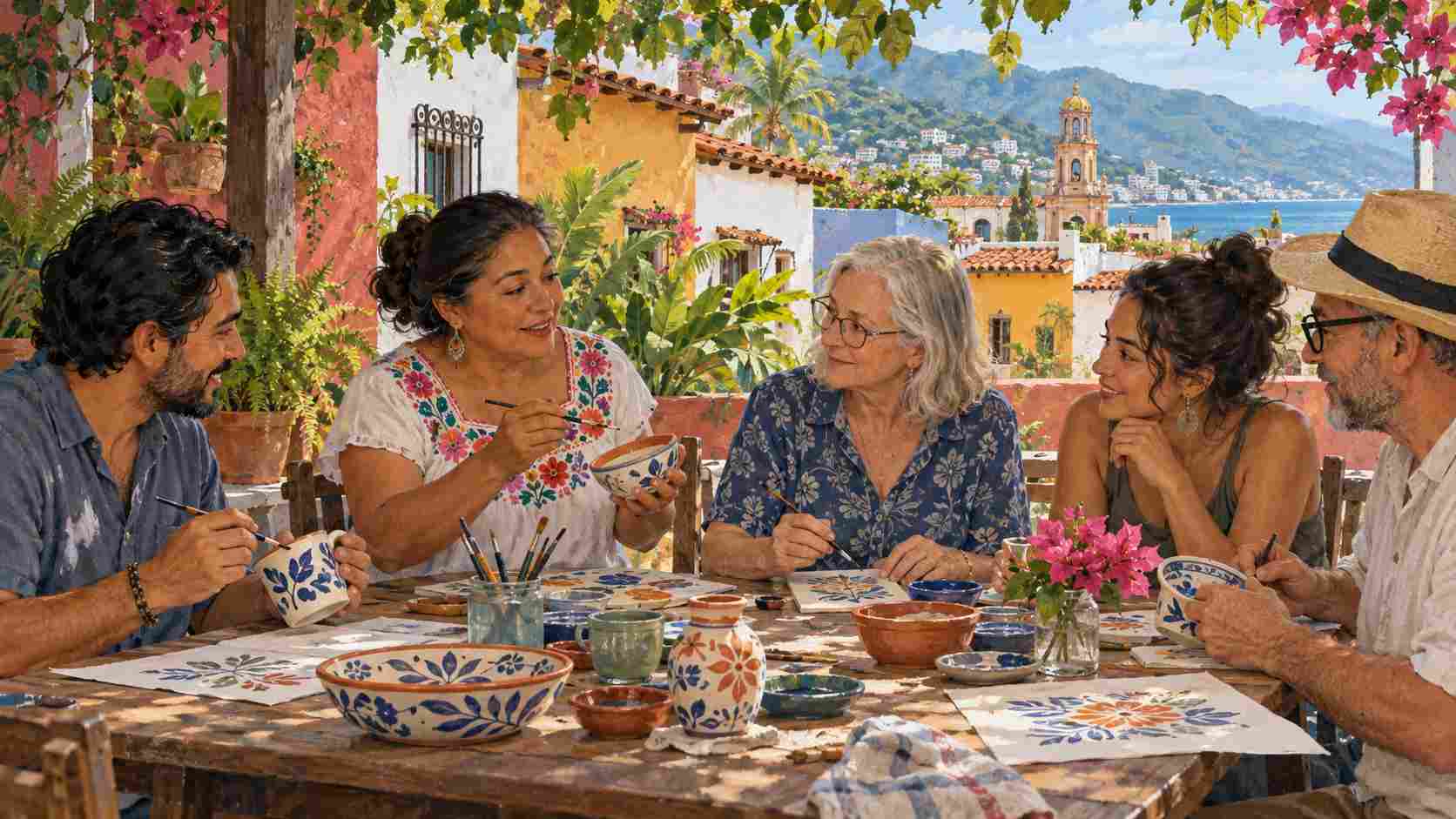
Biblioteca Los Mangos welcomes people of all nationalities, offering foreign residents ways to join Puerto Vallarta’s community life through classes, volunteering, and donations.
The library’s published mission and programs describe a space “for everyone, regardless of age, nationality or creed.”
For this report, I reviewed local cultural programs, neighborhood research, and oral histories. They provide a practical basis for exploring how to make a home here while respecting the community already in place.
The neighborhood you join has its own priorities
Local research gives newcomers a reason to learn what their neighbors value about the place they share.
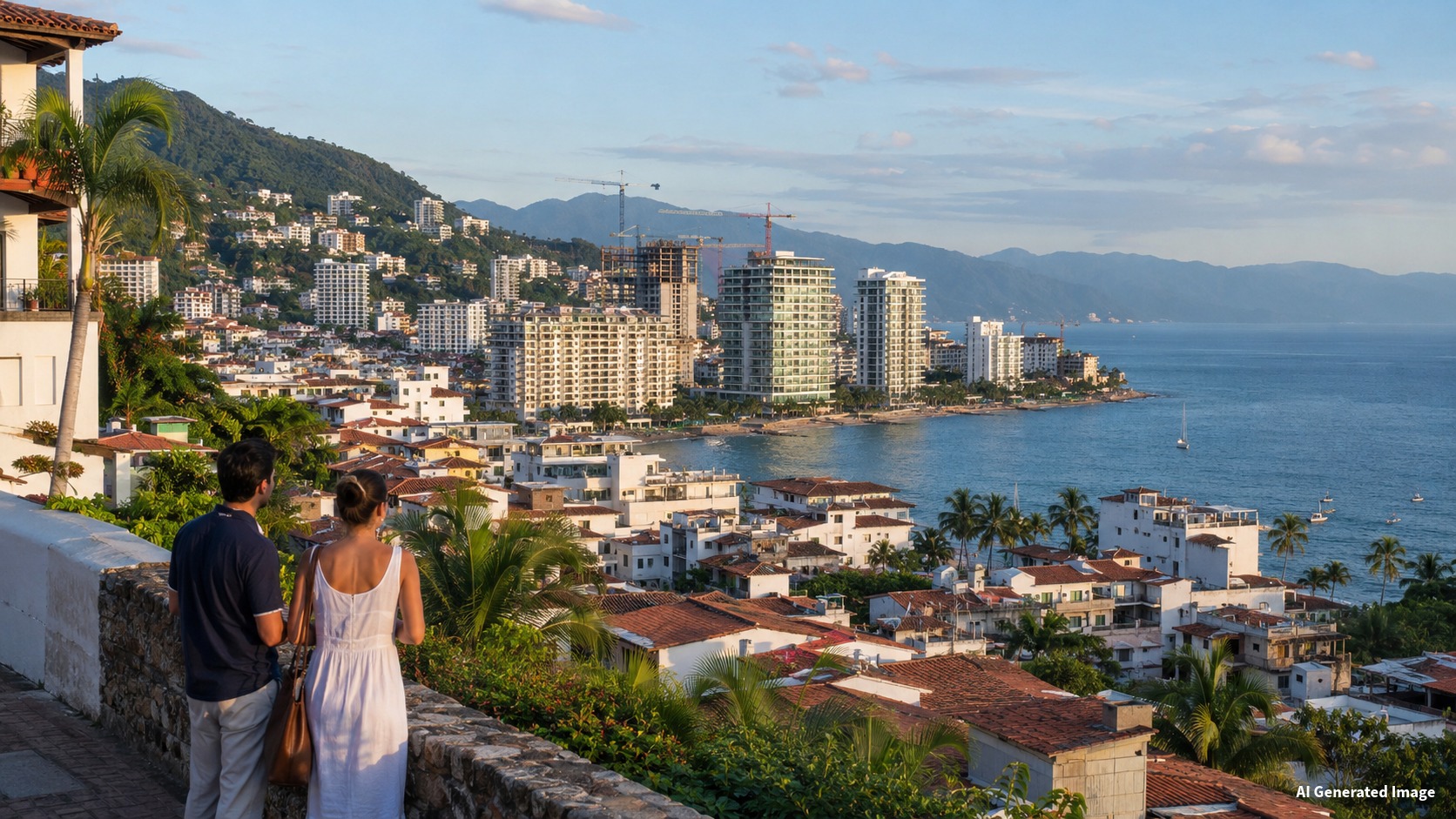
Jorge Luis López Ramos and María de los Ángeles Huízar Sánchez examined Versalles, Díaz Ordaz, and Los Mangos. Their study published April 24 documented traditional homes replaced by apartment towers and properties adapted for businesses serving visitors.
Their findings linked those changes to rising housing costs, fewer established residents, and a loss of neighborhood identity. The researchers also described local owners selling, renting, or adapting properties. Their work does not assign each foreign resident responsibility for those changes.
The community concern extends beyond a street’s appearance. At a 2023 university discussion, academic Juan Pablo Medina Valverde described residents feeling they were losing “part of their lives” as familiar neighborhoods changed.
Urban researcher Alfonso Baños Francia argued at the same discussion that territory deserves respect as someone’s place of origin. He criticized treating it chiefly as an opportunity for profit.
Living here and having local roots
Vallarta’s community history offers a fuller picture than its identity as a destination.
The University of Guadalajara published Gabriela Scartascini Spadaro’s oral-history research on Vallarta Viejo in 2011. Her work draws on families near the Río Cuale. It records networks built through marriage and committees supporting schools, the parish, and local fiestas.
Her account also describes families sharing food during outings to Los Muertos and Las Amapas. Those memories document an earlier community; they do not establish one shared outlook among today’s residents.
Read alongside Baños’ comments, that history helps explain the distinction between living here and sharing longstanding local roots. A foreign resident can describe a home, friendships, and years spent in Vallarta without claiming another family’s experience.
That distinction also offers a useful way to introduce yourself. Explain where you came from, how long you have lived here and what you are learning. The description gives people your actual connection to the city.
Let Spanish become part of ordinary life
Language educator Elba Ramirez puts respect into everyday terms in guidance published in April. She teaches at Auckland University of Technology; her advice concerns communication across cultures, rather than Puerto Vallarta alone.
“Learning at least a few words in a local language” constitutes “a gesture of respect,” Ramirez wrote, translated from Spanish.
She includes greetings, place names, requests, thanks, and apologies. She also emphasizes curiosity about other people’s values and humility about one’s own.
Applied to daily life here, her guidance suggests a manageable beginning: greet a neighbor, ask a shopkeeper a question, and learn to explain what you need. Ask for clarification when you miss something.
Our guide to using con permiso in everyday encounters explores one such expression. The phrase means excuse me or with your permission.
Ramirez recognizes translation tools as useful when language learning or professional interpretation is unavailable. She emphasizes checking understanding and building a relationship through the exchange.
Learning through everyday conversations
UNESCO’s work on sharing personal stories across cultures offers a practical approach to listening. Its method develops empathy and awareness of one’s own assumptions through people’s accounts of their lives.
Applied in Vallarta, that approach starts with questions. Ask how long someone has lived in the neighborhood, what has changed, and which places they want preserved. Let their answer set the direction of the conversation.
The same approach can help when a custom is unfamiliar. If a celebration, greeting, or gathering puzzles you, ask someone involved about its meaning before deciding how it should work.
An invitation to a family or neighborhood event offers another chance to apply that approach. Ask the host about plans and expectations, including whether photographs or additional guests are welcome. Let the people organizing the occasion guide your participation.
Build relationships around shared interests
The local cultural directory provides places to take part in activities alongside other residents.
The Instituto Vallartense de Cultura says its network of cultural centers brings workshops, exhibitions, and events to different parts of the municipality. Its stated purpose includes community encounters and broader access to the arts.
Centro Cultural Cuale is at Aquiles Serdán 437 on Isla Río Cuale, in Emiliano Zapata. Centro Cultural El Pitillal is on Hidalgo, between Libertad and Abasolo, in Leandro Valle.
The institute also lists La Lija in Lomas del Coapinole and Biblioteca Mojoneras on Avenida México. The range of locations reflects its stated goal of extending cultural services across Vallarta.
Those listings offer starting points for joining an activity that interests you. Ask the center about current classes, registration, and the language used. Join as a participant and learn how the group works.
Our guide to shopping at a mercado and becoming a regular addresses another setting for everyday contact.
Offer help through the community’s existing work
Los Mangos provides a concrete example of how residents and visitors can contribute to a shared project.
According to the library’s institutional history, citizens formed Pro Biblioteca de Vallarta A.C. in 1993. They brought residents, visitors, government, and businesses together to build a library, which opened in 1996.
The institution’s current website invites donations of money, materials, time, and talent. It says many courses and workshops depend on volunteers.
Offers to teach a workshop or exhibit work go through a proposal process. The library asks that activities support community learning and cultural development.
That process suggests a practical starting point for someone who wants to help: ask what the organization needs and how your skills fit. Submit a proposal through its existing channels and let its staff assess it.
At Los Mangos, Francisco Villa 1001, a foreign resident can start by asking about volunteering or a class.