Guadalajara’s new mobile app tracks trash trucks in real time and sends two alerts so residents know exactly when to put out their garbage.
Guadalajara is pushing its trash problem into the digital age. The city has rolled out the Guadalajara App, a free mobile tool that lets residents see garbage trucks moving in real time and sends alerts when a unit is about to pass their street. The promise is basic but essential for daily life. People should no longer have to guess when to drag bags to the curb or leave trash outside for hours.
The launch comes after a year of changes in how the municipality handles waste. In December of last year, the city took back direct control of garbage collection after ending a long-running private concession. A new fleet of around 160 trucks now covers the routes, and the local government reports service efficiency of about 95 percent on regular days. The app is the next step in that overhaul, designed to give residents the same tracking tools that the city already uses in its control center.
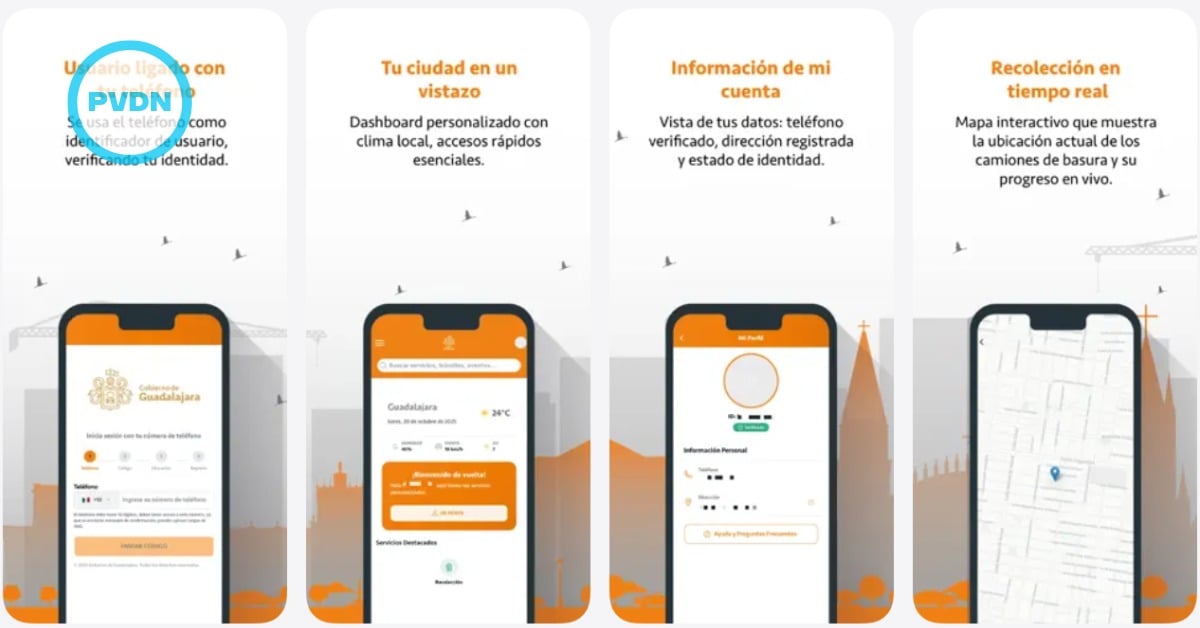
Residents who download the application on Android or iOS can register an address and choose to receive notifications. The system sends the first alert when the truck enters the neighborhood so people can get their bags ready and sweep up around their doors. A second alert arrives when the unit is roughly 100 meters from the home, giving a narrow window to carry trash outside without leaving it exposed for dogs, recyclers or the weather. This two-step system appears consistently in the technical explanations shared by city officials and local media.
How the Guadalajara garbage app works
The Guadalajara garbage app uses the GPS trackers already installed on the municipal trucks. Each vehicle’s position is fed into a central platform, which draws the route on a map and updates it for users in real time. When a truck’s location crosses a digital perimeter around a registered address, the app triggers the alerts on the resident’s phone.
This kind of tracking is not new in public services, but it is still rare in Mexican garbage systems. Guadalajara has already used satellite tracking to monitor its fleet internally since restructuring its collection service, and the same technology is now being shared with the public. Authorities argue that this makes planning easier for families and small businesses, especially in neighborhoods that have experienced irregular pick-ups or late-night routes.
The app is launching in stages. In this first phase, it focuses only on trash trucks, and residents must sign up, confirm their location and enable notifications for the system to work as intended. The municipal government has signaled that other urban services may be added later, turning the Guadalajara App into a broader platform for city information rather than a single-use tool.
The technology fits into a larger campaign to keep streets cleaner. Since assuming direct control of waste collection, the city has stepped up enforcement against people who dump trash in public spaces. Recent official figures show more than 1,000 detentions for littering and related offenses in less than a year, with most opting for community service rather than fines or short arrests. Authorities present the new app as the softer side of the same strategy, offering information and predictability rather than just penalties.
What residents can expect next
For now, the Guadalajara garbage app is a simple tool with a narrow purpose. It tells you where the truck is and when to take out the trash. The city is betting that this small change can reduce the piles of bags left out for hours, help workers move faster along their routes and limit the scattered waste that clogs drains during storms. If the alerts work as advertised, households will only need to place bags outside a few minutes before collection, not guess at a vague schedule.
Officials are also framing the app as a test of shared responsibility. The municipality has invested in trucks, drivers and digital systems, but the day-to-day result still depends on how people use them. If residents keep their contact details updated, respond to alerts and respect basic rules for bagging and placing waste, the technology could quietly shift habits across hundreds of neighborhoods.
The rollout will likely reveal gaps. Not everyone owns a smartphone, and some homes rely on informal collection or recycling routes that sit outside the new system. Still, Guadalajara is joining a small group of Mexican cities that are experimenting with real-time tracking and digital alerts for basic services. The following months will show whether a phone notification is enough to change how a metropolis manages one of its oldest problems.