Guadalajara’s winter operation will send a 1,400-strong team and expanded shelters to keep people on the streets alive this season.
With colder nights arriving and a busy cold-front season ahead, Guadalajara is activating a winter operation aimed at people living on the streets, migrants and others without safe housing. From 1 December until 18 February 2026, city teams will patrol key areas of the metropolitan area, offering blankets, hot food and a bed to anyone willing to come indoors. Authorities say the operation can be extended if the weather worsens.
The Guadalajara winter operation brings together several municipal services. Staff from the municipal DIF social services system, Civil Protection and Firefighters, the city police, municipal medical services, the Red Cross and the Coordinación de Combate a la Desigualdad will work side by side on night rounds. Together, they make up a force of about 1,400 people tasked with checking parks, hospital zones and central plazas where people without shelter often gather.
Patrols will run Monday to Friday between 7 p.m. and 11 p.m., a window chosen to reach people before the coldest hours of the night. Teams will focus on places that consistently show a high presence of people in street situations and informal workers: the Jardín Botánico and the surrounding area of the Hospitales Civiles, Parque Morelos, the corridors along Avenida Niños Héroes and Avenida Inglaterra, the Arcos del Milenio, Villas de San Juan, Parque Agua Azul, stretches of 16 de Septiembre, Plaza de los Mariachis and the streets near the Mercado San Juan de Dios.
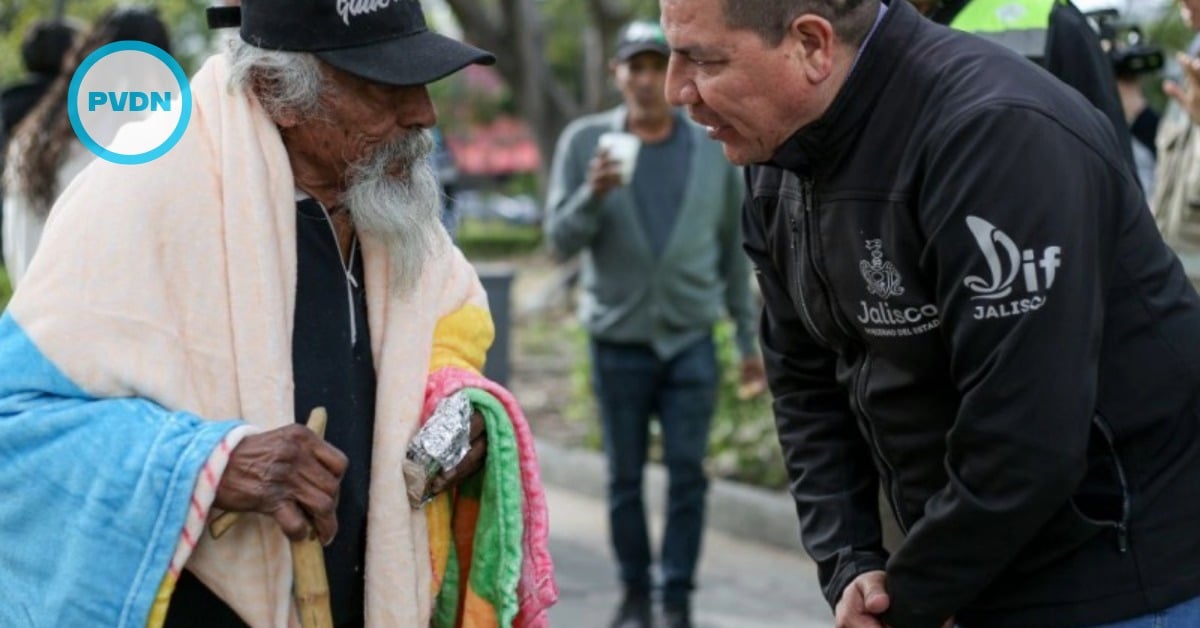
On each round, workers will offer hot meals, warm drinks, coats, blankets and medical checks. When someone agrees to leave the street, patrols coordinate transport to municipal shelters or, when needed, to emergency medical services or the Red Cross. The goal, officials stress, is not only to hand out supplies but to reduce the risk of hypothermia and other health complications that tend to spike in winter among people without secure housing.
Behind the operation is a stark weather forecast. Local authorities, citing national water and weather agencies, expect dozens of cold fronts during the 2025–2026 season, with particular intensity between December and April. For Guadalajara and other parts of Jalisco, that could mean night temperatures close to 1 or 2 degrees Celsius in some areas and near freezing in higher-altitude municipalities. In past winters, these temperature drops have proven especially dangerous for people who sleep outdoors or in makeshift spaces.
A recent pilot census carried out by municipal social services counted about 560 people living on the streets in Guadalajara. The survey found that many were originally from the metropolitan area, but a significant share came from other states or other municipalities in Jalisco, and a smaller group were foreign nationals. For them, cold weather adds to existing health conditions, substance use issues and the insecurity of sleeping in public spaces.
Inside the shelters, the city is also making changes. DIF Guadalajara operates two Centres for Attention and Integral Development for People in Street Situations (CADIPSIC). Las Palmas, the larger facility, can now receive up to 241 people per night. The second center, on Belisario Domínguez, has been refocused exclusively as a night refuge and has doubled its capacity to about 70 men. Both spaces offer more than a bed: people receive food, medical attention, psychological support and help from social workers who try to reconnect them with family or services that can support longer-term stability.
One barrier that had discouraged some people from accepting shelter was the fear of leaving a pet behind. This year, Guadalajara is opening a dedicated space so that people can enter with their animals. Authorities say they saw in the last winter season that several people refused to move to a shelter because they did not want to abandon dogs or other companions. Allowing pets is meant to remove that obstacle and bring more people indoors on the coldest nights.
Last winter’s operation gives some indication of the scale of the work ahead. Municipal figures indicate that thousands of “services” were delivered, from food and clothing to medical attention, and that more than 1,600 people ultimately agreed to spend at least one night in a shelter. City officials argue that expanding capacity and improving coordination across emergency services should help them reach even more people during the coming season.
How residents can help this winter
While municipal services lead the Guadalajara winter operation, the plan depends heavily on residents. One of the main tools is the city’s C5 monitoring center. Anyone who sees a person at risk from the cold on a sidewalk, in a park or near a public building can call the C5 Guadalajara line at 33 1201 6070. Operators then alert the nearest patrol so staff can offer assistance, medical checks and a possible transfer to a shelter.
Social services are also asking for direct community support. DIF Guadalajara is running several winter campaigns to bring in food, clothing and volunteers. Under the “Adopta una cena” program, residents can coordinate the donation of hot meals for people staying in the shelters. Other initiatives encourage people to donate warm clothing, shoes and blankets in good condition, as well as to sign up for volunteer shifts to support night brigades or help inside the centers.
To prevent crowding and keep the work organized, these efforts are coordinated by phone. Citizens are asked to call DIF lines to schedule meal donations or clothing drops and to register as volunteers before showing up at the facilities. The agency guides what kinds of food are most useful, how to package donations and what to expect during a night shift accompanying the mobile teams.
Health and emergency services are reinforcing their own response as part of the broader winter effort. Municipal medical services and the Red Cross plan to have seven ambulances available for pre-hospital care and transfers when patrols detect people with serious health problems linked to the cold or chronic illnesses. Guadalajara’s fire department is adding 60 firefighters and two units to support monitoring and outreach, particularly in areas with lower temperatures or more difficult access.
City officials insist that the operation is as much about dignity as it is about emergency relief. Alongside the patrols and shelters, they are working with the municipal unit that searches for missing people, in case someone in a street situation matches an active disappearance report. Staff at CADIPSIC centers also invite people to consider longer-term programs that can help them move away from the street, even if they initially come in only to escape the cold.
As the first strong cold fronts of the season arrive, the success of the Guadalajara winter operation will hinge on how fast patrols can respond and how often residents pick up the phone when they see someone sleeping outside. For people on the streets, that call, and the network now being deployed around the city, could be the difference between a long, difficult night and a safe, warm place to sleep.