Guadalajara’s emblematic fountains get a 14-million-peso overhaul, with structural repairs and RGB lighting to revive key public spaces.
On busy corners and roundabouts across Guadalajara, fountains that many residents pass without thinking are getting a rare, coordinated upgrade. The municipal government is investing about 14 million pesos in an integral rehabilitation of several of the city’s most recognizable water features. The plan focuses on structural repairs, hydraulic and electrical systems, and new lighting intended to bring these public spaces back into full working order.
City officials say the aim is simple but ambitious: keep the fountains safe, functional and visually appealing, instead of letting them slip into intermittent operation. Guadalajara has around 210 public fountains, with more than 80 in the historic center alone. Against that backdrop, the current program concentrates resources on a handful of emblematic spots that shape how residents and visitors experience the city’s main corridors.
The first works concentrate on the Olympic Fountain, the Glorieta de la Estampida, the Fuente de las Ranitas and the string of fountains that line the Chapultepec corridor. In each case, crews are tackling three fronts at once. They are repairing concrete basins and waterproofing, overhauling hydraulic systems so water circulates correctly, and renewing electrical installations that had aged or fallen out of code.
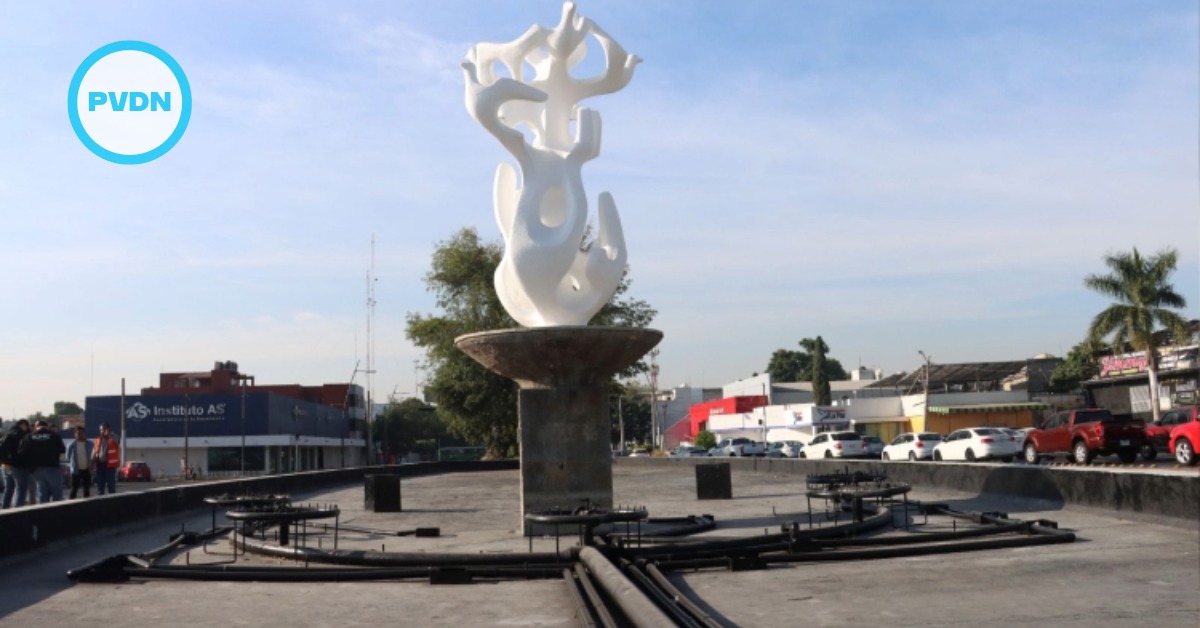
At the Olympic Fountain, the city reports waterproofing of the basin, repainting and maintenance of the water system, as well as the replacement of the technical access door for maintenance staff. In the Glorieta de la Estampida, work extends beyond the water itself. The project includes rehabilitation of the lighting base, new electrical wiring and improvements to surrounding green areas, including lighting in trees and decorative elements around the iconic sculpture.
The Fuente de las Ranitas, in the historic center, is also on the list. There, technicians are repairing the frog figures, replacing old ducts and installing new motors to keep the jets running with more reliability. Along the Chapultepec corridor, one of Guadalajara’s busiest nightlife and cultural strips, eight fountains are receiving fresh paint, renewed electrical systems and perimeter lighting designed to highlight them after dark.
From basic repairs to RGB lighting
Beyond day-to-day fixes, the project includes a clear technological shift. The city is replacing traditional luminaires with RGB lighting in various fountains and sculptures, including La Estampida and the Monumento de los Futbolistas. This type of system can generate millions of color combinations, allowing the city to program different tones and sequences for holidays, campaigns or local events without changing equipment each time.
Authorities frame the RGB upgrade as more than decoration. By improving visibility at night and making key landmarks easier to recognize, they argue that the investment supports both safety and a stronger urban identity. For people who walk, cycle or drive through these areas every day, the difference will be felt first as better illumination of crossings, sidewalks and plazas, and later as a more coherent nightscape when the synchronized colors start to run.
While the current intervention focuses on specific sites, it fits into a broader line of public-works projects that include maintenance of fountains and other water features in different parts of Guadalajara. Municipal planning documents list the rehabilitation of fountains and water bodies among the priorities for recent budget cycles, alongside work on sidewalks, parks and street lighting. This new 14-million-peso package is one of the visible faces of that longer-term strategy.
For now, the city says work is already advanced at the Olympic Fountain, the Fuente de las Ranitas and the Estampida roundabout, while the Chapultepec corridor continues under active intervention. Residents are already seeing temporary barriers, construction crews and test runs of the new lighting at some points. The full effect, though, will only be clear once all the systems are synchronized and the fountains return to regular operation.
If the project stays on track, Guadalajara’s upgraded fountains could soon signal a noticeable change in how several key corridors look and feel after sunset. For a city that depends heavily on its public spaces, the combination of structural repairs and modern lighting is meant to keep familiar landmarks alive, rather than letting them fade quietly into the background.